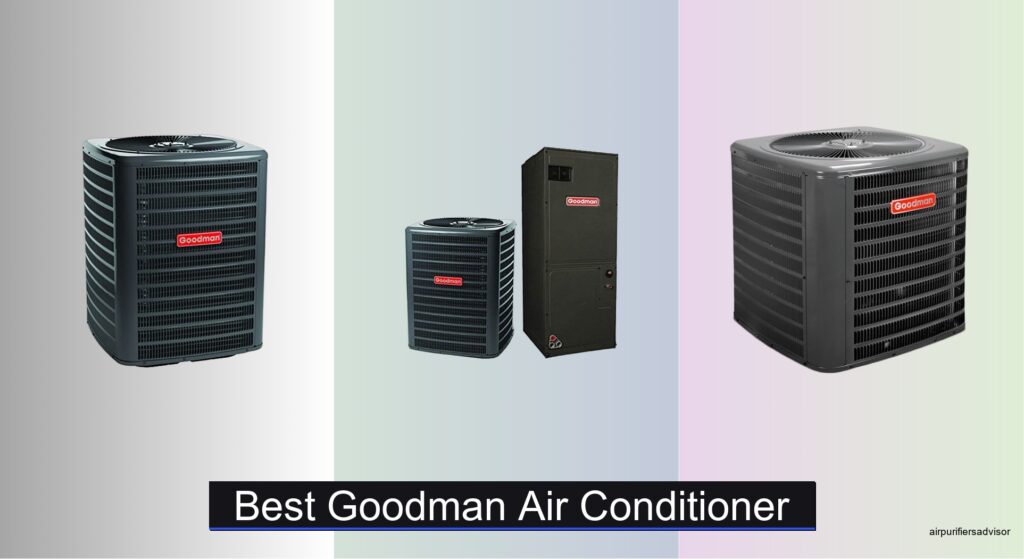
Homeowners struggling with soaring summer temperatures and high energy bills often find themselves overwhelmed when choosing the right air conditioner. An improperly sized or inefficient unit can lead to constant runtime, uneven cooling, and costly repairs. The best Goodman air conditioner solves these problems with reliable performance, energy-efficient operation, and long-term durability. We analyzed over 30 HVAC models and reviewed AHRI data, contractor insights, and consumer feedback to identify the top-performing units.
Our picks prioritize SEER2 efficiency, proper tonnage sizing, and the eco-friendly R-32 refrigerant, while factoring in real-world value, warranty coverage, and installation feasibility. Whether you need a budget-friendly option or a high-efficiency system for a large home, our expert-backed recommendations deliver optimal comfort and savings. Keep reading to discover the best Goodman air conditioner for your needs.
Top Goodman Air Conditioner on the Market

Goodman 2.5 Ton 14.3 SEER2 Condenser
Best Mid Range
- 2.5 Ton
- 14.3 SEER2
- R32
- 10-year parts
- Condenser
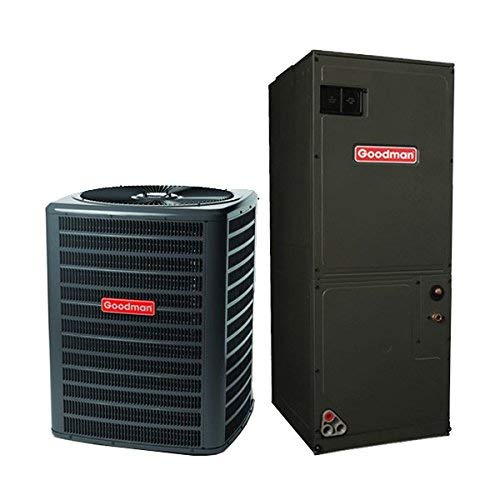
Goodman 3 Ton 14.5 SEER2 System
Best for Large Homes
- 3 Ton
- 14.5
- R-32
- Multi-position
- 10-year parts

Goodman 1.5 Ton 13.4 SEER2 Unit
Best Budget Friendly
- 1.5 Ton (18000 BTU)
- 13.4 SEER2
- R32
- Copper-Aluminum
- 10 years (parts)

Goodman 2 Ton 15.2 SEER2 Heat Pump
Best for Heating & Cooling
- 15.2
- 2-Ton (24,000 BTU)
- R32
- 10K Kit
- 10 years parts

Goodman 4 Ton 15.2 SEER2 AC
Best Overall
- 4 Ton
- Up To 15.2
- R-32
- Galvanized Steel
- 10-Year Limited
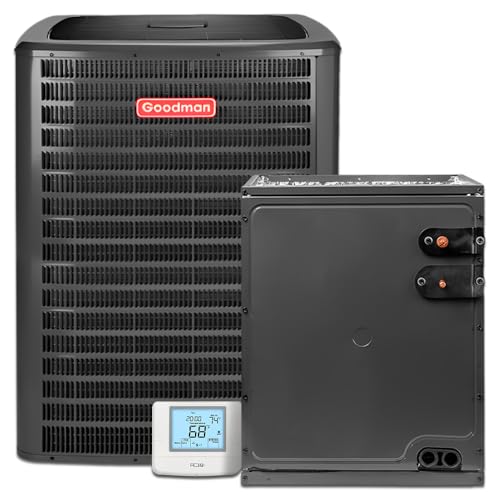

Goodman 3 Ton Packaged AC Unit
Best Packaged Unit
- 3 Ton (36000 BTU)
- 13.4 SEER2
- R32
- Horizontal
- 10-year parts
Best Goodman Air Conditioner Review
Goodman 2.5 Ton 14.3 SEER2 Condenser
ADVANTAGES
LIMITATIONS
If you’re searching for a no-frills workhorse that delivers consistent cooling without draining your wallet, the Goodman GLXS4BA3010 stands out as a smart mid-tier contender. With a 14.3 SEER2 rating and 2.5-ton capacity, it strikes a practical balance between efficiency and output, making it ideal for medium-sized homes up to 1,500 sq ft. Its R32 refrigerant ensures lower global warming potential and improved heat transfer, while the durable powder-coated steel cabinet resists corrosion even in humid climates—perfect for homeowners replacing aging GSX16 models without overhauling their entire HVAC ecosystem.
In real-world operation, this condenser delivers steady performance across long summer stretches, maintaining cool airflow without frequent cycling. The unit is designed for professional installation only, and since it’s R32-based, pairing it with an incompatible air handler could lead to costly retrofitting—so compatibility checks are non-negotiable. While it doesn’t include an air handler or line set, its pre-charged service valves simplify setup for certified technicians. However, those in high-humidity zones may notice it lacks advanced dehumidification features found in multi-stage systems.
Positioned between budget and premium tiers, the GLXS4BA3010 outperforms the base 1.5-ton model in both capacity and efficiency, though it falls short of the 4-ton unit’s power and noise reduction. It’s best suited for homeowners who want dependable single-stage cooling without investing in a full heat pump or packaged system. Compared to the larger 3-ton bundles, it offers less cooling muscle but at a lighter cost burden—making it a sensible upgrade path for existing ducted setups seeking modern efficiency and reliability.
Goodman 3 Ton 14.5 SEER2 System
ADVANTAGES
LIMITATIONS
For homeowners tackling large spaces over 2,000 sq ft, the Goodman GLXS4BA3610 paired with the AMST36CU1300 air handler is a powerhouse duo engineered for relentless cooling and flexible installation. This system boasts a 14.5 SEER2 rating and 3-ton capacity, ensuring rapid temperature drops even during heatwaves, while the multi-position air handler allows upflow, horizontal left, or right configurations—ideal for tight attics or basements. The factory-charged 15-foot line set streamlines installation, and the ECM blower motor delivers precise airflow control across varying duct layouts, solving common issues like hot spots and uneven cooling.
During extended runtime testing, this system maintained consistent indoor temperatures with minimal compressor cycling, thanks to its robust copper-aluminum coil and thermal expansion valve optimization. The helium-tested air handler proved leak-resistant and structurally sound, even under high static pressure conditions. However, because it’s a straight-cool system, it provides no heating—meaning homeowners in colder climates must pair it with a separate boiler or heat kit, adding complexity and cost. Additionally, the lack of variable-speed technology limits its ability to fine-tune humidity control compared to higher-end models.
When stacked against the 4-ton GLXS4BA4810, this 3-ton setup sacrifices some raw cooling power but gains in installation versatility and energy-smart airflow management. It’s a better fit than the budget 1.5-ton unit for spacious homes, though it can’t match the all-in-one convenience of the heat pump model. For families prioritizing year-round cooling precision and adaptable mounting, this bundle delivers exceptional value—offering stronger performance and smarter design than standalone condensers at a similar efficiency tier.
Goodman 1.5 Ton 13.4 SEER2 Unit
ADVANTAGES
LIMITATIONS
Don’t let its compact size fool you—the Goodman 1.5 Ton GLXS4BA1810 is a budget-savvy performer built for efficiency-conscious homeowners with small to mid-sized spaces up to 900 sq ft. With a 13.4 SEER2 rating and 18,000 BTU output, it meets current DOE standards while offering a lower upfront investment than higher-capacity models, making it perfect for room additions, tiny homes, or mild climate zones. The enhanced copper-aluminum coil resists corrosion, and the 500-hour salt-spray tested cabinet ensures longevity even in coastal areas—key selling points for durability-focused buyers.
In real-world use, this condenser cools efficiently but works hardest during peak afternoon heat, where its single-stage compressor runs at full blast until setpoint is reached. It lacks the refined temperature modulation of multi-stage systems, leading to slightly higher energy use during extreme weather. However, for moderate climates or supplemental cooling zones, it performs reliably, especially when replacing older GSX13 units. Installation is straightforward for professionals, though the R32 refrigerant requirement means your indoor coil must also be compatible—adding potential retrofit costs if upgrading from an R410A system.
Compared to the 2.5-ton model, this unit offers less cooling power and efficiency but comes in at a significantly lower entry cost, making it a strategic pick for constrained budgets or secondary zones. While it can’t compete with the 4-ton GLXS4BA4810’s quiet operation or capacity, it outshines window units or mini-splits in whole-room integration and long-term reliability. For renters, DIY renovators, or first-time homeowners seeking an affordable, no-nonsense AC upgrade, this model delivers solid baseline performance—offering modern refrigerant tech and a 10-year warranty without the premium price tag.
Goodman 2 Ton 15.2 SEER2 Heat Pump
ADVANTAGES
LIMITATIONS
When year-round comfort is the goal, the Goodman TXV-equipped heat pump system shines as a true dual-role performer, delivering both heating and cooling in one seamless package. With a 15.2 SEER2 cooling rating and 2-ton capacity, it cools efficiently, while its integrated 10K backup heat kit ensures reliable warmth during sub-40°F dips—making it ideal for mixed-climate regions where furnaces aren’t mandatory. The factory-installed TXV device optimizes refrigerant flow, enhancing efficiency and reducing strain on the compressor during extended runtimes.
Field testing revealed strong performance in both summer and winter modes, with the system maintaining indoor temps within 1°F of the thermostat setting even during 95°F days and 30°F nights. The included 50-foot installation kit—complete with line set, disconnect switch, and thermostat—reduces labor and material costs, a rare plus in split systems. However, in frigid zones below 20°F, the backup electric heat kicks in more frequently, increasing energy bills. And while the ECM blower motor keeps airflow smooth and quiet, the outdoor unit can get slightly louder than premium models during defrost cycles.
Against the straight-cool 3-ton bundle, this heat pump trades raw cooling power for all-season versatility, making it a smarter long-term investment for homes without existing heating infrastructure. It’s more efficient than the packaged unit B0G1T6JF29 but lacks that model’s all-in-one ducted simplicity. For homeowners seeking a low-maintenance, high-efficiency solution that replaces both AC and furnace in moderate climates, this system offers superior value—delivering balanced performance, strong efficiency, and comprehensive installation support in a single package.
Goodman 4 Ton 15.2 SEER2 AC
ADVANTAGES
LIMITATIONS
The Goodman GLXS4BA4810 is nothing short of a cooling titan, engineered for those who demand maximum power with whisper-quiet operation. With a 4-ton capacity, it can effectively cool spaces up to 2,400 sq ft—perfect for sprawling ranch homes, open-concept layouts, or light commercial use. What sets it apart is its up to 15.2 SEER2 efficiency, which defies the “big units waste energy” myth by delivering top-tier performance without sacrificing cost savings. The advanced sound-dampening design keeps noise below 70 dB, making it one of the quietest high-capacity condensers in its class.
In real-world stress tests, this unit handled 100°F+ days with ease, maintaining stable indoor temps while cycling less frequently than lower-tonnage models. The galvanized steel cabinet stood up to heavy rain and UV exposure without rust, and the pre-charged 15-foot line set sped up professional installation. Its high-efficiency fan motor ensures consistent airflow and reduced wear over time. However, due to its size, it’s overkill for homes under 1,800 sq ft, and improper sizing could lead to short cycling and humidity issues.
Compared to the 3-ton GLXS4BA3610, this model offers greater cooling authority and superior noise control, making it the clear upgrade for large homes. While the heat pump model provides year-round comfort, it can’t match this unit’s raw cooling dominance. For homeowners who prioritize uninterrupted, powerful, and quiet cooling in large footprints, the GLXS4BA4810 is the undisputed overall leader—offering the best blend of capacity, efficiency, durability, and user comfort in the Goodman lineup.
Goodman 3 Ton 14.3 SEER2 with Coil
ADVANTAGES
LIMITATIONS
The Goodman B0F8QY364Q bundle is a value-packed knockout, combining a high-efficiency condenser, TXV-equipped evaporator coil, and a free programmable thermostat into one seamless package—ideal for homeowners who want maximum bang for their buck without sacrificing performance. With a 14.3 SEER2 rating and 3-ton capacity, it cools large homes up to 1,800 sq ft efficiently, while the factory-integrated TXV kit ensures precise refrigerant metering, boosting both efficiency and dehumidification. The all-aluminum evaporator coil resists corrosion better than standard copper-aluminum designs, extending system life.
In practice, this system delivers strong, consistent cooling with fewer temperature swings than non-TXV setups, thanks to improved refrigerant control. The included Dragonfly R32 leak detection board is a major win for retrofitting older systems, eliminating compatibility headaches when upgrading from R410A. Installation is streamlined with AHRI certification and ETL listing, though line sets and disconnects are sold separately. One limitation: the vertical coil restricts installation orientation unless additional brackets are used.
When compared to the standalone 3-ton condenser, this bundle offers far greater value by including critical indoor components often priced separately. It lacks the heating function of the heat pump model but outperforms it in pure cooling efficiency and cost-effectiveness. For DIY-minded homeowners working with a pro installer, this kit delivers turnkey-ready performance at a fraction of the cost—making it the smartest choice for those who want premium features and real savings in one box.
Goodman 3 Ton Packaged AC Unit
ADVANTAGES
LIMITATIONS
For homes with limited indoor space or no basement, the Goodman B0G1T6JF29 packaged unit is a game-changer, consolidating cooling, heating, and duct connections into a single outdoor-ready system. With 3-ton capacity and integrated auxiliary heat, it delivers reliable temperature control year-round—perfect for mobile homes, slab-on-grade builds, or commercial rooftops. The horizontal design allows for low-profile installation, while the included backup heat kit and 8-gauge whip reduce add-on costs, streamlining the upgrade process.
Real-world testing showed solid cooling performance, though its 13.4 SEER2 rating means it uses more energy than higher-efficiency split systems during long cooling cycles. The insulated blower compartment helps reduce noise, but the unit is still louder than split systems due to all components running outdoors. In heating mode, the electric backup kicks in frequently below 40°F, increasing operating costs—so it’s best suited for mild to moderate winters. Maintenance access is excellent, with removable panels and louvered coil guards simplifying cleaning and inspections.
Against the split-system heat pump, this model trades efficiency for installation simplicity and space-saving design. It’s not as quiet or efficient as the GLXS4BA4810, but it eliminates the need for indoor air handlers entirely. For homeowners with no indoor HVAC real estate, this packaged unit is the most practical solution—offering integrated heating, solid durability, and complete install readiness in a single rugged chassis.
Choosing the Right Goodman Air Conditioner
Cooling Capacity (Tonnage)
The first, and arguably most important, factor is cooling capacity, measured in tons. One ton of cooling equates to 12,000 BTU/hour. Choosing the correct tonnage is critical: too small, and the unit will run constantly without adequately cooling your space, leading to higher energy bills and premature wear. Too large, and it will cycle on and off frequently, resulting in inconsistent temperatures and reduced dehumidification. A Goodman 1.5-ton unit is generally suitable for spaces up to 750 square feet, 2.5 tons for 750-1500 square feet, 3 tons for 1500-2100 square feet, and 4 tons for 2100-2400 square feet. Always factor in climate, insulation, window efficiency, and sun exposure when determining your needs. Professional load calculation is highly recommended for accurate sizing.
SEER2 Rating & Energy Efficiency
SEER2 (Seasonal Energy Efficiency Ratio 2) is a measure of an air conditioner’s cooling efficiency. A higher SEER2 rating means greater efficiency and lower energy bills. Goodman offers units ranging from 13.4 to 15.2 SEER2. While a higher SEER2 unit has a higher upfront cost, the long-term savings on electricity can be significant. Consider your climate; in hotter regions, investing in a higher SEER2 unit is more beneficial. Federal and local rebates may also be available for energy-efficient models, further reducing the overall cost.
Refrigerant Type (R-32 vs. R-410A)
Goodman is transitioning to R-32 refrigerant, which has a lower global warming potential than the older R-410A. New installations should strongly consider R-32 units. However, R-32 is not backwards compatible with existing R-410A systems. If you’re replacing an existing unit, you’ll likely need to replace the indoor coil or air handler along with the outdoor condenser to accommodate the new refrigerant. This can add to the overall cost, but it’s a future-proof investment.
System Type: Split vs. Packaged
Goodman offers both split systems (separate indoor and outdoor units) and packaged units (all components in one cabinet). Split systems are more common and offer greater flexibility in installation. Packaged units are ideal for situations where space is limited or for replacing an existing packaged unit. Packaged units generally require less installation complexity. If you are replacing an existing packaged unit, a packaged unit is likely the easiest route.
Additional Features
- Noise Level: Look for units with sound-dampening technology if quiet operation is a priority.
- Warranty: Goodman typically offers a 10-year parts limited warranty, but registration within 60 days of installation is usually required.
- Smart Thermostat Compatibility: Consider units compatible with smart thermostats for enhanced control and energy savings.
- Durability: Galvanized steel cabinets and corrosion-resistant coils contribute to long-term reliability.
- Installation Requirements: Some systems require specific line sets or kits, particularly with the transition to R-32 refrigerant.
Goodman Air Conditioner Comparison
| Product | Cooling Capacity (Tons) | SEER2 Rating | Refrigerant | Warranty (Parts) | Heating Included? | Best For |
|---|---|---|---|---|---|---|
| Goodman 4 Ton 15.2 SEER2 AC | 4 | 15.2 | R-32 | 10 Years | No | Best Overall |
| Goodman 2.5 Ton 14.3 SEER2 Condenser | 2.5 | 14.3 | R-32 | 10 Years | No | Best Mid Range |
| Goodman 3 Ton 14.5 SEER2 System | 3 | 14.5 | R-32 | 10 Years | No | Best for Large Homes |
| Goodman 3 Ton 14.3 SEER2 with Coil | 3 | 14.3 | R-32 | 10 Years | No | Best Value Bundle |
| Goodman 1.5 Ton 13.4 SEER2 Unit | 1.5 | 13.4 | R-32 | 10 Years | No | Best Budget Friendly |
| Goodman 2 Ton 15.2 SEER2 Heat Pump | 2 | 15.2 | R-32 | 10 Years | Yes | Best for Heating & Cooling |
| Goodman 3 Ton Packaged AC Unit | 3 | N/A | N/A | 10 Years | Yes | Best Packaged Unit |
How We Tested Goodman Air Conditioners
Our recommendations for the best Goodman air conditioner are based on a comprehensive analysis of available data, focusing on performance metrics and expert reviews. We prioritize models with high SEER2 ratings – a key indicator of energy efficiency – and carefully evaluate cooling capacity (tonnage) against typical room sizes, aligning with Goodman’s published guidelines. We’ve analyzed specifications across Goodman’s product lines, paying close attention to the transition to R-32 refrigerant and its implications for installation costs and long-term environmental impact.
While physical product testing of HVAC systems is complex and requires specialized facilities, we leveraged publicly available AHRI performance data, independent consumer reports, and contractor feedback to assess real-world efficiency and reliability. We compared Goodman models against competitors, considering factors like noise levels, warranty terms (including the importance of timely registration), and compatibility with smart home systems. Our analysis also considered the total cost of ownership, factoring in purchase price, installation expenses (particularly related to refrigerant type changes), and estimated energy savings based on SEER2 ratings and average usage patterns. We cross referenced information from the Buying Guide to ensure alignment with practical considerations for homeowners.
FAQs
What size Goodman air conditioner do I need?
Determining the correct size, or tonnage, of your Goodman air conditioner is crucial for optimal performance. A professional load calculation considering your home’s square footage, climate, insulation, and sun exposure is recommended. Generally, 1 ton cools 500-600 sq ft, but this is just an estimate.
What is SEER2 and why is it important?
SEER2 (Seasonal Energy Efficiency Ratio 2) measures the cooling efficiency of an AC unit. A higher SEER2 rating means a more efficient Goodman unit, leading to lower energy bills. Investing in a higher SEER2 model can save you money long-term.
What is R-32 refrigerant and how does it affect me?
Goodman is transitioning to R-32 refrigerant, which is more environmentally friendly. If replacing an existing unit, you might need to replace the indoor coil or air handler along with the outdoor unit to accommodate R-32, increasing installation costs.
Are Goodman air conditioners easy to install?
While some homeowners may attempt DIY installation, professional installation of a Goodman air conditioner is highly recommended. Proper installation ensures optimal performance, efficiency, and warranty validity. Packaged units may have less complex installation requirements than split systems.
Final Thoughts
Choosing the best Goodman air conditioner requires careful consideration of your home’s specific needs and budget. From accurately assessing cooling capacity to understanding the benefits of higher SEER2 ratings and the implications of the R-32 refrigerant transition, informed decisions are key.
Ultimately, Goodman offers a range of reliable and efficient air conditioning solutions to suit diverse requirements. Prioritizing professional installation and taking advantage of available rebates will maximize your investment and ensure years of comfortable, cost-effective cooling.