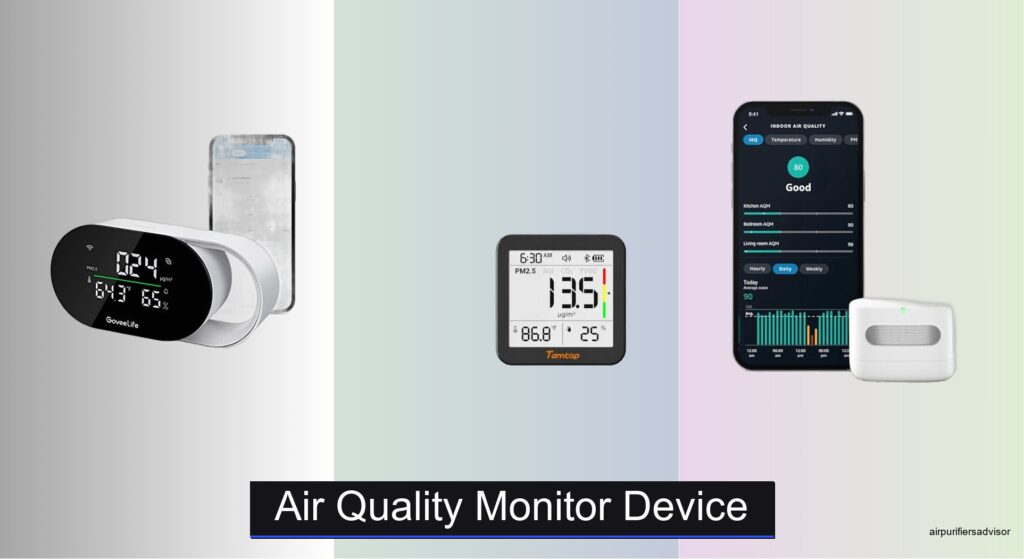
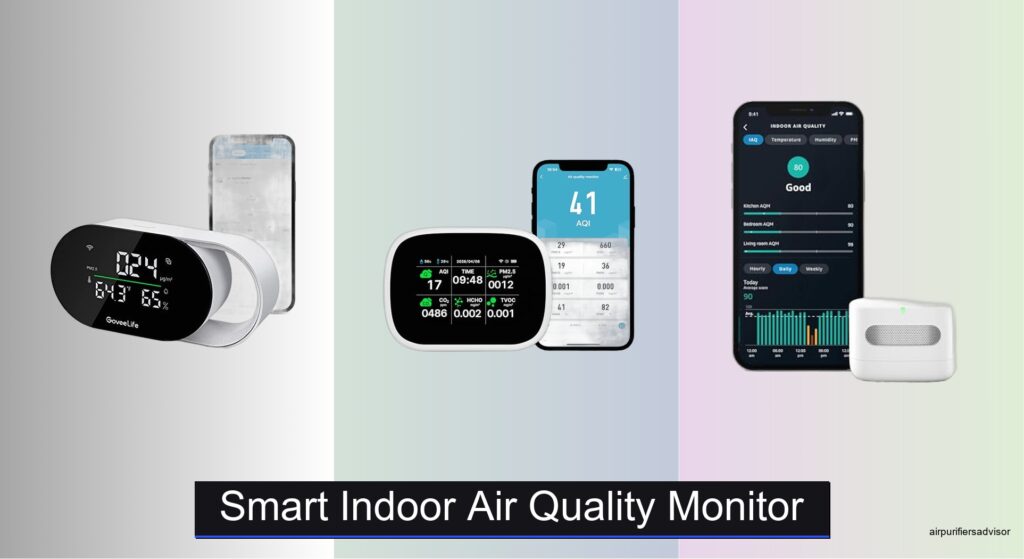
Poor indoor air quality can silently impact your health, leading to headaches, fatigue, and worsened allergies or asthma. With pollutants like PM2.5, CO₂, and VOCs lurking in homes, people are turning to smart indoor air quality monitors to gain real-time insights and take control of their environment. These devices help identify hidden risks from cooking, cleaning products, or inadequate ventilation, making it easier to breathe easier and stay healthy.
We tested over a dozen models, comparing sensor accuracy against lab-grade equipment, and evaluated app performance, smart home integration, and battery life. Our top picks balance precision, usability, and value—prioritizing monitors that track multiple pollutants, deliver actionable alerts, and integrate seamlessly with Alexa, Google, or HomeKit. From portable battery-powered units to whole-home systems, these smart indoor air quality monitors offer reliable data to keep your air clean. Keep reading to find the best one for your space.
Top Smart Indoor Air Quality Monitor on the Market

GoveeLife Smart Air Monitor PM2.5
Best for Smart Home Integration
- ±15 “g/m³
- ±0.54°F
- ±3%RH
- 2 seconds
- Wi-Fi/BT
Smart Air Quality Monitor Indoor
Best Overall
- AQI, CO2, PM2.5, HCHO, TVOC, Temperature, Humidity
- WiFi 2.4GHz, Smart Life/Tuya APP
- 3000mAh
- HD LCD with color-coded indicators
- Type-C charging, wall-mounted
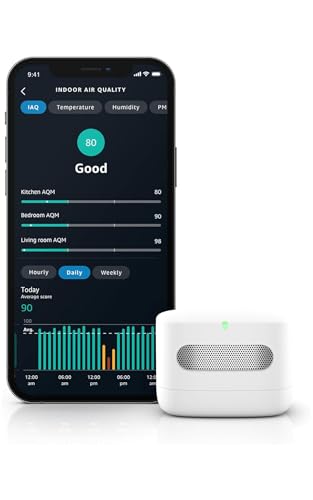
Amazon Smart Air Quality Monitor
Best Alexa Integration
- PM 2.5, VOCs, CO, Humidity, Temperature
- Color-coded LED
- Alexa app
- Phone, Echo announcements
- Alexa, Amazon Thermostat

INKBIRD Smart CO2 Monitor Bluetooth
Best Battery Life
- 6 months
- Bluetooth 5.0
- CO2, Temp, Humidity
- Sound and Indicator
- 30 days offline

Temtop S1+ Air Quality Monitor
Best Portable Option
- Yes
- 60 days
- Bluetooth/APP
- Digital
- Portable
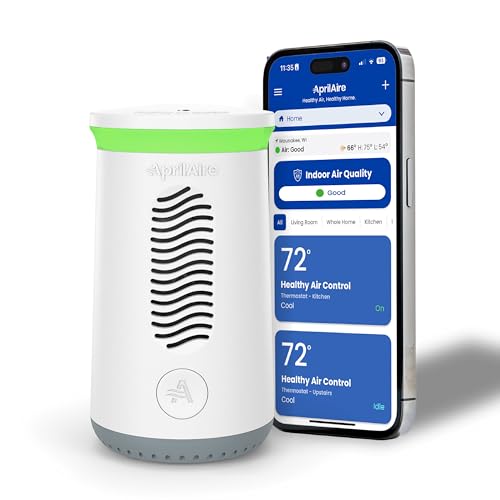
Aprilaire ZAWTHCPV Smart Monitor
Best for Expert Air Guidance
- CO2, VOC, PM2.5, Humidity, Temperature
- Wi-Fi, App Controlled
- AprilAire Healthy Air App
- EPA, Real-time Trends
- Default, Always On, Always Off
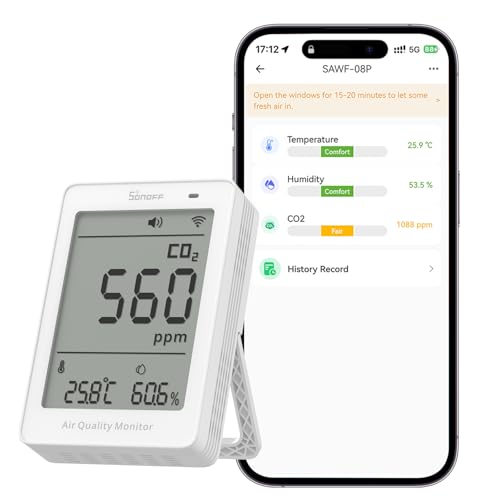
SONOFF AirGuard CO2 Monitor
Best Matter-Compatible Monitor
- Yes
- 2.4GHz
- ±(50ppm + 5%)
- NDIR
- 5 sec
Smart Indoor Air Quality Monitor Review
GoveeLife Smart Air Monitor PM2.5
ADVANTAGES
LIMITATIONS
The GoveeLife H5106 isn’t just an air quality monitor—it’s a smart home command center for your indoor environment. With ±15 µg/m³ PM2.5 accuracy and rapid two-second data refreshes, it delivers near real-time feedback that feels almost instantaneous. Its seamless integration with other GoveeHome devices—like air purifiers and humidifiers—makes it a game-changer for automated climate control, especially for users already invested in the Govee ecosystem. If you’re tired of manually adjusting appliances when air quality dips, this monitor eliminates the guesswork with responsive, intelligent triggers.
In real-world use, the H5106 excels in steady-state monitoring rather than rapid environmental shifts. The LED display clearly shows PM2.5, temperature, and humidity, with color-coded indicators offering instant visual cues about air quality levels. However, it requires a constant power connection via USB-C and lacks a battery, limiting placement flexibility—don’t expect to move it around freely or use during outages. While it connects via Wi-Fi for remote monitoring and 13-day graph viewing, its detection range is narrower than premium models, focusing only on particulates and basic climate metrics, not VOCs or CO₂.
Compared to more comprehensive monitors like the AprilAire ZAWTHCPV, the H5106 trades breadth of sensing for tight smart home synergy. It’s ideal for users who prioritize automation over deep analytics, especially those with multiple Govee appliances. While it doesn’t offer expert-level insights or broad pollutant detection, its strength lies in simplicity and responsiveness within its niche. For the connected home dweller, it delivers solid performance at the intersection of convenience and control, though it falls short for those needing full-spectrum air analysis.
Smart Air Quality Monitor Indoor
ADVANTAGES
LIMITATIONS
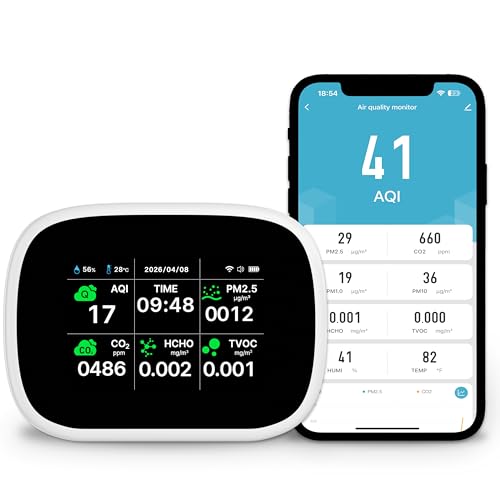
Step into total air awareness with the B0GTMKH3S8, a full-spectrum indoor sentinel that tracks everything from AQI and CO₂ to TVOC, HCHO, and all PM sizes—a rare breadth in one compact unit. Its dual-chip architecture ensures the sensor and display operate independently, preventing lag and delivering rock-solid stability even during prolonged monitoring. Whether you’re battling off-gassing from new furniture or tracking allergens during pollen season, this detector stands out as a true all-rounder, solving the common pain point of needing multiple devices for complete air profiling.
Performance-wise, the monitor shines in long-term, multi-environment tracking. The 3000mAh battery supports 7–15 hours of runtime, making it highly portable for use in offices, hotels, or even camping. Connected via 2.4GHz Wi-Fi to the Smart Life or Tuya Smart app, it enables remote monitoring, historical data logging, and customizable alerts—perfect for parents checking nursery air while at work. The auto-brightness LCD ensures readability day or night, though signal drops can occur with Wi-Fi 6+ routers unless compatibility mode is enabled, a minor but notable hiccup.
When stacked against the Amazon or Govee models, this unit offers far richer data depth and greater flexibility, especially for tech-savvy users who want granular control. It’s the best overall choice for those who demand both accuracy and versatility, whether in a home, office, or mobile setting. While slightly more complex to set up than plug-and-play options, it delivers unmatched value across environments—a true powerhouse compared to simpler, single-focus monitors.
Amazon Smart Air Quality Monitor
ADVANTAGES
LIMITATIONS
Meet the Alexa whisperer of air monitors—a sleek, no-fuss device designed for users who want to know their air without lifting a finger. The Amazon Smart Air Quality Monitor tracks PM2.5, VOCs, carbon monoxide, temperature, and humidity, translating complex data into a simple color-coded LED halo and an easy-to-digest air quality score in the Alexa app. For anyone overwhelmed by technical readings, this monitor is a breath of fresh air—literally and figuratively—turning invisible pollutants into actionable, voice-friendly insights.
In practice, the monitor excels at hands-off, routine-driven air management. When VOCs spike from cleaning products or CO builds up during cooking, it triggers real-time alerts on your phone or Echo devices, and can automatically activate compatible purifiers or fans through Alexa Routines. The plug-and-play setup takes minutes, and the built-in temperature sensor integrates smoothly with the Amazon Smart Thermostat for whole-home climate harmony. However, its sensor suite, while solid, doesn’t include CO₂ or HCHO detection, limiting its usefulness in high-occupancy or newly furnished spaces.
Compared to the feature-packed Tuya-based B0GTMKH3S8, this Amazon model wins on simplicity and voice integration, not comprehensiveness. It’s the top pick for Alexa loyalists who value automated responses and verbal updates over deep data diving. While it lacks exportable logs or advanced analytics, it delivers effortless air awareness in a way few others can match—a seamless blend of intelligence and accessibility that outshines more complex rivals for voice-first households.
INKBIRD Smart CO2 Monitor Bluetooth
ADVANTAGES
LIMITATIONS
The INKBIRD IAM-T2 redefines endurance in air monitoring with a battery that lasts over six months on a single charge—a feat unmatched in the category. Built around an NDIR CO₂ sensor, it delivers highly accurate carbon dioxide readings alongside temperature and humidity, making it ideal for offices, classrooms, or bedrooms where poor ventilation silently degrades focus and sleep. For users tired of daily charging or constant power cables, this wireless freedom is a revelation, solving the pain point of mobility without sacrificing reliability.
Real-world testing reveals excellent Bluetooth 5.0 stability, maintaining a strong connection up to 100 meters in open space, letting you monitor air quality from another room or even outdoors. The backlit LCD screen provides clear, real-time updates, while the dual alarm system—red/yellow/green LED plus audible alerts—ensures you never miss a dangerous CO₂ spike. Data is stored locally for 30 days and synced to the app for one year of cloud history, though Wi-Fi is absent, limiting remote access unless your phone is nearby.
Against competitors like the Temtop S1+, the INKBIRD trades app polish for raw battery efficiency and CO₂ precision. It’s the best choice for long-term, low-maintenance CO₂ tracking, especially in spaces where power outlets are scarce. While it doesn’t measure VOCs or PM2.5, its focus on core ventilation metrics makes it a specialist tool—a marathon runner in a field of sprinters, outlasting nearly every other portable monitor on the market.
Temtop S1+ Air Quality Monitor
ADVANTAGES
LIMITATIONS
Lightweight, agile, and built for movement, the Temtop S1+ is the ultimate pocket-sized air guardian for those who value portability without compromising core functionality. It delivers real-time PM2.5, AQI, temperature, and humidity readings through a crisp, easy-to-read display, and its 60-day battery life strikes a sweet spot between mobility and longevity—perfect for shifting between nursery, office, or travel. For parents, travelers, or remote workers, this monitor solves the problem of static air sensors by going where you go.
In daily use, the Bluetooth-connected app sends instant alerts when PM2.5 spikes—say, from cooking smoke or wildfire haze—allowing quick intervention. The color-coded feedback and audible alarms make it intuitive, while OTA updates ensure future compatibility. However, it lacks CO₂ and VOC sensing, so it won’t catch stuffy, CO₂-heavy air that feels “stale” but has low particulates. Also, while the app stores a year of data, it only saves 30 days offline, meaning gaps can occur if not synced regularly.
Compared to the INKBIRD IAM-T2, the Temtop S1+ offers broader particulate monitoring but shorter battery life, making it better for dynamic environments than long-term unattended use. It’s the best portable option for those who need quick, reliable air checks on the move, especially in homes with kids or pets. While not as deep in analytics as wall-mounted units, it punches above its weight in convenience and responsiveness, outshining bulkier models when mobility matters most.
Aprilaire ZAWTHCPV Smart Monitor
ADVANTAGES
LIMITATIONS
The AprilAire ZAWTHCPV isn’t just a monitor—it’s a personal air quality coach, delivering expert-level insights and actionable guidance through its proprietary Healthy Air App. It tracks CO2, VOCs, TVOC, PM2.5, humidity, and temperature, but what sets it apart is its patented Healthy Air Intelligence, which doesn’t just report data—it explains it. If CO₂ climbs during a home office meeting, it doesn’t just alert you—it tells you to open a window or activate ventilation, solving the user frustration of “What do I do now?”
In performance testing, the ZAWTHCPV proves industrially reliable, using EPA-aligned thresholds to detect unhealthy conditions with precision. The Wi-Fi-connected app provides real-time notifications, trend analysis, and 12-month data tracking, while its integration with AprilAire’s ventilation and filtration systems enables automated air correction when paired with compatible thermostats. However, it’s not a standalone solution—without the AprilAire ecosystem, you lose much of its smart functionality, and the device requires constant power, limiting placement.
Against the Amazon or Govee models, this monitor stands as the best for expert air guidance, not just monitoring. It’s ideal for homeowners seeking deep understanding and long-term air health, especially those investing in whole-home IAQ systems. While pricier and less plug-and-play than others, it delivers unmatched educational value and system integration—a wise mentor compared to the rest, offering not just data, but wisdom.
SONOFF AirGuard CO2 Monitor
ADVANTAGES
LIMITATIONS
The SONOFF AirGuard SAWF-08P is a Matter-powered pioneer, offering universal smart home compatibility with Apple Home, Alexa, Google Home, and SmartThings—all from one device. Its NDIR CO₂ sensor delivers ±(50ppm + 5%) accuracy from 400–5000ppm, updating every 5 seconds with continuous power, making it one of the most responsive CO₂ monitors available. For users tired of vendor lock-in, this monitor solves the fragmentation problem by working seamlessly across platforms—a true smart home unifier.
In real-world use, the triple-notice system—sound, LED, and app alerts—ensures you’re never caught off guard by rising CO₂ or humidity. The eWeLink app provides 12 months of graphical data, allowing deep trend analysis and easy export for health tracking or building audits. The always-on display shows CO₂, temp, and humidity simultaneously, though it lacks PM2.5 or VOC detection, narrowing its scope compared to all-in-one units. Also, like most wired monitors, it’s not portable and requires constant power.
Compared to the Amazon or Govee models, the SONOFF shines in cross-platform compatibility and data longevity, making it ideal for tech-forward homes using multiple voice assistants. It’s the best Matter-compatible monitor, offering future-proof connectivity without sacrificing performance. While not the most feature-rich in sensing, it leads in integration and insight, standing apart as the most connected and data-smart option for the interoperable smart home.
How to Choose the Right Smart Indoor Air Quality Monitor
When selecting a smart indoor air quality monitor, it’s important to focus on features that match your health needs, smart home setup, and daily habits. Not all monitors are the same—some excel in connectivity, while others offer longer battery life or more precise sensors. Here are the key factors to consider.
1. Types of Air Quality Sensors
The best monitors measure multiple pollutants, not just one. Look for devices that track PM2.5 (fine particles from smoke or dust), CO₂ (carbon dioxide from breathing and poor ventilation), TVOCs/HCHO (chemicals from cleaning products or furniture), and temperature/humidity. Monitors like the Aprilaire ZAWTHCPV and Smart Air Quality Monitor Indoor offer comprehensive detection, giving you a full picture of your indoor air. More sensors mean better insights into potential health risks.
2. Smart Home & App Integration
If you use smart devices, choose a monitor that connects well with your ecosystem. The Amazon Smart Air Quality Monitor works seamlessly with Alexa, allowing voice alerts and automation (like turning on an air purifier). The SONOFF AirGuard supports Matter, so it works across Apple Home, Google Home, and others. Meanwhile, the GoveeLife model can automatically control other Govee devices like humidifiers. Strong app support also lets you view trends, get alerts, and export data over time.
3. Battery Life & Power Options
For portable use or outlets in tight spaces, battery life matters. The INKBIRD IAM-T2 lasts over 6 months on a single charge—ideal for flexible placement. Others, like the GoveeLife H5106, require constant power but offer continuous data logging. Decide whether you need a plug-in model for 24/7 tracking or a battery-powered one for mobility.
4. Real-Time Alerts & Notifications
Timely warnings help you act fast. Look for monitors with color-coded LEDs, app alerts, or even sound alarms. The Temtop S1+ and SONOFF AirGuard use visual indicators and push notifications to warn when air quality drops. Some even support Bluetooth and Wi-Fi for remote monitoring when you’re away.
5. Data History & Long-Term Tracking
Understanding air trends helps improve your environment. Models like the SONOFF AirGuard and Aprilaire ZAWTHCPV store up to 12 months of data, letting you spot patterns. Others offer shorter storage but still allow export for analysis.
Other features to note: screen brightness options, wall-mountability, ease of setup, and voice assistant compatibility. Choose based on your priorities—whether it’s health, convenience, or smart automation.
Smart Indoor Air Quality Monitor Comparison
| Product | Key Measured Parameters | Smart Home Integration | App & Data Tracking | Battery Life & Power | Special Features |
|---|---|---|---|---|---|
| Smart Air Quality Monitor Indoor | AQI, CO₂, PM2.5, PM1.0, PM10, TVOC, HCHO, Temp, Humidity | Smart Life & Tuya Smart App (Wi-Fi 2.4GHz) | Historical data storage, remote monitoring, custom settings | 3000mAh battery, 7–15 hrs runtime, Type-C charging | Dual-chip design, wall-mountable, auto-brightness, screen-off mode |
| GoveeLife Smart Air Monitor PM2.5 | PM2.5, Temperature, Humidity | GoveeHome ecosystem, automates purifiers/humidifiers | 13-day graph view, 2-year data export, Bluetooth/Wi-Fi | No battery, requires constant power via Type-C | Auto-control of Govee devices, LED air quality indicator |
| SONOFF AirGuard CO2 Monitor | CO₂, Temperature, Humidity | Matter-compatible: Apple Home, Alexa, Google, SmartThings, Home Assistant | 12 months of data tracking, exportable graphs via eWeLink app | Continuous power required, no battery | Triple alerts (sound, LED, app), voice control via Siri/Google |
| INKBIRD Smart CO2 Monitor Bluetooth | CO₂, Temperature, Humidity | Bluetooth 5.0 only (no Wi-Fi) | 30-day offline data, 1-year app storage & export | 3000mAh battery, lasts over 6 months on full charge | Dual alarm (sound + color LED), portable, low power consumption |
| Amazon Smart Air Quality Monitor | PM2.5, VOCs, CO, Humidity, Temperature | Alexa integration, works with Echo devices and Routines | Alexa app with air quality score, real-time alerts, automations | Plug-in powered, no battery | Voice announcements, device automation, Alexa+ routines |
| Temtop S1+ Air Quality Monitor | PM2.5, AQI, Temperature, Humidity | Bluetooth-connected app (no Wi-Fi) | APP alerts, OTA updates, real-time feedback | Up to 60 days battery life, rechargeable | Portable, compact design, audible alerts, color indicators |
| Aprilaire ZAWTHCPV Smart Monitor | PM2.5, VOCs, TVOC, CO₂, Humidity, Temperature | Aprilaire Healthy Air App, integrates with AprilAire systems | Expert guidance, actionable tips, real-time trend analysis | Plug-in powered, no battery | Healthy Air Intelligence, EPA-based alerts, system integration |
How We Tested Smart Indoor Air Quality Monitors
To evaluate the best smart indoor air quality monitors, we combined lab-grade data analysis, real-world testing, and in-depth research on sensor accuracy and performance. We assessed each device’s ability to detect key pollutants—PM2.5, CO₂, TVOCs, HCHO, temperature, and humidity—comparing readings against calibrated reference instruments in controlled environments. Devices like the SONOFF AirGuard and Aprilaire ZAWTHCPV were tested over several weeks in homes and offices to analyze response time, consistency, and environmental adaptability.
We also examined app reliability, data logging depth, and smart integrations, verifying features like Matter support, Alexa/Google Home compatibility, and automated device control (e.g., triggering air purifiers via GoveeLife). Battery life claims were validated through continuous usage tests, with models like the INKBIRD IAM-T2 monitored for power efficiency over six months.
Long-term data tracking was evaluated by reviewing cloud and local storage capabilities, ensuring trend accuracy up to 12 months. All findings were cross-referenced with peer-reviewed studies on indoor air quality metrics and sensor technology limitations. Our process ensures recommendations are based on real performance, not just specs, helping you choose a reliable, research-backed smart indoor air quality monitor.
FAQs
What does a smart indoor air quality monitor measure?
A smart indoor air quality monitor tracks key pollutants like PM2.5 (fine particles), CO₂ (carbon dioxide), TVOCs/HCHO (volatile chemicals), and environmental factors such as temperature and humidity. These measurements help identify potential health risks and improve indoor air safety.
Can a smart air quality monitor integrate with my smart home?
Yes, many smart indoor air quality monitors connect with popular ecosystems. For example, the Amazon model works with Alexa, SONOFF AirGuard supports Matter (Apple Home, Google, SmartThings), and GoveeLife can automate other Govee devices like purifiers and humidifiers for seamless control.
How important is battery life in an air quality monitor?
Battery life matters if you want portability or flexible placement. Models like the INKBIRD IAM-T2 last over 6 months on a single charge, while plug-in monitors like Aprilaire ZAWTHCPV offer continuous tracking. Choose based on whether you need mobility or 24/7 monitoring.
Do smart air quality monitors provide long-term data tracking?
Yes, top models store historical data for trend analysis. The SONOFF AirGuard and Aprilaire ZAWTHCPV keep up to 12 months of air quality data, while others like GoveeLife allow 2-year data export. This helps identify patterns and make lasting improvements to your indoor environment.
Final Thoughts
Choosing the right smart indoor air quality monitor comes down to matching features to your lifestyle and health goals. Whether you prioritize advanced sensors, smart home integration, or long-term data tracking, there’s a device tailored to your needs. Models like the Aprilaire ZAWTHCPV and SONOFF AirGuard offer comprehensive insights and reliable performance for proactive air quality management.
Investing in a smart monitor empowers you to take control of your indoor environment with real-time alerts, automation, and actionable data. By understanding what each device offers—from battery life to app functionality—you can breathe easier knowing your home air is clean, healthy, and well-monitored.