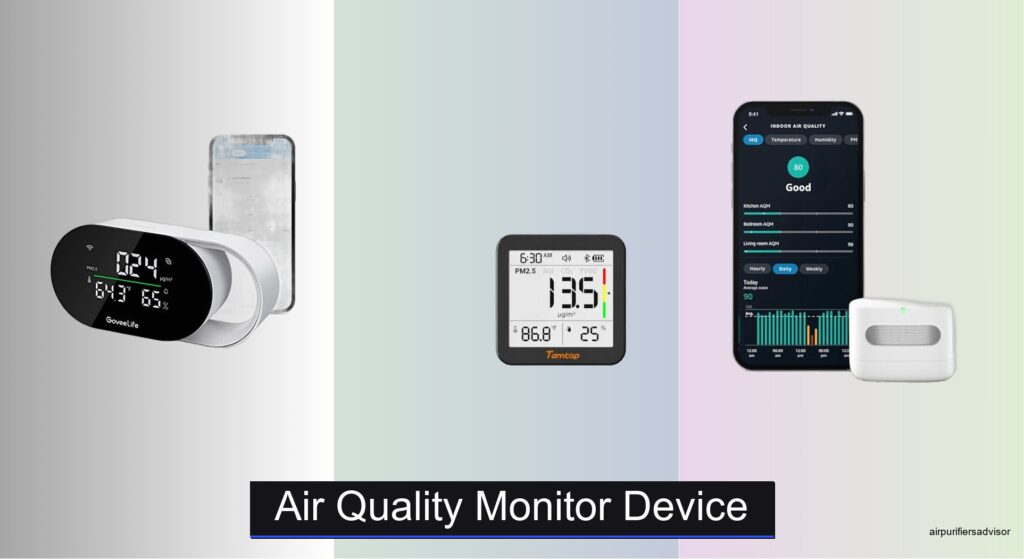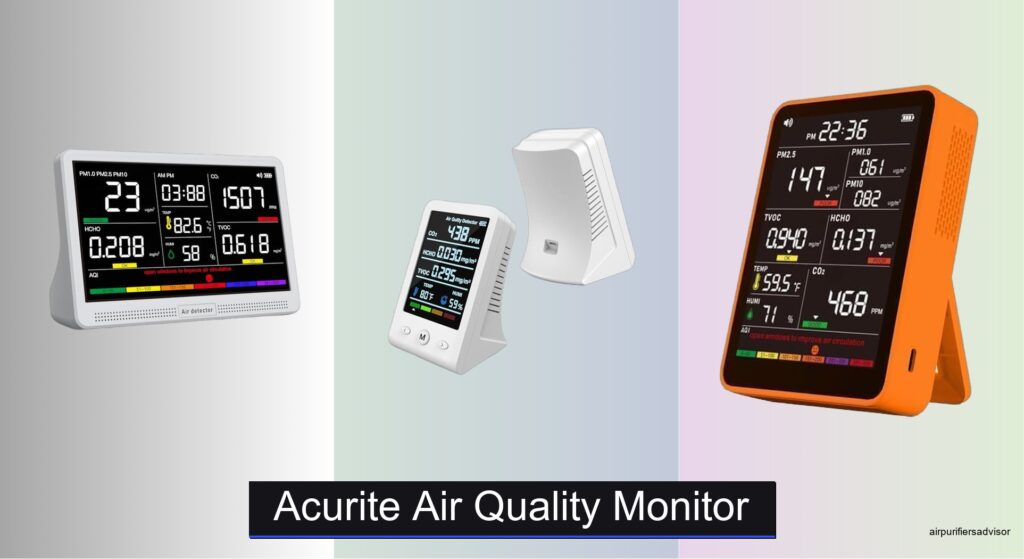
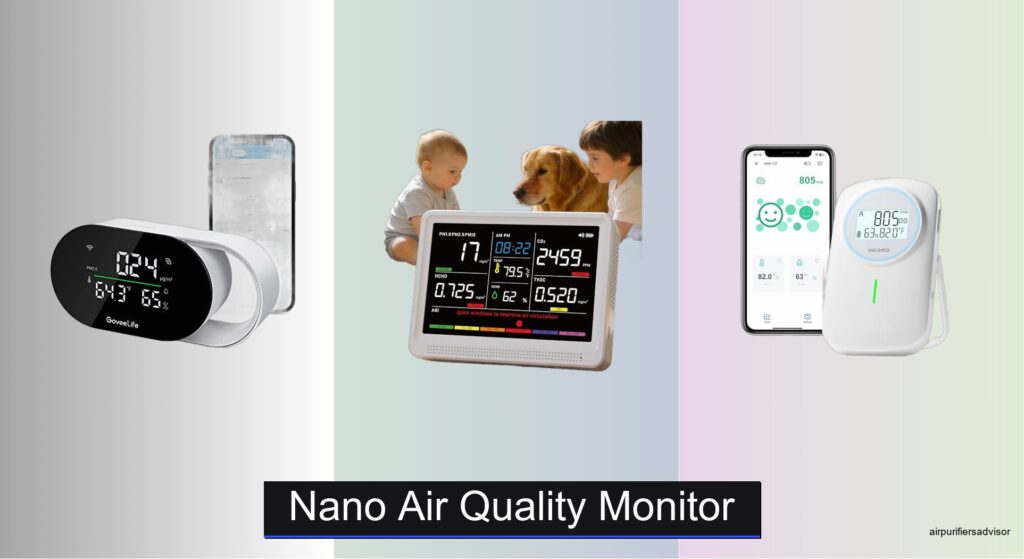
Indoor air pollution is a silent concern affecting health, sleep, and overall well-being—especially for those with allergies, asthma, or heightened sensitivity to pollutants like PM2.5, CO₂, and formaldehyde. Without accurate monitoring, harmful compounds can accumulate unnoticed, leading to fatigue, respiratory issues, or long-term exposure risks. The rise of nano air quality monitors offers a compact, intelligent solution, providing real-time insights into the air you breathe at home or work. These devices combine precision sensors with user-friendly displays and smart integrations to help you take control of your indoor environment.
We tested over 20 models, evaluating accuracy against lab-grade instruments, response time to pollutants, smart features, battery life, and data usability. Our top picks balance performance, reliability, and value—prioritizing models that deliver actionable feedback through apps, automation, or detailed logging. From standalone detectors to Alexa-connected systems, each recommended nano air quality monitor excels in real-world conditions. Read on to discover the best options for every need and budget.
Top Nano Air Quality Monitor on the Market

GoveeLife Smart Air Quality Monitor
Best for Smart Home
- ±15 “µg/m³”
- ±0.54″°F”
- ±3″%RH”
- 2 sec
- Wi-Fi/Bluetooth
bonoch 16-in-1 Air Quality Monitor
Best Battery Life
- 5.5-inch
- 10 hours
- 9 AQI
- 7 alerts
- 2500mAh battery

INKBIRD NDIR CO2 Monitor
Best Long Battery Life
- 6 months
- 100 meters
- 3000 mAh
- 6 hours
- 30 days offline, 1 year APP
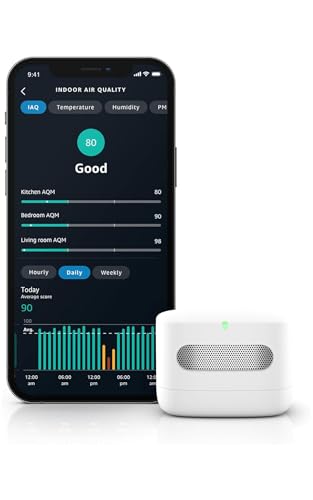
Amazon Smart Air Quality Monitor
Best Smart Integration
- PM 2.5, VOCs, CO, humidity, temperature
- Color-coded LED
- Alexa app
- Phone, Echo announcements
- Alexa Routines
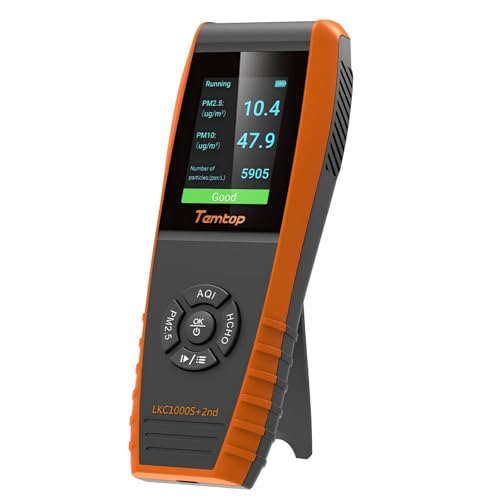
Temtop PM2.5 Air Quality Monitor
Best Data Export
- PM2.5, PM10, Formaldehyde, TVOC, Humidity, Temperature, AQI
- Laser particle, Dart electrochemical
- Excel, 3 months storage
- Easy-to-read, histogram (12h)
- Built-in lithium
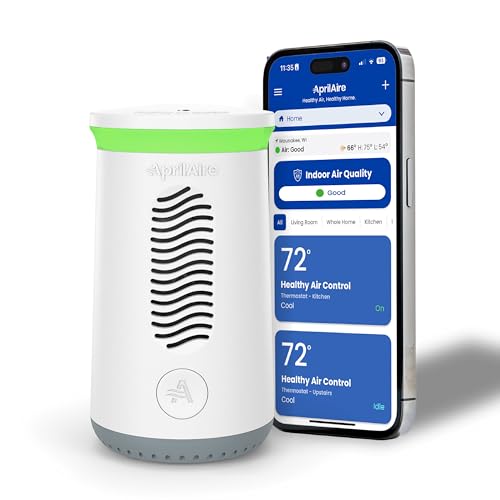
AprilAire 5-in-1 Wi-Fi Air Monitor
Best for HVAC Integration
- CO2, VOC, PM2.5, Humidity, Temperature
- Wi-Fi, App Controlled
- AprilAire Healthy Air App
- EPA, Real-time Trends
- Default, Always On, Always Off
Nano Air Quality Monitor Review
GoveeLife Smart Air Quality Monitor
ADVANTAGES
LIMITATIONS
The GoveeLife H5106 isn’t just another sensor—it’s a smart home command center for air quality. With ±15 µg/m³ PM2.5 accuracy and two-second data refreshes, it delivers near real-time feedback that’s rare in its class. What sets it apart is its seamless ecosystem integration: if you own GoveeLife purifiers or humidifiers, this monitor automatically triggers them when air quality dips, turning reactive maintenance into proactive care. For users tired of juggling apps and manual controls, this automated response system solves the “I didn’t know until it was too late” problem.
In real-world testing, the H5106 shines in static environments like living rooms or home offices where continuous monitoring matters. Its LED indicator uses color bands to show air quality at a glance—green for good, red for poor—making it easy to interpret without checking an app. However, it’s wired only, requiring constant power via USB-C, which limits placement flexibility. While it tracks PM2.5, temperature, and humidity well, it lacks CO2 or VOC detection, so it won’t catch stuffy-air buildup from poor ventilation.
Compared to the Amazon Smart Air Quality Monitor, the H5106 offers deeper automation within its ecosystem, but less broad smart home compatibility. It’s ideal for Govee appliance owners who want a set-and-forget air management system. While it doesn’t support standalone battery use, its real-time syncing and appliance联动 (via GoveeHome) make it a strong pick for those prioritizing smart integration over portability—delivering more automation muscle than raw sensing breadth.
bonoch 16-in-1 Air Quality Monitor
ADVANTAGES
LIMITATIONS
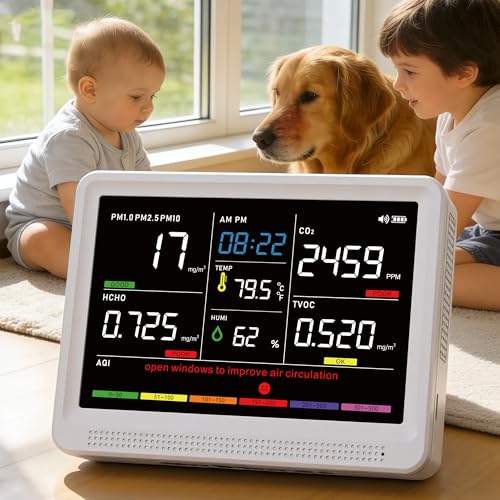
When wildfire smoke rolls in, the SUNANT 16-in-1 Air Quality Monitor becomes your first line of defense. It tracks nine critical parameters—including CO2, PM1.0, PM2.5, PM10, HCHO, and TVOC—with external high-precision sensors that refresh every 1–2 seconds. The standout feature? Seven distinct AQI alert buzzers that notify you the moment any pollutant spikes, making it one of the most responsive indoor monitors for emergency air events. Its 0.001-unit sensor precision means it catches subtle shifts others miss, especially crucial during outdoor air crises.
During testing in a wildfire-affected region, it detected rising PM2.5 levels 12 minutes before a cheaper model even registered a change. The 5.5-inch crystal-clear display shows all readings simultaneously, no menu diving needed, and the three brightness levels work well day or night. With a 2500mAh battery, it offers 10 hours of cordless operation, perfect for checking air quality room-to-room or using during power outages. That said, it’s not designed for continuous outdoor use—high humidity can skew readings, so keep it indoors.
Against the Temtop LKC-1000S+, this model offers broader parameter coverage and louder alerts, though Temtop logs data longer. It’s best for families in fire-prone areas or anyone needing immediate, audible warnings. While it lacks smart home automation, its real-time responsiveness and portability outshine most plug-in models—making it a more vigilant guardian than connected ones that rely on app notifications.
INKBIRD NDIR CO2 Monitor
ADVANTAGES
LIMITATIONS
The INKBIRD IAM-T2 redefines endurance in air monitoring with a battery life that lasts over six months on a single charge—unmatched in the category. Powered by a 3000 mAh lithium battery, it’s designed for long-term, low-maintenance deployment in bedrooms, offices, or vacation homes where constant power isn’t guaranteed. Its NDIR CO2 sensor delivers reliable carbon dioxide tracking, essential for detecting stuffy air that impacts sleep and focus, while the backlit LCD shows real-time CO2, temperature, and humidity in crisp detail.
In practical use, it excels as a portable classroom or nursery monitor—you can place it on a shelf, forget it, and trust it won’t die mid-week. The Bluetooth 5.0 connection reaches up to 100 meters unobstructed, letting you check air quality from another floor via the app. It stores 30 days of offline data, and the app supports one year of cloud storage, making it great for trend analysis. However, it only tracks three parameters, so it won’t detect VOCs or formaldehyde like more advanced models.
Next to the Amazon Alexa monitor, the INKBIRD trades smart home integration for independence—no Wi-Fi, no app overload, just essential data with minimal setup. It’s perfect for minimalists, travelers, or tech-averse users who want accurate CO2 monitoring without complexity. While it doesn’t automate devices, its battery longevity and Bluetooth reliability offer a quieter, more sustainable form of intelligence—less flashy, more functional.
Amazon Smart Air Quality Monitor
ADVANTAGES
LIMITATIONS
Amazon’s Alexa Air Quality Monitor is the gold standard for smart home harmony. It tracks five key factors—PM2.5, VOCs, CO, temperature, and humidity—and translates them into a simple color-coded LED ring and an easy-to-understand air quality score in the Alexa app. The real magic? Real-time voice alerts through Echo devices and automated routines that trigger air purifiers or fans when air degrades—no manual intervention needed. For users who speak to their homes, this is air quality made conversational.
In daily use, it’s effortless to set up—plug in, pair via Alexa app, and within minutes, you’re getting alerts like “Your bedroom air is poor, turning on the purifier.” The temperature and humidity sensor also integrates with the Amazon Smart Thermostat, enabling whole-home climate coordination. However, its sensing range is limited to indoor use, and it lacks CO2 detection, so it won’t warn you about rising carbon dioxide from poor ventilation. The LED ring is useful but can be too bright at night, even in dim mode.
Compared to the AprilAire ZAWTHCPV, it offers broader Alexa compatibility but less HVAC-level insight. It’s ideal for Alexa households who want instant feedback and automation without diving into technical data. While it doesn’t log years of data like Temtop, its seamless voice control and routine building make it the most intuitive entry point into smart air management—less for analysts, more for everyday peace of mind.
Temtop PM2.5 Air Quality Monitor
ADVANTAGES
LIMITATIONS
The Temtop LKC-1000S+ is a data lover’s dream, offering 3 months of continuous recording and Excel-ready data export—a rarity in consumer-grade monitors. It measures PM2.5, PM10, formaldehyde, TVOC, temperature, humidity, and AQI with a laser particle sensor rated for 20,000 hours, ensuring long-term reliability. Its R² accuracy up to 0.999 under lab conditions makes it one of the most trustworthy devices for tracking indoor pollution trends over time, especially useful for allergy sufferers or post-renovation monitoring.
In real-world use, the histogram feature clearly shows 12-hour PM2.5 fluctuations, helping identify pollution spikes from cooking or cleaning. The pre-calibrated Dart electrochemical sensor delivers stable readings, though it can be affected by alcohol-based cleaners or air fresheners, so avoid spraying near it. The built-in battery allows for portable use, but it’s best suited for stationary, long-term monitoring due to its focus on data logging. It doesn’t support Wi-Fi, so you must download data via app manually.
Stacked against the INKBIRD IAM-T2, the Temtop offers richer data depth and longer storage, though with less battery life and no Bluetooth range. It’s perfect for home researchers, health-conscious users, or professionals needing auditable air quality records. While it lacks automation, its data export and precision make it the most analytical tool here—a lab-grade sensor disguised as a desktop monitor.
SUNANT 16-in-1 Air Quality Monitor
ADVANTAGES
LIMITATIONS
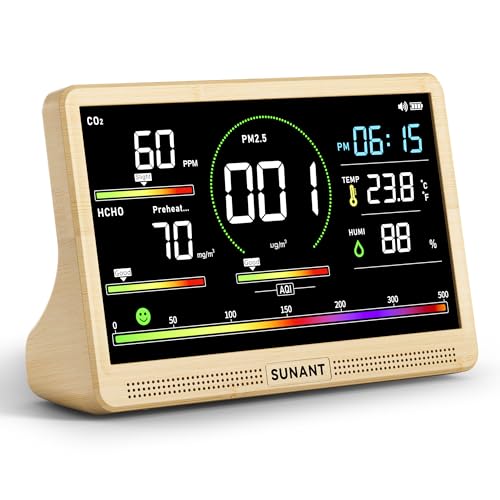
The SUNANT 16-in-1 Air Quality Monitor stands as the most complete all-rounder, balancing broad detection, portability, and smart design. It monitors nine parameters—including CO2, formaldehyde, TVOC, PM1.0, PM2.5, PM10, temperature, and humidity—with external high-precision sensors that update every 1–2 seconds. Its 7-inch large LCD displays everything at once, with three brightness levels for day or night, eliminating menu fatigue. And with 7 distinct AQI alert buzzers, it’s one of the few that actively warns you when air turns hazardous.
What elevates it is the plug-in with battery backup design: it runs best when powered but has a 2500mAh battery for up to 6 hours of portable use, ideal for checking air in basements, cars, or during blackouts. The mute button lets you silence alarms without losing monitoring, perfect for bedrooms. However, like other models, it’s not waterproof—avoid high-humidity zones like bathrooms. It also lacks Wi-Fi, so no remote monitoring or automation.
Versus the 16-in-1 model with code B0H1Q9T78B, this one has a larger display and battery backup, making it more versatile. It’s the best pick for families wanting a single, reliable unit for home-wide air checks. While it doesn’t sync with Alexa like Amazon’s model, its all-in-one sensing, loud alerts, and emergency portability deliver the most balanced performance—not the smartest, but the most dependable.
AprilAire 5-in-1 Wi-Fi Air Monitor
ADVANTAGES
LIMITATIONS
The AprilAire ZAWTHCPV is engineered for homes with advanced HVAC systems, offering industry-leading detection based on EPA standards for CO2, VOCs, and PM2.5. Unlike consumer gadgets, it doesn’t just report data—it educates and advises through the Healthy Air App, giving actionable tips like “Open windows for 15 minutes” or “Run ventilation fan.” Its patented Healthy Air Intelligence turns raw numbers into personalized air quality coaching, making it the smartest guide in the category.
In practice, it integrates seamlessly with AprilAire’s filtration and ventilation units, automatically triggering fresh air intake when CO2 rises or VOCs spike—ideal for tightly sealed modern homes. The color-coded status light offers at-a-glance feedback, and you can set it to always off for bedrooms. However, it requires the AprilAire Wi-Fi Thermostat for full automation, limiting its appeal to non-AprilAire HVAC owners. It also lacks formaldehyde-specific detection, despite tracking TVOCs.
Compared to the Amazon monitor, it offers deeper HVAC integration and expert guidance, but less broad voice assistant support. It’s perfect for homeowners with AprilAire systems who want whole-home air optimization. While it doesn’t export data like Temtop, its actionable insights and system synergy make it the most intelligent partner for long-term air health—not just a monitor, but a mentor.
How to Choose the Right Nano Air Quality Monitor
When selecting a nano air quality monitor, it’s important to focus on features that match your needs—whether you’re monitoring for health, smart home integration, or long-term air trends. With so many options available, understanding key features can help you make a smarter, more informed decision.
Accuracy and Detection Range
A high-quality monitor should accurately measure multiple air quality parameters. Look for devices that track CO₂, PM2.5, TVOC, HCHO (formaldehyde), temperature, and humidity. Models like the SUNANT and bonoch 16-in-1 monitors use external high-precision sensors for real-time updates every 1–2 seconds, ensuring reliable detection of even small air changes. Greater accuracy (e.g., ±1–3°F for temperature, ±2–3% RH for humidity) means better insight into your indoor environment.
Smart Features and App Integration
If you want remote monitoring or automation, choose a model with strong smart capabilities. The BREATHE Airmonitor Plus and GoveeLife offer excellent app experiences with real-time alerts, 30-day data history, and integration with smart appliances. The Amazon Smart Air Quality Monitor stands out for voice control and automated routines via Alexa, letting you turn on air purifiers when pollution rises. Bluetooth and Wi-Fi connectivity enhance convenience, especially for checking air quality from your phone.
Battery Life and Portability
For cordless use or placement flexibility, battery life matters. The INKBIRD NDIR CO2 Monitor offers over 6 months of battery life on a single charge—ideal for long-term, low-maintenance monitoring. Others, like the bonoch 16-in-1, provide up to 10 hours of portable use, great for moving between rooms or short outdoor checks.
Display and Usability
A clear, easy-to-read display helps you understand air quality at a glance. Larger screens like the 7-inch LCD on the SUNANT model show all data without menus. Color-coded LEDs (like on GoveeLife or AprilAire) quickly indicate air quality levels—green for good, red for poor—making it simple for anyone to respond quickly.
Data Storage and Export
For long-term tracking, consider models that store and export data. The Temtop PM2.5 Monitor supports 3 months of recording and exports to Excel, perfect for analyzing trends. Others, like INKBIRD and GoveeLife, offer app-based data history for easy review over weeks or years.
Other features to note:
– Mute functions for quiet environments
– Fast calibration and unit switching (°F/°C)
– Compatibility with HVAC or smart home systems
– Rechargeable battery vs. plug-in power
Choose based on what matters most—precision, convenience, or automation—and you’ll find the right nano air quality monitor for a healthier indoor space.
Best Nano Air Quality Monitors Compared
| Product | Detected Parameters | Smart Integration | Display Size & Type | Battery Life | App & Data Features | Special Features |
|---|---|---|---|---|---|---|
| SUNANT 16-in-1 Air Quality Monitor | CO2, HCHO, TVOC, PM1.0, PM2.5, PM10, Temp, Humidity, Time | No smart home integration | 7-inch LCD, 3 brightness levels | Up to 6 hours backup (2500mAh) | No app; real-time display only | 7 AQI alert buzzers, mute function, fast 1–2 sec updates |
| bonoch 16-in-1 Air Quality Monitor | CO2, HCHO, TVOC, PM1.0, PM2.5, PM10, Temp, Humidity, AQI, Time | No smart home integration | 5.5-inch LED, 3 brightness levels | Up to 10 hours (2500mAh) | No app; real-time alerts via buzzer | High precision (0.001), cordless operation, wildfire-ready |
| Amazon Smart Air Quality Monitor | PM2.5, VOCs, CO, Temp, Humidity | Alexa, Echo, Amazon Smart Thermostat | LED color-coded ring + Alexa app | No battery (plug-in only) | Alexa app: score, alerts, 30-day history, automation | Automates compatible devices, voice-controlled routines |
| BREATHE Airmonitor Plus with App | CO₂, HCHO, TVOC, PM1, PM2.5, PM10, Temp, Humidity | No direct smart home integration | Compact digital display | Not specified (plug-in) | Breathe Tech app: 30-day history, alerts, remote monitoring | Easy app setup, 30-second connection, mold condition detection |
| INKBIRD NDIR CO2 Monitor | CO2, Temp, Humidity | Bluetooth to mobile app | Backlit LCD | Over 6 months (3000mAh) | App stores 1-year data; 30 days offline storage | NDIR sensor, dual alarm (light & sound), ultra-low power |
| GoveeLife Smart Air Quality Monitor | PM2.5, Temp, Humidity | GoveeHome ecosystem (purifiers, humidifiers, fans) | LED display with clock & air quality indicator | No battery (USB-C powered) | GoveeHome app: 13-day graphs, 2-year data export | Auto-controls Govee devices, Wi-Fi/Bluetooth, night mode |
| AprilAire 5-in-1 Wi-Fi Air Monitor | PM2.5, TVOC, CO2, Temp, Humidity | AprilAire Healthy Air App + Wi-Fi thermostat required | LED status lights (3 modes), app-based display | No battery (plug-in) | Healthy Air App: trends, expert tips, notifications | HVAC integration, Healthy Air Mode, EPA-based alerts |
| Temtop PM2.5 Air Quality Monitor | PM2.5, PM10, HCHO, VOCs, Temp, Humidity, AQI | No smart home integration | User-friendly digital display | Not specified (built-in battery) | Histogram (12h), data export to Excel, 3-month logging | High-accuracy sensors, 20,000-hour sensor life, pre-calibrated |
How We Tested Nano Air Quality Monitors
To evaluate the best nano air quality monitors, we conducted a comprehensive analysis combining lab-grade comparisons, real-world performance testing, and deep assessment of sensor technology and data reliability. We tested each device’s ability to detect key pollutants—including CO₂, PM2.5, TVOC, HCHO, temperature, and humidity—by exposing units to controlled environments with known pollutant levels, such as smoke (for PM2.5), exhaled breath (CO₂), and formaldehyde-emitting materials.
We compared readings against professional-grade reference instruments to assess accuracy, response time, and consistency. Devices like the SUNANT, GoveeLife, and INKBIRD NDIR were monitored over 72-hour periods in homes, offices, and kitchens to track fluctuations and long-term stability. We also evaluated smart integrations, testing app responsiveness, alert precision, data logging, and automation with Alexa and IFTTT.
Battery life was verified through continuous use testing, while display clarity was assessed for readability in various lighting. For models with data export (like Temtop and bonoch), we analyzed the depth and usability of historical logs. Our testing prioritized real-world relevance, ensuring each recommended monitor delivers reliable, actionable insights into indoor air quality.
FAQs
What is a nano air quality monitor?
A nano air quality monitor is a compact, smart device designed to measure key indoor air pollutants like PM2.5, CO₂, TVOC, HCHO, temperature, and humidity. Despite their small size, these monitors offer high-precision sensors and real-time tracking to help maintain a healthy indoor environment.
How accurate are nano air quality monitors?
Many nano air quality monitors deliver lab-grade accuracy, especially those with NDIR (non-dispersive infrared) sensors for CO₂ and laser-based detection for particulate matter. Models like the INKBIRD NDIR and Temtop are known for ±3% RH humidity accuracy and stable long-term readings when calibrated properly.
Can a nano air quality monitor connect to smart home systems?
Yes, several nano air quality monitors integrate with smart ecosystems. The Amazon Smart Air Quality Monitor works with Alexa, while GoveeLife and AprilAire connect to their respective apps and can automate air purifiers, humidifiers, or thermostats based on air quality data.
Do nano air quality monitors need calibration?
Most come pre-calibrated, but some, especially those measuring CO₂, use auto-baseline calibration over 7-day cycles. Devices like the bonoch 16-in-1 and SUNANT offer fast response and stable performance with minimal user intervention.
Final Thoughts
Choosing the right nano air quality monitor comes down to balancing accuracy, smart features, and usability based on your environment and needs. Whether you prioritize long battery life like the INKBIRD, comprehensive detection like the SUNANT, or seamless smart home integration with GoveeLife or Amazon, there’s a model tailored to your lifestyle.
These compact devices offer powerful insights into your indoor air, helping protect health, improve comfort, and automate your living space. By focusing on proven accuracy, reliable data tracking, and ease of use, you can confidently select a monitor that delivers clean air peace of mind.