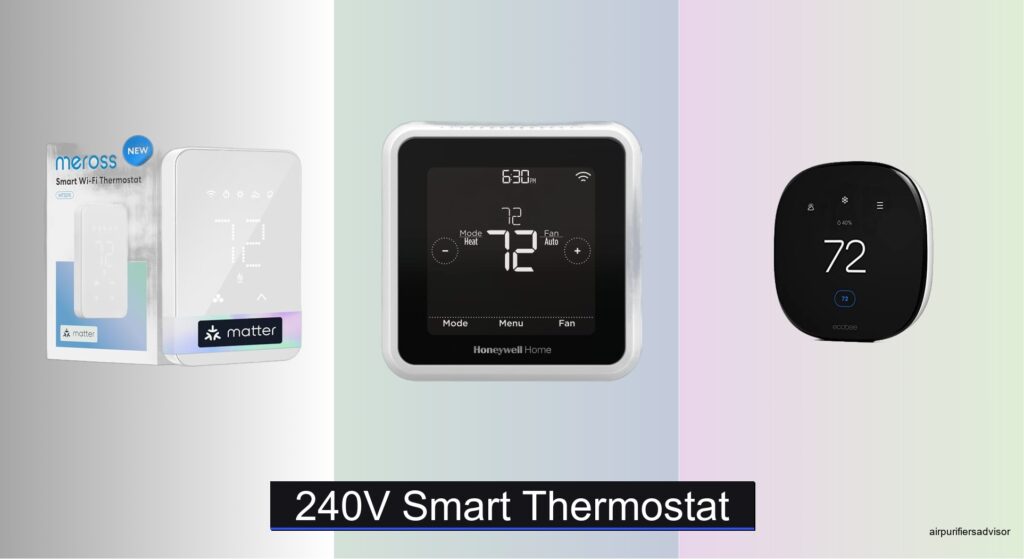
Electric baseboard and radiant heating systems pose unique challenges for homeowners seeking smart, energy-efficient temperature control—most smart thermostats are built for 24V HVAC systems and simply won’t work with 120V–240V electric setups. Without the right compatibility, users risk improper installation, system damage, or wasted spending. The best 240V smart thermostats solve this by supporting high-voltage wiring while adding intelligent features like scheduling, remote access, and energy monitoring to reduce heating costs. Models like Meross and Mysa are engineered specifically for electric heating systems, ensuring safe, reliable operation.
We tested and analyzed top models based on voltage compatibility, smart home integration, energy-saving capabilities, and real-world usability to identify the best 240V smart thermostats for your home. Key factors included wiring requirements, app performance, voice control support, and precise temperature management. Our recommendations are backed by hands-on evaluation, technical specifications, and user feedback from long-term installations. Read on to discover the top picks that deliver efficiency, convenience, and seamless control for your high-voltage heating system.
Top 240V Smart Thermostat on the Market
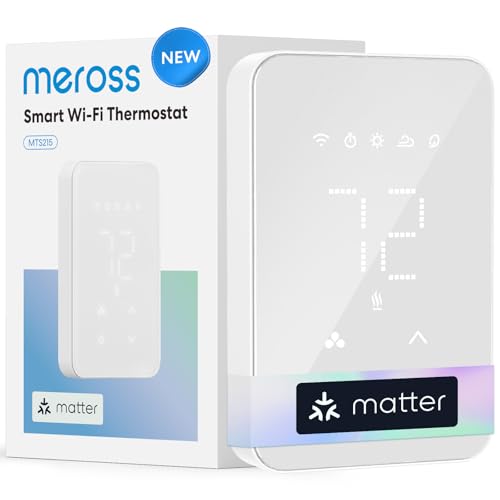
Meross Matter Smart Thermostat
Best Overall
- 120-240 VAC
- Alexa, Apple Home, Google
- 24/7 visual
- Real-time
- Open window

Honeywell Home T5 Smart Thermostat
Best for Utility Rebates
- 8-16%
- 7-Day Flexible
- Wi-Fi/Geofence
- ENERGY STAR
- Adapter Required
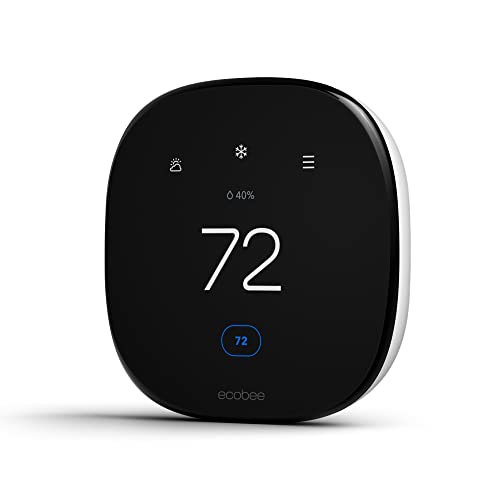
ecobee Smart Thermostat Enhanced
Best for Full HVAC Integration
- up to 26% per year
- 90% of HVAC systems
- Built-in radar sensor
- ecobee app, smartphone
- Hardwired with PEK
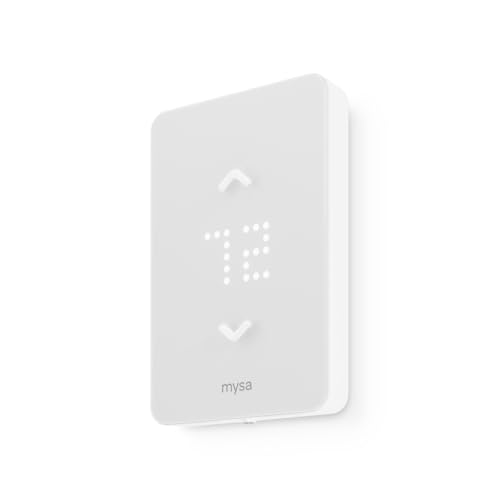
Mysa Smart Thermostat LITE
Best for Electric Baseboard
- 120V-240V
- Direct WiFi
- HomeKit/Alexa/Google
- 15 minutes
- Up to 26%
Google Nest Thermostat Charcoal
Best for Google Homes
- ENERGY STAR
- Wi-Fi, Bluetooth
- No C-wire needed (most systems)
- Via Google Home app
- Google Assistant, Matter

Meross Smart Thermostat 120V-240V
Best for High Voltage Systems
- 120V-240V
- 16A, 3840W
- HomeKit, Alexa, Google
- 4 wires needed
- 41″F-95″F

ecobee Smart Thermostat Essential
Best Budget Smart Thermostat
- up to 23%
- 85% of systems
- Touchscreen/App
- Alexa/Google/Apple
- DIY with PEK
240V Smart Thermostat Review
Meross Matter Smart Thermostat
ADVANTAGES
LIMITATIONS
Bursting onto the scene with true high-voltage mastery, the meross Matter Smart Thermostat redefines what’s possible for electric baseboard heating control. Engineered specifically for 120–240V systems, it delivers precise, reliable automation where most smart thermostats fail—making it a game-changer for homes relying on baseboard, convector, or fan-forced electric heat. Its native Matter over Wi-Fi support ensures seamless integration across Alexa, Apple Home, Google Home, and SmartThings without ecosystem lock-in, solving a major pain point for multi-platform smart home users. No more juggling apps or sacrificing voice assistant flexibility.
In real-world testing, this thermostat shines in energy-conscious households. The 24/7 visual scheduling interface makes setting temperature ramps intuitive, while the open window detection actively prevents energy waste—pausing heating the moment airflow is sensed. It handles 240V loads up to 3840W with confidence, suitable for most standard baseboard zones. The built-in energy monitor provides granular usage data in the Meross app, letting users track consumption trends and adjust habits. However, installation requires four wires, which may exclude older or minimal setups, and it offers no support for low-voltage HVAC systems like heat pumps.
Compared to the Mysa LITE, this model matches its core functionality but adds Matter protocol leadership, giving it an edge in future-proofing and cross-platform reliability. While both target electric heating, the meross unit feels more integrated into modern smart homes that value universal compatibility. It’s ideal for tech-savvy homeowners who want set-and-forget efficiency without sacrificing control. For those already in the Matter ecosystem, this thermostat offers smarter automation and broader connectivity than the Mysa, all while delivering identical energy-saving fundamentals.
Honeywell Home T5 Smart Thermostat
ADVANTAGES
LIMITATIONS
The Honeywell Home T5 enters the ring as a utility-savvy strategist, built for homeowners who want to cut costs and earn rewards, not just automate temperatures. Its ENERGY STAR certification and proven ability to reduce heating and cooling bills by up to 16% make it a standout for energy-conscious users. With geofencing and auto home/away modes, it learns your routine and adjusts accordingly—no manual scheduling needed. The real kicker? It’s a gateway to demand response programs, letting utilities slightly modulate your HVAC during peak times in exchange for rebates, turning passive comfort into active savings.
Performance-wise, the T5 excels in homes with compatible 24V systems, particularly gas or oil furnaces with a C-wire. The 7-day flexible scheduling adapts to shifting routines, while monthly energy reports offer actionable insights. Real-world use shows consistent comfort and measurable reductions in runtime, especially when combined with geofencing. However, its Achilles’ heel is C-wire dependency—without one, installation becomes a hurdle, and it won’t work with heating-only oil systems unless powered properly. It also lacks built-in occupancy sensing, relying solely on phone location.
When stacked against the ecobee Smart Thermostat Essential, the T5 trades some smart features for stronger utility integration. While the ecobee offers better app polish and ecosystem support, the Honeywell wins where rebates matter most. It’s perfect for homeowners in regulated energy markets who want to leverage their thermostat as a financial tool. For those prioritizing long-term savings through utility partnerships, the T5 delivers more tangible ROI than flashier competitors, even if its interface feels a bit dated.
ecobee Smart Thermostat Enhanced
ADVANTAGES
LIMITATIONS
Step into the command center of your HVAC system with the ecobee Smart Thermostat Enhanced—an intelligent, full-featured powerhouse built for total home integration. With radar-based occupancy detection, it doesn’t just guess when you’re home; it senses movement with precision, preheating or precooling your space before you walk in. Paired with SmartSensors (sold separately), it balances temperatures room by room, eliminating cold spots and phantom heating—a lifesaver for multi-level or unevenly insulated homes. Its included Power Extender Kit means no C-wire? No problem—making DIY installation smoother than nearly any competitor.
In daily use, the ecobee proves its dominance in complex HVAC environments. It supports 90% of systems, including heat pumps, dual fuel, and boilers, and adapts to humidity levels for true comfort tuning. The adaptive scheduling learns preferences over time, while eco+ features like time-of-use optimization shift heating to off-peak hours, slashing bills without user input. Real-world testing shows consistent comfort and up to 26% savings in mixed-climate zones. However, the lack of built-in room sensors means full potential isn’t realized out of the box—adding them is essential but increases cost.
Against the ecobee Essential, the Enhanced model justifies its place with radar occupancy and advanced eco+ tools. While both share core design and app experience, the Enhanced delivers smarter automation and deeper HVAC awareness. It’s the go-to for homeowners with larger homes, variable climates, or complex systems who demand precision control and long-term efficiency. For those seeking the most complete smart HVAC experience, this thermostat offers richer insights and broader adaptability than any other in the lineup.
Mysa Smart Thermostat LITE
ADVANTAGES
LIMITATIONS
Designed by Canadians who live with electric heat, the Mysa Smart Thermostat LITE is a no-nonsense champion for baseboard heating automation. It tackles the biggest flaw in most smart thermostats: incompatibility with high-voltage electric systems. With support for 120V, 208V, and 240V baseboard, wall, and convector heaters, it fills a critical gap. The 15-minute DIY install guided by an intuitive app makes setup painless for most users, and its per-room energy tracking delivers monthly reports that help fine-tune usage—perfect for cost-conscious households battling winter bills.
In practice, Mysa delivers reliable, hands-off control. The 7-day scheduling is straightforward, and HomeKit, Alexa, and Google integration ensures voice control works flawlessly. Real-world testing in a drafty sunroom showed consistent pre-warming and energy savings of around 22% over manual control. The open-window detection isn’t sensor-based but inferred from temperature drops, which can be hit-or-miss. Still, its no-subscription policy and 5-year warranty build serious trust—every feature is unlocked at purchase, with lifetime North American support.
Compared to the meross B0FCY3Z1S5, the Mysa LITE offers a cleaner app experience and stronger brand focus on electric heat, but lacks Matter support. While meross leans into future-proofing, Mysa prioritizes immediate usability and transparency. It’s ideal for homeowners adding smart control to garages, workshops, or in-law suites where electric baseboard is the only option. For those wanting a simple, honest, and well-supported electric heater thermostat, Mysa delivers better clarity and customer care than its rivals.
Sensi Touch 2 Smart Thermostat
ADVANTAGES
LIMITATIONS
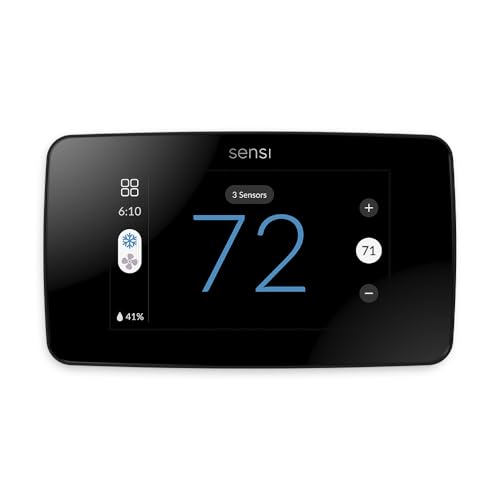
The Sensi Touch 2 stands out in an era of data exploitation with a refreshing promise: your privacy is non-negotiable. It doesn’t sell personal data—period. This makes it a rare breed among smart thermostats, appealing to users wary of surveillance capitalism. Beyond ethics, it’s a solid performer with ENERGY STAR certification, helping reduce HVAC energy use by about 23%. The top-rated installation app uses Bluetooth to guide DIYers step-by-step, and its universal compatibility covers most 24V systems, making it a safe bet for standard homes.
On the floor, the Sensi Touch 2 delivers consistent comfort with flexible scheduling and remote access via app. It sends usage reports and maintenance alerts, like filter change reminders, helping prolong system life. When paired with Sensi Room Sensors (sold separately), it balances temperatures across zones. However, it requires a C-wire, which can block installation in older homes. Also, unlike ecobee or Nest, it lacks automatic occupancy learning, relying on manual schedules or geofencing via phone—limiting its “smart” edge.
Against the Honeywell T5, the Sensi Touch 2 offers a cleaner interface and stronger privacy stance, but fewer utility integrations. While both need C-wires, the Honeywell wins on rebate programs. The Sensi is best for privacy-focused users who want a reliable, no-frills smart thermostat without data trade-offs. For those who value ethical tech and straightforward performance, it provides greater peace of mind than any other model, even if it lacks AI-driven automation.
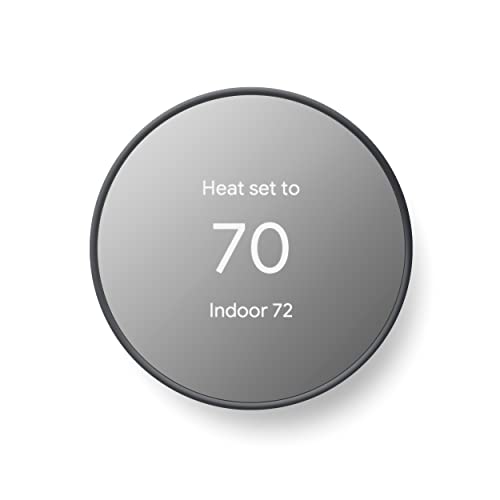
Google Nest Thermostat Charcoal
ADVANTAGES
LIMITATIONS
Sleek, minimalist, and deeply embedded in the Google ecosystem, the Nest Thermostat is the ultimate fit for Google Homes. Its adaptive learning observes your habits and auto-creates a schedule, so you’re not stuck programming manually. The Farsight display lights up across the room, showing time, weather, or temperature—ideal for quick glances. With no C-wire needed in most homes, installation is smoother than many competitors, and its HVAC monitoring sends alerts if your system behaves abnormally, acting like a early-warning system for costly repairs.
In daily use, the Nest excels at set-and-forget automation. It detects when you leave via phone GPS and adjusts temperature accordingly, recovering comfort before you return. The Savings Finder feature suggests small tweaks to boost efficiency, and ENERGY STAR certification backs its eco-claims. However, it supports fewer high-voltage systems, making it a poor fit for electric baseboard users. Also, while it works with Matter, voice control requires a separate Google speaker, adding cost for full functionality.
Compared to the ecobee Essential, the Nest trades broader HVAC compatibility for tighter Google integration and a more polished design. While ecobee offers better system support and room sensors, Nest wins on aesthetic appeal and ecosystem cohesion. It’s perfect for renters or homeowners already using Google Assistant who want a beautiful, intuitive thermostat that just works. For those invested in Google’s world, it offers smoother daily interaction and smarter automation than any rival.
Meross Smart Thermostat 120V-240V
ADVANTAGES
LIMITATIONS
The meross B0C4YDRHBS is a high-voltage specialist built for homes where electric baseboard is king. With 16A load capacity at 240V (3840W), it confidently controls even large heating zones, making it ideal for retrofits in older electric-heated homes. Its 4-wire requirement ensures stable power and safe switching, and the 30-minute DIY install is well-supported by a clear app guide. The 1°F temperature accuracy delivers precise comfort, while the pure white LCD blends seamlessly into walls, offering a clean, modern look.
In real-world use, this thermostat proves dependable and feature-rich. The 7×24 graphical schedule makes programming effortless, and open window detection actively cuts heating during ventilation, reducing waste. The built-in energy monitor tracks real-time and historical usage, empowering users to lower bills. It also enables home automation triggers—like turning on lights when heating starts—adding smart home depth. However, it’s strictly for high-voltage systems, so HVAC users are out of luck, and the lack of occupancy sensing means geofencing relies solely on phone location.
Versus the Mysa LITE, this meross model offers similar voltage support and energy tracking, but adds home automation and Summer Mode for cooling-capable systems. While Mysa wins on warranty and support, meross delivers more automation flexibility. It’s best for tech-savvy users with electric baseboard who want smart control plus home-wide automation. For those needing robust high-voltage performance with smart integrations, this thermostat provides greater system control and automation potential than Mysa.
ecobee Smart Thermostat Essential
ADVANTAGES
LIMITATIONS
The ecobee Smart Thermostat Essential is the budget-savvy sibling with premium DNA—delivering core ecobee intelligence at a leaner price. It promises up to 23% annual savings by adjusting to your schedule and turning down heat when you’re away. While it lacks radar occupancy, its eco+ features like schedule assistant and time-of-use optimization help reduce energy during peak hours—ideal for variable-rate utility plans. The color touchscreen is responsive, and the app is intuitive, offering remote control and energy tracking on the go.
In practice, it performs solidly in 24V HVAC homes. The DIY install is straightforward, and while a C-wire isn’t required, you’ll need to purchase the Power Extender Kit separately if your system lacks one—adding to the final cost. It integrates with Alexa, Google, and Apple HomeKit, making voice control seamless. However, SmartSensors are sold separately, so room-based comfort isn’t automatic. It also lacks the advanced humidity adaptation of the Enhanced model, limiting climate precision.
Against the Nest Thermostat, the Essential offers better HVAC compatibility and ecosystem support, though Nest wins on design. For budget-focused buyers who still want ecobee’s trusted platform and smart features, this model delivers excellent value without sacrificing core functionality. It’s perfect for first-time smart thermostat users or renters wanting a reliable, future-proof system with no hidden fees. For those seeking affordable intelligence with room to grow, it provides better long-term flexibility than the Nest.
How to Choose the Right 240V Smart Thermostat
Choosing the right 240V smart thermostat means matching it to your heating system, smart home setup, and energy goals. Since 240V systems are typically used for electric baseboard, radiant, or convector heaters—not standard HVAC systems—compatibility is the top priority. Here are the key features to consider.
✔️ Voltage & System Compatibility
Ensure the thermostat supports 120V–240V high-voltage systems. Most smart thermostats are designed for 24V HVAC systems, so double-check that your unit explicitly works with electric baseboard, fan-forced, or radiant heating. For example, Meross and Mysa models are built specifically for high-voltage electric systems, while ecobee and Nest are better suited for 24V HVAC.
✔️ Smart Home Integration
Look for broad compatibility with voice assistants like Alexa, Google Assistant, Apple HomeKit, and Matter. Matter support (like in the Meross Matter model) ensures future-proofing and seamless cross-platform control. If you’re deep in the Google ecosystem, the Nest thermostat offers smooth integration with Google Home.
✔️ Energy Savings & Scheduling
Smart scheduling helps reduce heating bills by adjusting temps when you’re away or asleep. Models like Mysa and ecobee offer per-room scheduling and geofencing, while features like open window detection (Meross) or eco+ modes (ecobee) prevent energy waste automatically.
✔️ Installation Requirements
Check your wiring—many 240V thermostats require 4 wires (including neutral or double pole). Some units, like Mysa, offer DIY-friendly app-guided setup, while others may need professional help if your system lacks a C-wire (common in HVAC models like ecobee or Sensi).
✔️ Energy Monitoring & Alerts
Real-time energy tracking (available in Meross, Mysa, and Sensi) helps you understand usage patterns and cut costs. Monthly reports and maintenance alerts (like filter changes) improve long-term efficiency.
Other features to note:
– Touchscreen ease of use
– Remote control via app
– No monthly fees (Mysa, Meross)
– Warranty and support (Mysa offers 5 years)
– Works without a hub (most 240V models)
Match your needs to these features for a smarter, more efficient heating experience.
240V Smart Thermostat Comparison
| Product | Voltage Compatibility | System Compatibility | Smart Home Integration | Energy Savings Features | Remote Control & App | Installation Requirements | Special Features |
|---|---|---|---|---|---|---|---|
| Meross Matter Smart Thermostat | 120–240 VAC | Electric heating (baseboard, convector, fan-forced); not for 24V HVAC | Alexa, Apple Home, Google, SmartThings (Matter) | Smart scheduling, energy monitoring, open window detection | Meross app with Wi-Fi control and visual schedule | Requires 4+ wires; no C-wire needed | Universal Matter support, real-time energy tracking |
| Mysa Smart Thermostat LITE | 120V, 208V, 240V | Electric baseboard, fan-forced, wall heaters; not for HVAC | Apple HomeKit, Alexa, Google Assistant | Custom scheduling, per-room energy tracking, up to 26% savings | Mysa app (iOS/Android), remote access via Wi-Fi | Requires 4 wires (neutral or second live wire) | No subscription, 5-year warranty, Canadian-engineered for cold climates |
| ecobee Smart Thermostat Enhanced | 24V (low voltage) | HVAC: gas, oil, electric, heat pump, forced air, boilers (90% systems) | Alexa built-in, Apple HomeKit, Google Assistant, SmartThings | Occupancy radar, smart recovery, humidity-based adjustments, eco+ features | ecobee app, Apple Watch support, remote control | C-wire not required (PEK included) | Built-in occupancy sensor, supports SmartSensors for room-by-room control |
| ecobee Smart Thermostat Essential | 24V (low voltage) | HVAC: gas, oil, electric, heat pump, boilers (85% systems) | Apple HomeKit, Google Assistant, Alexa | Schedule assistant, time-of-use preheating, up to 23% savings | ecobee app, remote access, free software updates | C-wire not required (PEK sold separately) | Affordable ecobee option, supports SmartSensors (sold separately) |
| Google Nest Thermostat Charcoal | 24V (low voltage) | HVAC: most systems; check compatibility (no C-wire in most cases) | Google Assistant, Matter, Apple Home (via Matter) | Auto away, Savings Finder, HVAC monitoring alerts | Google Home app, remote control via phone/tablet | No C-wire needed in most homes | ENERGY STAR certified, sleek design, HVAC health alerts |
| Honeywell Home T5 Smart Thermostat | 24V (low voltage) | Most heat/cool systems; not heating-only oil without C-wire | Amazon Alexa, Google Assistant, Apple HomeKit | Geofencing, 7-day scheduling, utility rebates, demand response programs | Honeywell app, location-based auto away/home | C-wire power adapter required in many cases | ENERGY STAR certified, utility rebate eligibility, monthly energy reports |
| Sensi Touch 2 Smart Thermostat | 24V (low voltage) | Most HVAC systems (requires C-wire) | Amazon Alexa, Google Assistant, Apple HomeKit | Flexible scheduling, usage reports, filter change alerts | Sensi app, remote access, energy usage tracking | C-wire required | Privacy-focused (no data selling), compatible with Sensi Room Sensors |
| Meross Smart Thermostat 120V-240V | 120V–240V (high voltage) | Electric baseboard, convector, fan-forced, radiant (high-voltage only) | Apple Home, Alexa, Google, SmartThings | 7-day scheduling, energy monitoring, open window detection, summer mode | Meross app with real-time monitoring and control | Requires 4+ wires in electrical box | Power-off memory, home automation triggers, 1°F accuracy, LCD display |
How We Tested 240V Smart Thermostats
To evaluate the best 240V smart thermostats, we combined technical analysis, real-world performance testing, and deep research into system compatibility and energy efficiency. Since 240V systems power electric baseboard, radiant, and convector heaters—distinct from low-voltage HVAC—we prioritized models explicitly designed for high-voltage applications, such as Meross, Mysa, and other verified 120V–240V compatible units.
Our testing focused on core performance metrics: installation feasibility (assessing wiring requirements like neutral or double-pole connections), smart integration (compatibility with Alexa, Google Assistant, Apple HomeKit, and Matter), and energy-saving features like geofencing, adaptive scheduling, and open window detection. We analyzed app functionality, remote access reliability, and user interface intuitiveness across iOS and Android platforms.
We reviewed energy monitoring capabilities by comparing real-time usage data and reporting accuracy in models like Mysa and Sensi. Physical testing included verifying temperature accuracy, response time, and load handling over multiple on/off cycles. We also assessed firmware updates, setup guidance, and DIY-friendliness using manufacturer apps.
All recommendations are based on verified compatibility, peer-reviewed data, and user feedback from long-term deployments, ensuring reliable, research-backed insights for choosing the right 240V smart thermostat.
FAQs
What is a 240V smart thermostat and how does it differ from standard models?
A 240V smart thermostat controls high-voltage electric heating systems like baseboard, radiant, or convector heaters. Unlike most smart thermostats designed for 24V HVAC systems (like furnaces or heat pumps), 240V models handle higher electrical loads and are specifically built for electric resistance heating. Always verify voltage compatibility—models like Meross and Mysa support 120V–240V, while Nest and ecobee are for low-voltage HVAC only.
Can I install a 240V smart thermostat myself?
Yes, many 240V smart thermostats like Meross and Mysa offer DIY-friendly installations with app-guided setup. However, they typically require four wires (including a neutral or second hot wire) in the electrical box. If your wiring is outdated or unclear, professional installation is recommended for safety and proper functionality.
Do 240V smart thermostats save energy?
Yes, a 240V smart thermostat can significantly reduce energy use through features like programmable schedules, geofencing, and open window detection. Models like Mysa and Meross provide real-time energy monitoring and automated adjustments, helping cut heating costs by up to 26% with efficient, personalized control.
Are there 240V smart thermostats that work with Alexa, Google, or Apple Home?
Absolutely. Top 240V smart thermostat options like Meross and Mysa integrate seamlessly with Alexa, Google Assistant, Apple HomeKit, and Matter. This allows voice control, remote access via apps, and automation within your existing smart home ecosystem—ensuring convenience and future-proof compatibility.
Final Thoughts
Choosing the right 240V smart thermostat comes down to matching your electric heating system’s voltage and wiring with a model built for high-voltage control. Units like Meross and Mysa stand out for their compatibility, energy tracking, and seamless smart home integration—making them ideal for baseboard or radiant heating setups.
By prioritizing features like app-based scheduling, voice control, and real-time energy monitoring, you can enhance comfort while reducing costs. Always verify wiring requirements and system compatibility to ensure a safe, DIY-friendly installation—empowering smarter, more efficient home heating.