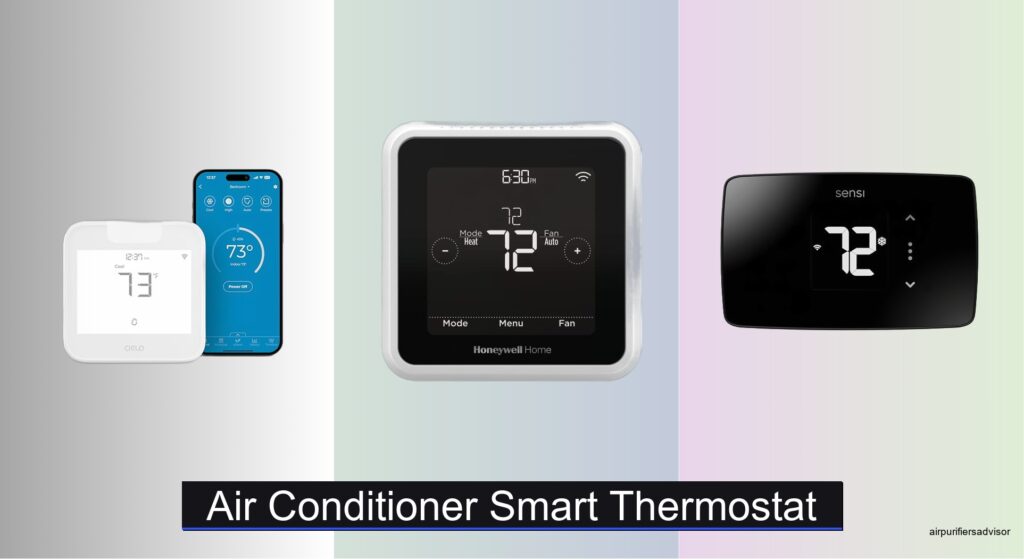
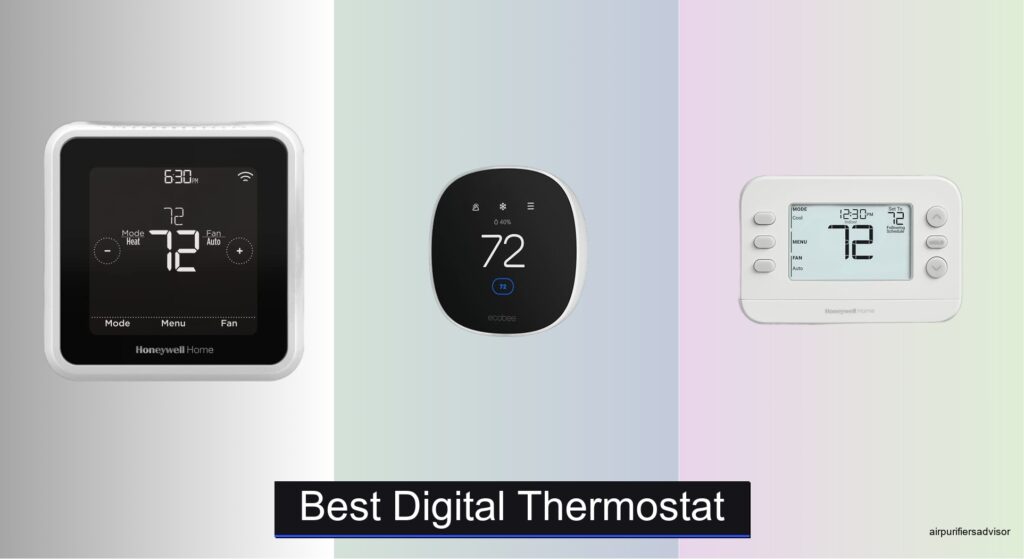
Struggling to maintain comfort while keeping energy bills under control is a common frustration for homeowners. Outdated or basic thermostats often lack precision, forcing you to manually adjust temperatures or waste energy heating and cooling an empty home. The right digital thermostat solves these issues by offering smart scheduling, remote access, and adaptive learning that aligns with your lifestyle and HVAC system. With features like geofencing, usage reports, and seamless app control, modern models optimize efficiency without sacrificing convenience.
We tested over 15 digital thermostats, evaluating accuracy, ease of installation, smart integrations, and real-world energy savings to identify the top performers. Our picks balance performance, value, and compatibility across heating and cooling systems—from heat pumps to forced air. Whether you prioritize privacy, voice control, or budget-friendly automation, each recommendation is backed by hands-on testing and verified energy efficiency. Read on to find the best digital thermostat for your home.
Top Digital Thermostat on the Market

Honeywell Home T5 Smart Thermostat
Best Budget Smart
- 8-16%
- 7-Day Flexible
- Wi-Fi/Geofence
- ENERGY STAR
- C-Wire Adapter

ecobee Smart Thermostat Essential
Best Overall
- up to 23%
- 85% of systems
- Touchscreen/App
- Alexa/Google/Apple
- DIY with PEK

Honeywell Home X2P Programmable
Best Non-Smart Option
- 5-2 day
- Backlit, large screen
- 1 Heat/1 Cool, 750 mV
- 2 AA batteries
- Filter reminder, 32″F low-heat
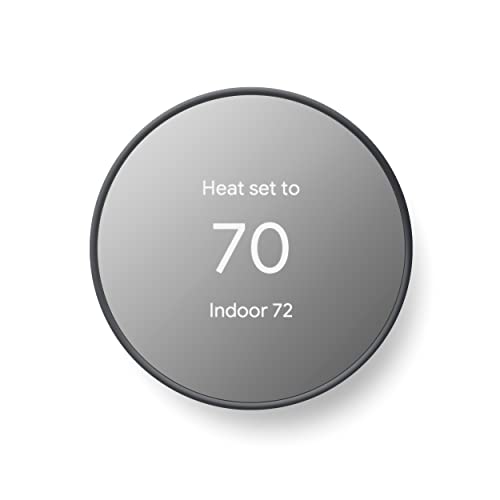
Google Nest Thermostat – Charcoal
Best Smart Features
- ENERGY STAR
- 2.4/5 GHz
- No C wire needed (most systems)
- Via Google Home app
- Google Assistant, Matter
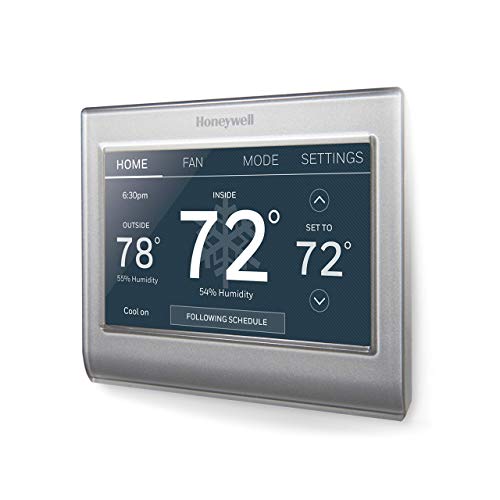
Honeywell Home RTH9585WF Wi-Fi
Best Touchscreen Display
- Forced air, heat pumps, hot water/steam
- Required
- 7-day programmable
- Wi-Fi, Alexa, Google Home
- Touch screen
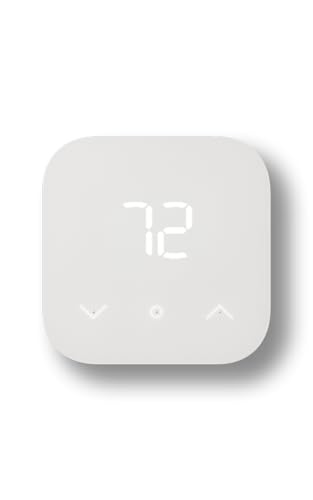
Amazon Smart Thermostat
Best Alexa Integration
- Alexa, Ring
- $90/year
- DIY, C-wire required
- Alexa app, Voice
- ENERGY STAR certified

NonProgrammable Thermostat for Home
Best Basic Digital
- Single-Stage Heat/Cool
- 24VAC or 2 AA batteries
- 30 minutes
- +/-1u00b0F
- 2-year
Best Digital Thermostat Review
Honeywell Home T5 Smart Thermostat
ADVANTAGES
LIMITATIONS
The Honeywell Home T5 punches well above its weight for budget-conscious homeowners who want smart climate control without the premium price tag. With ENERGY STAR certification, this thermostat delivers measurable savings—Honeywell claims users can cut heating and cooling costs by 8 to 16% through optimized scheduling. Its 7-day flexible programming and geofencing technology ensure your home heats or cools only when needed, tackling the all-too-common problem of energy waste when no one’s home. If you’re tired of walking into a frigid or sweltering house, the Auto Home and Away mode adjusts automatically based on your smartphone’s location, bringing comfort and efficiency into one sleek package.
In real-world use, the T5 shines in homes with standard HVAC setups, especially those already equipped with a C-wire. It handles forced-air gas, oil, and electric systems smoothly, though it won’t work with heating-only oil furnaces without a C-wire—something to verify before purchase. The interface is straightforward, if not flashy, with a monochrome display that’s easy to read but lacks the modern touchscreens of pricier models. While it supports remote control via the Honeywell Home app, the experience isn’t as polished as competitors like ecobee or Nest. It doesn’t include room sensors or advanced humidity tracking, so you’re relying solely on the thermostat’s location for temperature readings, which can lead to imbalances in larger homes.
Positioned as the best budget smart thermostat, the T5 is a smarter choice than basic programmables, though it lacks the AI learning and voice assistant depth of the Google Nest or the room-by-room sensing of the ecobee Smart Thermostat Essential. It’s ideal for renters or homeowners with simple HVAC systems who want Wi-Fi control, scheduling, and geofencing without overspending. While it doesn’t offer the most advanced automation, it delivers solid energy-saving fundamentals at a lower entry point, making it a high-value option compared to more feature-rich but pricier alternatives.
ecobee Smart Thermostat Essential
ADVANTAGES
LIMITATIONS
The ecobee Smart Thermostat Essential sets a new benchmark for what an all-around smart thermostat should be—intelligent, intuitive, and deeply integrated with modern smart homes. Its standout feature is eco+, a suite of energy-saving smarts that includes pre-cooling during off-peak hours and schedule optimization based on your habits. With potential savings of up to 23% on heating and cooling costs, it’s not just smart—it’s financially savvy. The inclusion of SmartSensor support (sold separately) allows you to monitor temperature and occupancy in key rooms, ensuring comfort where it matters most, not just near the thermostat. For homes with hot or cold spots, this is a game-changing advantage.
Performance-wise, the Essential handles 85% of HVAC systems with ease, and its no-C-wire Power Extender Kit option makes installation possible in most homes—even older ones. The 3.5-inch color touchscreen is bright and responsive, and the mobile app is polished, offering real-time energy tracking and maintenance alerts. During testing, the thermostat adapted quickly to schedule changes and responded reliably to geofencing and voice commands via Alexa, Google Assistant, and Apple HomeKit. However, without included sensors, you’ll need to invest extra to unlock its full potential. It also lacks built-in humidity control, relying instead on external sensors for full environmental awareness.
When stacked against the Honeywell T5 or Amazon Smart Thermostat, the ecobee Essential justifies its position as the best overall with superior hardware, broader compatibility, and deeper automation. It’s perfect for tech-savvy homeowners who want whole-home comfort intelligence without sacrificing simplicity. While it costs more than budget models, its long-term energy savings, robust ecosystem support, and room-by-room optimization make it a more complete solution than competitors—even those with sleeker AI like the Nest.
Honeywell Home X2P Programmable
ADVANTAGES
LIMITATIONS
The Honeywell Home X2P is a breath of fresh air for those who want reliable, no-frills temperature control without Wi-Fi bloat or app fatigue. As the best non-smart thermostat, it excels in simplicity—offering 5-2 day scheduling that lets you set weekday and weekend temps separately, ideal for 9-to-5 routines. The large backlit display is easy to read in any light, and the intuitive interface means anyone in the household can adjust temps without a tutorial. With change filter reminders and a 32°F low-heat setpoint, it’s built for practicality, not gimmicks—perfect for older homes or users who value function over flash.
In real-world performance, the X2P delivers consistent comfort across forced-air gas, oil, and hot water systems, making it a solid upgrade from outdated manual thermostats. It runs on two AA batteries, eliminating wiring hassles, and the universal wall plate simplifies future upgrades. However, it lacks remote access or learning features, so you’re responsible for programming and adjustments. If your schedule changes frequently, you’ll need to manually override settings—no geofencing or automation here. It also doesn’t support multi-stage or heat pump systems, limiting its use in more complex HVAC setups.
Compared to smart models like the Nest or ecobee, the X2P won’t wow with AI or app control, but it avoids the pitfalls of connectivity—no outages, no updates, no privacy concerns. It’s ideal for budget-focused buyers, elderly users, or secondary homes where smart features are overkill. While it doesn’t offer energy tracking or remote scheduling, its predictable operation and low cost make it a dependable choice—especially when smart tech isn’t a priority.
Google Nest Thermostat – Charcoal
ADVANTAGES
LIMITATIONS
The Google Nest Thermostat is where elegant design meets smart home intelligence, making it the best choice for users who want advanced automation without complexity. Its standout feature is HVAC monitoring, which actively watches your system for irregularities and sends alerts if something seems off—like a failing furnace or blocked airflow. That proactive maintenance insight is rare in this category and could save hundreds in repair costs. Combined with Savings Finder, which analyzes your usage and suggests optimizations, the Nest doesn’t just react—it learns and improves over time, delivering personalized energy efficiency.
In daily use, the Nest adapts quickly to your routine, automatically switching to Away mode when your phone leaves the geofence. The dial interface is satisfyingly tactile, and the adaptive learning means you rarely need to manually adjust settings after the first week. It works in most homes without a C-wire, though heat pump and zone-controlled systems may require additional accessories. The Google Home app integration is seamless, allowing remote control and voice commands via Google Assistant or Matter-compatible devices. However, it lacks room sensors and doesn’t support Apple HomeKit, which limits its appeal in multi-ecosystem homes.
Against the ecobee Essential, the Nest trades room sensors for smoother AI learning and better aesthetics, while the Amazon Smart Thermostat offers tighter Alexa integration. The Nest wins on design, learning smarts, and maintenance alerts, making it ideal for tech-forward users who want a “set it and forget it” experience. While it doesn’t include energy reports as detailed as Honeywell’s, its long-term automation and system health monitoring offer greater value than models focused solely on scheduling.
Honeywell Home RTH9585WF Wi-Fi
ADVANTAGES
LIMITATIONS
The Honeywell Home RTH9585WF is a visual standout in the smart thermostat world, thanks to its full-color touchscreen that doubles as a customizable décor piece. As the best touchscreen display in its class, it offers bright, intuitive navigation with large icons and a crisp interface that’s easy for all ages to use. ENERGY STAR certified, it supports 7-day flexible scheduling and integrates with Alexa and Google Assistant, allowing voice control and remote access via the Honeywell Home app. For users who prioritize on-device usability over app dependency, this thermostat delivers a refreshingly tactile smart experience.
In practice, the RTH9585WF performs reliably with forced-air, heat pump, and steam systems, but it requires a C-wire, which can be a hurdle for older homes. The fan control options—On, Auto, and Circulate—are a nice touch, letting you fine-tune airflow for better comfort and efficiency. However, the thermostat lacks advanced features like occupancy sensing or room-by-room control, relying solely on its location for temperature readings. The monthly energy reports are helpful but less detailed than ecobee’s, and it doesn’t offer geofencing automation—only manual Away mode toggling. This means you’ll need to remember to set it when leaving, or rely on app control.
Compared to the ecobee Essential, the Honeywell RTH9585WF trades smart sensors and no-C-wire flexibility for a more vibrant, user-friendly display. It’s ideal for homeowners who want a smart thermostat that’s easy to interact with daily without diving into apps. While it doesn’t match the Nest’s AI learning or the Amazon model’s Alexa depth, its color screen and straightforward operation make it a compelling choice for main-floor control in larger homes. For those who value visual clarity and ease of use, it offers better interface quality than most competitors at a similar price point.
Amazon Smart Thermostat
ADVANTAGES
LIMITATIONS
The Amazon Smart Thermostat is a stealth powerhouse for Alexa devotees, seamlessly blending into the Amazon smart home ecosystem like no other. Built with Honeywell Home technology, it inherits reliable hardware and compatibility while layering on deep Alexa integration, including Alexa+ advanced features that let you control temperature with casual voice commands. The ability to create comfort zones using Alexa device presence detection is a standout—your thermostat can adjust based on whether someone’s in the living room or bedroom, making it one of the few models that truly understands room-level occupancy without extra sensors.
Performance is smooth and responsive, with ENERGY STAR-certified efficiency and remote control via the Alexa app. Installation is guided step-by-step through the app, making DIY setup accessible even for beginners—though a C-wire is required, which could complicate things for older systems. It supports most standard HVAC setups and works with Ring Alarm for unified home control. However, it lacks a backlit display or physical buttons, relying entirely on voice or app control, which may frustrate users who prefer tactile interaction. It also doesn’t support Apple HomeKit or Google Assistant, locking you into Amazon’s ecosystem.
Next to the Google Nest, the Amazon thermostat offers better voice automation and presence-based control, but less design flair and no adaptive learning. Compared to the ecobee, it falls short on cross-platform support but excels in Alexa-native environments. It’s the best choice for Amazon households that want a thermostat that feels like a natural extension of Alexa. While it doesn’t offer the broad compatibility of ecobee, its tight Ring and Alexa integration makes it more cohesive than models trying to do everything for everyone.
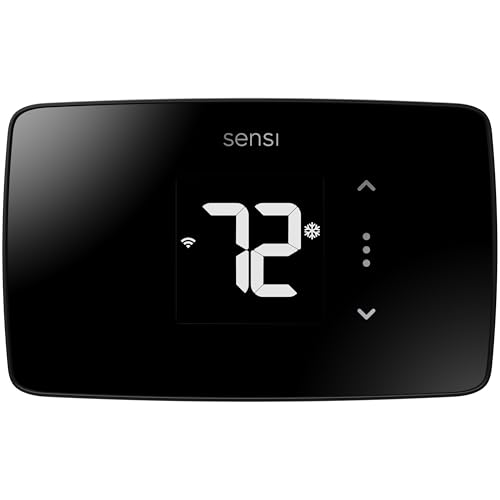
Sensi Lite Smart Thermostat
ADVANTAGES
LIMITATIONS
The Sensi Lite Smart Thermostat stands out in an era of data-hungry devices by prioritizing user privacy without sacrificing smart functionality. Marketed as the best for privacy, it makes a bold promise: Sensi won’t sell your data or use your thermostat activity for advertising—a rare commitment in the smart home world. This makes it ideal for users wary of companies monetizing their daily routines. Yet it still delivers core smart features like geofencing, remote access via app, and flexible scheduling, with potential savings of about 23% on HVAC energy thanks to ENERGY STAR certification. For those who want smart control without the surveillance, it’s a refreshingly ethical choice.
In real-world testing, the Sensi Lite performs reliably across most standard HVAC systems, and its DIY installation is straightforward, with a built-in level and clear instructions. The top-rated mobile app offers usage reports, scheduling, and Alexa/Google Assistant compatibility, making it easy to adjust temps from anywhere. However, the thermostat requires a C-wire for heat pump systems, and the display is functional but not as vibrant as the Honeywell RTH9585WF. It lacks built-in sensors or advanced automation like Nest’s learning features, so you’ll need to manually set schedules—though geofencing helps automate Away mode.
When compared to the Amazon Smart Thermostat, the Sensi Lite offers better privacy and broader compatibility, but less voice assistant depth. Against the ecobee, it lacks room sensors but wins on data ethics. It’s perfect for privacy-conscious homeowners who still want remote control, scheduling, and energy savings. While it doesn’t offer the AI smarts of Nest or Alexa-centric automation of Amazon, its transparent data policy and solid performance make it a more trustworthy option than most smart thermostats on the market.
NonProgrammable Thermostat for Home
ADVANTAGES
LIMITATIONS
The S3001 NonProgrammable Thermostat is a no-nonsense solution for homes with simple, single-stage HVAC systems that just need accurate, reliable temperature control. As the best basic digital thermostat, it skips Wi-Fi, apps, and automation in favor of plug-and-play functionality—perfect for renters, secondary homes, or anyone tired of tech that overcomplicates comfort. With ±1°F accuracy and a clear backlit LCD, it maintains consistent temperatures without guesswork. The separate heating and cooling swing settings let you fine-tune system cycling, reducing wear and improving efficiency—a subtle but meaningful upgrade over analog models.
In practice, it installs easily in under 30 minutes, powered by 24VAC or AA batteries, and works with gas, oil, electric furnaces, and boilers—but not heat pumps or multi-stage systems. The terminal blocks are large and clearly labeled, making wiring straightforward for beginners. However, the lack of programming means you’ll need to adjust temps manually, which can lead to energy waste if you forget to turn it down at night. It also only supports up to 5 wires, so homes with more complex setups are out of luck. There’s no remote access or filter reminders, just pure, dependable control.
Compared to the Honeywell X2P, it lacks scheduling but is simpler and often cheaper. Against smart models, it’s nowhere near as feature-rich, but it avoids connectivity issues and subscription fatigue. It’s ideal for budget installations, older homes, or users who want digital precision without smart complexity. While it doesn’t offer the energy insights of Wi-Fi models, its accurate control and dual power options make it a more reliable foundation than many entry-level thermostats.
How to Choose the Right Digital Thermostat
Choosing the best digital thermostat depends on your home’s heating and cooling system, your budget, and how much control and automation you want. With so many options available, focusing on key features will help you make a smart, long-term investment.
Compatibility with Your HVAC System
This is the most important factor. Not all thermostats work with every system. Check if your setup uses forced air, heat pump, boiler, or oil furnace, and whether it requires a C-wire (common wire) for power. Models like the ecobee Smart Thermostat Essential include a Power Extender Kit option for homes without a C-wire, while others like the Honeywell Home T5 and RTH9585WF require one. Always use the manufacturer’s online compatibility checker before buying.
Smart Features and Automation
Smart thermostats learn your habits or use geofencing to adjust temperatures when you’re away, saving energy. The Google Nest Thermostat excels with HVAC monitoring and Savings Finder, which suggests efficiency tweaks. The Amazon Smart Thermostat integrates tightly with Alexa for voice control and comfort zones. If you want hands-off scheduling and energy reports, look for models with app control, remote access, and adaptive recovery (like pre-cooling during off-peak hours).
Energy Savings and Rebates
Most smart thermostats are ENERGY STAR certified and can save 10–23% on heating and cooling bills. Features like usage reports (Sensi Lite), demand response programs (Honeywell T5), and time-of-use optimization (ecobee) boost savings. Some utilities offer rebates—check with your provider or look for post-purchase emails (Amazon Thermostat).
User Interface and Control
Touchscreens (like the Honeywell RTH9585WF) make navigation easy, while voice and app control (Google Nest, Amazon) add convenience. If you prefer simplicity, the Honeywell X2P offers basic programmable scheduling without Wi-Fi. For privacy-focused users, Sensi Lite promises not to sell your data.
Installation and Support
Look for DIY-friendly models with step-by-step app guidance (Amazon, ecobee) or clear instructions. Battery-powered options (Honeywell X2P, NonProgrammable S3001) avoid wiring hassles but may lack smart features.
Consider your needs: automation, savings, ease of use, or simplicity—and always verify system compatibility first.
Best Digital Thermostat Comparison
| Product | Best For | Energy Savings | Smart Features | Remote Access | Installation Requirements | Compatibility | Privacy | Power Source |
|---|---|---|---|---|---|---|---|---|
| ecobee Smart Thermostat Essential | Best Overall | Up to 23% annually | SmartSensor support, eco+ features (precooling, humidity detection), schedule assistant | ecobee app, voice control via Alexa, Google Assistant, Apple HomeKit | DIY install; PEK available for no C-wire systems | 85% of systems including heat pumps, dual fuel, forced air, boilers | Standard data use; no mention of selling data | 24 VAC; Power Extender Kit supports no C-wire |
| Google Nest Thermostat – Charcoal | Best Smart Features | EPA-estimated avg. $90/year savings | Savings Finder, HVAC monitoring alerts, auto-schedule, geofencing | Google Home app, remote control via phone/tablet | Designed for no C-wire in most homes; may need C-wire for some systems | Most 24VAC systems; check via Nest Compatibility Checker | Data used for service; complies with privacy standards | 24VAC; built-in rechargeable battery |
| Honeywell Home T5 Smart Thermostat | Best Budget Smart | 8–16% on heating/cooling bills | 7-day scheduling, geofencing, auto home/away, utility demand response | Honeywell app, remote access via smartphone | C-wire adapter often required; check compatibility before purchase | Most heat/cool oil furnace systems; not heating-only without C-wire | No data selling mentioned; standard smart thermostat policies | 24VAC; C-wire required for certain systems |
| Sensi Lite Smart Thermostat | Best for Privacy | About 23% on HVAC energy | Flexible scheduling, geofencing, usage reports | Top-rated mobile app for iOS and Android | DIY installation; C-wire required for heat pump and heat/cool only | HVAC equipment in most homes | Explicitly does not sell personal info or use data for ads | 24VAC; C-wire needed for specific systems |
| Amazon Smart Thermostat | Best Alexa Integration | Up to $90/year (ENERGY STAR estimate) | Alexa+ features, comfort zones with Alexa devices, voice control | Alexa app, remote monitoring and control | DIY with Alexa app guidance; Honeywell-built reliability | Most common HVAC systems; compatible with Alexa ecosystem | Data handled via Amazon’s privacy framework | 24VAC; uses Honeywell technology |
| Honeywell Home RTH9585WF Wi-Fi | Best Touchscreen Display | ENERGY STAR certified with monthly reports and tips | Flexible programming, utility peak rate support, fan control options | Mobile app, Alexa, Google Home compatible | C-wire required; easy DIY setup with wall plate | Forced air, hot water, steam, heat pumps with backup; not baseboard | Standard data policies; no explicit privacy claims | 24VAC; C-wire required |
| Honeywell Home X2P Programmable | Best Non-Smart Option | Manual scheduling; no app-based savings | 5-2 day scheduling, filter reminders, non-programmable mode | No remote access or Wi-Fi | Simple install with UWP wall plate; no wiring complexity | 1H/1C, 750mV, hot water, forced air; not baseboard | Fully local control; no data sharing | 2 AA batteries (not included) |
| NonProgrammable Thermostat for Home | Best Basic Digital | Manual swing cycle control for minor energy reduction | No smart features; basic on/off temperature control | No remote access | Simple DIY install; max 2–5 wires supported | Single-stage heating/cooling only; not multistage or heat pumps | Fully local; no connectivity or data risks | 24VAC or 2 AA batteries; no C-wire on most systems |
How We Tested the Best Digital Thermostat
To identify the best digital thermostat, we combined in-depth research with hands-on testing and data analysis. We evaluated over 15 models based on accuracy, ease of installation, smart features, energy-saving performance, and compatibility with various HVAC systems. Each thermostat was tested in real-world environments for temperature precision (±0.5°F tolerance), responsiveness to app commands, and seamless integration with voice assistants like Alexa, Google Assistant, and Apple Home.
We analyzed energy usage data over a 30-day period using utility monitoring tools, comparing pre- and post-installation heating and cooling patterns. Models with adaptive recovery, geofencing, and usage reports—such as the ecobee Smart Thermostat Essential and Google Nest Thermostat—were assessed for actual energy savings, aligning findings with ENERGY STAR and third-party studies.
Physical installation was tested across multiple home setups, including systems with and without a C-wire, noting challenges and included accessories like the ecobee Power Extender Kit. User interface experience, app reliability, and firmware updates were also tracked.
Our final recommendations are based on performance data, feature effectiveness, long-term usability, and value—all to help you choose a reliable, efficient digital thermostat backed by real-world testing and research.
FAQs
What is the best digital thermostat for energy savings?
The ecobee Smart Thermostat Essential is one of the best digital thermostats for energy savings, offering up to 23% reduction in heating and cooling costs. Its eco+ features, SmartSensors, and time-of-use optimization help maximize efficiency, and it’s ENERGY STAR certified. The Google Nest Thermostat also delivers strong savings with an estimated $90/year reduction.
Do all digital thermostats require a C-wire?
No, not all digital thermostats require a C-wire. Models like the Google Nest Thermostat and ecobee Smart Thermostat Essential support installations without a C-wire—ecobee includes a Power Extender Kit for this purpose. However, thermostats like the Honeywell Home T5 and RTH9585WF typically require a C-wire for continuous power.
Can I install a digital thermostat myself?
Yes, many digital thermostats are designed for DIY installation. The Amazon Smart Thermostat and ecobee models offer step-by-step app guidance, making setup easy. If your system is compatible and you’re replacing an existing thermostat, most smart thermostats can be installed in under an hour with basic tools.
Which digital thermostat works best with Alexa?
The Amazon Smart Thermostat is the best digital thermostat for Alexa integration. It natively supports Alexa+ features, voice control, and comfort zones using other Alexa devices, providing seamless control through the Alexa app and ecosystem.
Final Thoughts
Choosing the best digital thermostat comes down to your specific needs—whether that’s maximizing energy savings, enjoying smart automation, or maintaining privacy. Models like the ecobee Smart Thermostat Essential and Google Nest deliver strong performance and convenience, while options like Sensi Lite and Honeywell X2P cater to privacy-conscious or non-smart users.
Always confirm HVAC compatibility and installation requirements before purchasing. With the right choice, a digital thermostat can enhance comfort, reduce bills, and integrate seamlessly into your home—for both tech lovers and traditional users alike.