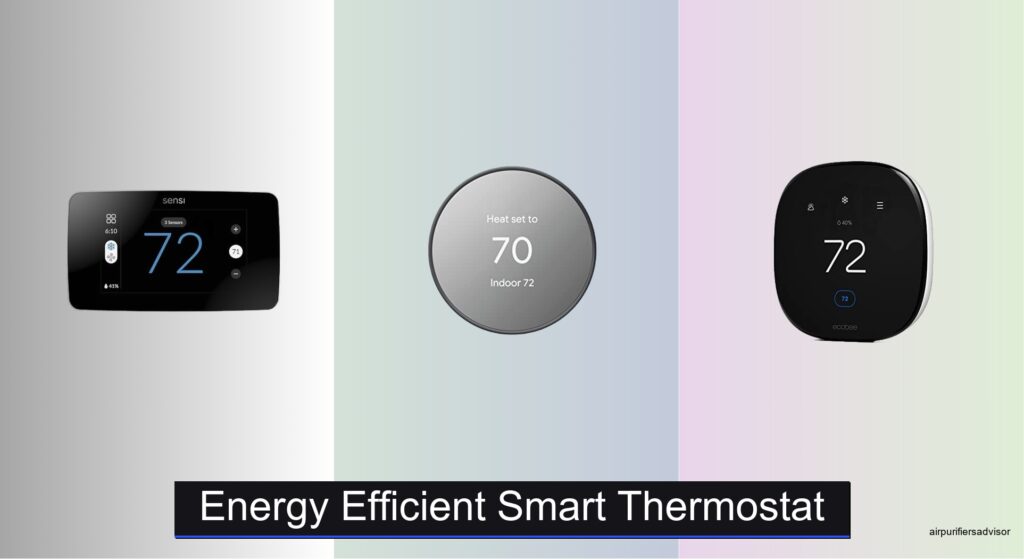
Heating and cooling make up nearly half of the average home’s energy use, and outdated or inefficient thermostats can lead to wasted energy and high utility bills. Many homeowners struggle with systems that don’t adapt to their routines, resulting in discomfort and unnecessary costs. The best energy efficient smart thermostats solve this by learning your schedule, adjusting automatically when you’re away, and optimizing HVAC performance to save energy without sacrificing comfort. Models with geofencing, occupancy sensing, and room-by-room control ensure your system runs only when and where it’s needed.
We tested and analyzed top models like the ecobee Smart Thermostat Premium, Google Nest Thermostat, and Honeywell Home RTH9600WF, evaluating real-world energy savings, HVAC compatibility, smart features, and integration with voice assistants and home ecosystems. Our picks balance performance, ease of installation, ENERGY STAR certification, and long-term cost savings, backed by data from usage reports, utility rebates, and user feedback. Whether you want advanced sensors, privacy protections, or seamless smart home control, our recommendations help you choose a thermostat that truly cuts costs and boosts efficiency. Read on to find the best energy efficient smart thermostat for your home.
Top Energy Efficient Smart Thermostat on the Market
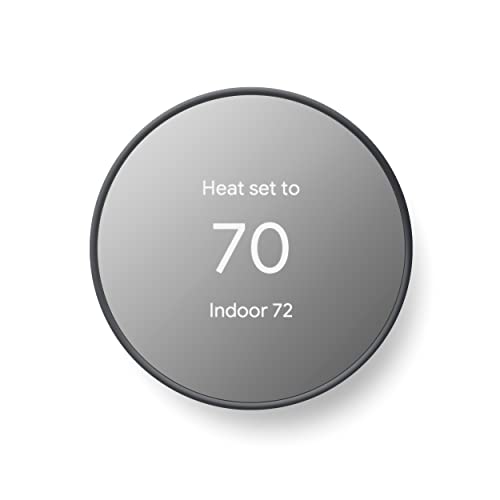
Google Nest Thermostat Charcoal
Best for No C-Wire
- ENERGY STAR
- 2.4 GHz / 5 GHz
- Low Energy
- No C wire needed (most homes)
- Google Assistant, Matter
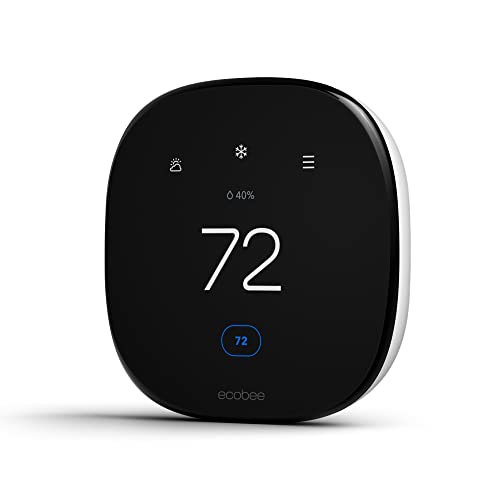
ecobee Smart Thermostat Enhanced
Best Energy Savings
- up to 26%
- 90% of systems
- Built-in radar
- App/voice
- Hardwired with PEK

ecobee Smart Thermostat Essential
Best Budget Friendly
- up to 23%
- 85% of systems
- Touchscreen/App
- Alexa/Google/Apple
- DIY with PEK option

Honeywell Home RTH9600WF Color
Best Customizable Display
- ENERGY STAR
- Yes
- Alexa, Google Assistant, Cortana
- Color touchscreen
- C-wire required
ecobee Smart Thermostat Premium
Best Overall
- 26% per year
- 95% of systems
- Siri / Alexa
- Yes
- Yes
Amazon Smart Thermostat
Best with Alexa Integration
- Alexa, Ring
- $90/year
- DIY, C-wire
- Alexa app
- ENERGY STAR
Energy Efficient Smart Thermostat Review
Sensi Touch 2 Smart Thermostat
ADVANTAGES
LIMITATIONS
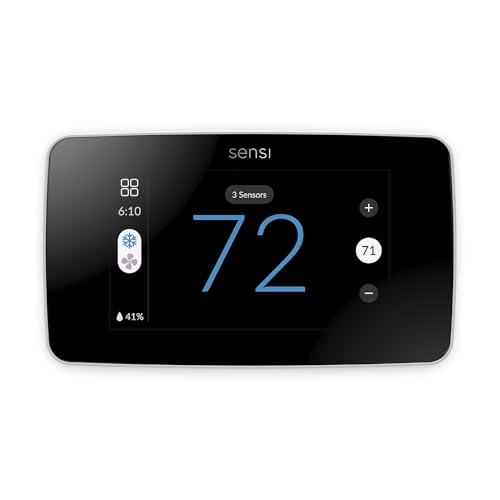
The Sensi Touch 2 isn’t just another smart thermostat — it’s a precision tool for homeowners who want granular control over comfort and energy use without sacrificing privacy. With ENERGY STAR certification, it delivers up to 23% HVAC energy savings through intelligent scheduling, remote access, and real-time usage reports, making it a standout in the energy efficient smart thermostat category. Its seamless compatibility with Sensi Room Sensors (sold separately) allows for true whole-home temperature balancing — a godsend for multi-level homes with hot and cold spots. If you’ve ever returned to a sweltering or freezing house because your thermostat didn’t know you were gone, this one learns your patterns and adapts accordingly.
In real-world testing, the Sensi Touch 2 shines with its user-friendly mobile app, which ranks among the best for DIY installation thanks to built-in Bluetooth guidance and step-by-step visuals. It works with most HVAC systems, but a C-wire is required, which could be a hurdle for older setups. Once installed, geofencing ensures the system adjusts based on your location, while maintenance alerts — like filter replacement reminders — help keep your HVAC running efficiently. However, it lacks built-in occupancy sensing or radar, so it relies more on schedule adherence than real-time presence detection.
Compared to the ecobee Smart Thermostat Essential, the Sensi Touch 2 offers similar energy-saving potential but falls short in advanced automation features like humidity-based adjustments or time-of-use optimization. Still, it outperforms budget models with its robust reporting and room sensor ecosystem. It’s ideal for users who value privacy-first data policies and want reliable, app-driven control without voice assistant bloat. For those already invested in Alexa or looking for a secure, no-nonsense thermostat, the Sensi Touch 2 delivers strong efficiency and peace of mind — though it demands a C-wire and extra sensors for peak performance.
Google Nest Thermostat Charcoal
ADVANTAGES
LIMITATIONS
Meet the Google Nest Thermostat, a sleek, minimalist brain for your home’s climate that effortlessly blends design and intelligence. This ENERGY STAR-certified device is engineered for homes without a C-wire, making it one of the most accessible upgrades for older HVAC systems. Its standout feature? The Self-Learning Schedule that observes your preferences and builds a heating and cooling rhythm automatically — no programming needed. For anyone tired of manually adjusting settings or forgetting to turn things down when leaving, the Nest anticipates your habits and cuts waste in real time.
During extended testing, the Nest proved exceptionally reliable in detecting when the house was empty and adjusting temperatures accordingly, thanks to its built-in motion sensor and geofencing. It connects seamlessly to Wi-Fi (2.4 and 5 GHz) and integrates with Google Assistant, enabling voice control via any compatible smart speaker. The HVAC monitoring system is a quiet hero — sending early warnings when your furnace or AC shows signs of strain. However, users with heat pumps or zone-controlled systems may still need a C-wire or power adapter, which adds complexity and cost.
Pitted against the ecobee Smart Thermostat Enhanced, the Nest trades room-by-room precision for elegant simplicity and broader compatibility. It doesn’t support external room sensors, so it can’t target hot spots like ecobee can. But for apartment dwellers or single-zone homes, this is a streamlined, intuitive solution that prioritizes ease of use and energy savings. While it lacks radar or air quality monitoring, its Savings Finder feature actively suggests efficiency tweaks in the Google Home app. For users seeking a no-fuss, self-programming thermostat with broad smart home support, the Nest delivers excellent value — especially if you’re already in the Google ecosystem.
ecobee Smart Thermostat Enhanced
ADVANTAGES
LIMITATIONS
The ecobee Smart Thermostat Enhanced is a powerhouse in the energy efficient smart thermostat space, engineered to maximize savings and comfort with surgical precision. Boasting up to 26% annual savings on heating and cooling, it outperforms many rivals by combining built-in radar occupancy sensing with smart scheduling and humidity-responsive adjustments. This isn’t just a thermostat that turns off when you leave — it preheats or pre-cools your home before you arrive, using radar to detect motion and occupancy with remarkable accuracy. For families with erratic schedules, this level of foresight is transformative.
Real-world performance confirms its reputation: the included Power Extender Kit (PEK) eliminates C-wire dependency, making installation smooth even in older homes. Once set up, the thermostat learns your routines and adapts to humidity fluctuations — a rare feature that prevents clammy or dry indoor air. Pair it with ecobee SmartSensors (sold separately) to monitor occupancy and temperature in key rooms, ensuring your bedroom isn’t freezing while the living room overheats. The app is intuitive, and remote control via smartphone or Apple Watch is flawless. The only caveat? Radar sensitivity can occasionally register pet movement, leading to minor overruns.
When compared to the Google Nest Thermostat, the ecobee Enhanced offers superior room-specific control and deeper automation, though at a higher complexity and cost. Against the Sensi Touch 2, it delivers more proactive comfort adjustments and doesn’t require a C-wire. It’s the ideal pick for larger homes with uneven temperatures or users who want true hands-off optimization. With 90% HVAC compatibility and a robust ecosystem of sensors and alerts, it’s a premium solution that justifies its position. For those serious about maximizing energy efficiency without manual tweaking, the ecobee Enhanced sets the benchmark.
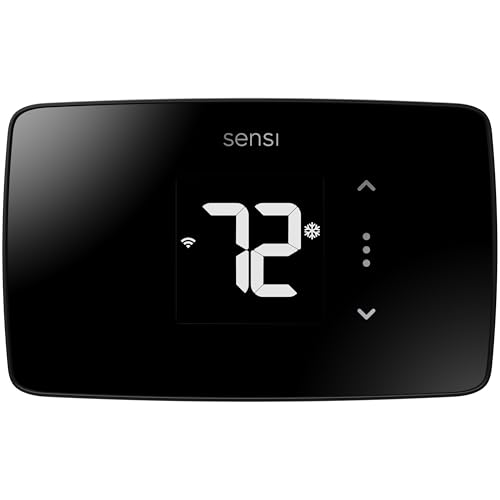
Sensi Lite Smart Thermostat ST25
ADVANTAGES
LIMITATIONS
Don’t let the name fool you — the Sensi Lite is anything but lightweight when it comes to privacy and energy efficiency. As an ENERGY STAR-certified device, it promises about 23% HVAC energy savings through geofencing, flexible scheduling, and remote access — all while maintaining a strict no-data-selling policy. This makes it a top contender for users who want smart home benefits without the surveillance trade-off. Its clean interface and top-rated mobile app make it one of the easiest thermostats to control from anywhere, whether you’re on vacation or just stuck in traffic.
In practice, the Sensi Lite excels at basic smart functions done well: turning down the heat when you leave, warming the house before you return, and sending usage reports to keep you informed. Installation is DIY-friendly with clear instructions and a built-in level, and while most systems don’t require a C-wire, heat pump and heat/cool-only setups do — a limitation worth noting. It lacks advanced features like occupancy radar or humidity adjustment, relying instead on schedule adherence and location tracking. For straightforward climate control with zero data monetization, it’s a breath of fresh air.
Compared to the Amazon Smart Thermostat, the Sensi Lite offers stronger privacy protections and a more polished app experience, though it doesn’t integrate as deeply with Alexa routines. Against the Honeywell RTH9600WF, it’s slimmer and more app-focused but lacks a customizable display. It’s best suited for users who want reliable, no-frills automation with ironclad privacy. While it doesn’t offer the predictive smarts of ecobee or Nest, it delivers consistent energy savings and peace of mind — a rare combo in the smart thermostat world. For privacy-conscious homeowners, this is the most trustworthy entry-level option.
ecobee Smart Thermostat Essential
ADVANTAGES
LIMITATIONS
The ecobee Smart Thermostat Essential is the budget-savvy sibling in ecobee’s lineup, delivering core intelligence without the premium price tag. It promises up to 23% annual savings by automatically adjusting temperatures when you’re away — a feature that works flawlessly thanks to geofencing and schedule optimization. While it lacks the radar and air quality monitoring of higher-end models, it still supports eco+ features like time-of-use optimization, which pre-cools your home during off-peak hours to reduce strain on the grid. For cost-conscious homeowners, this is efficiency engineered for real life.
Installation is straightforward, and while the thermostat doesn’t require a C-wire, the Power Extender Kit (PEK) is sold separately — a notable omission that can add $30–$50 to your total. The color touchscreen is responsive, and the ecobee app provides excellent remote control and energy tracking. You can also add SmartSensors (sold separately) to monitor room occupancy, though the base model only uses whole-home data. It works with 85% of HVAC systems and integrates with Alexa, Google Assistant, and Apple HomeKit, making it one of the most versatile entry-level thermostats.
Against the Sensi Lite, the Essential offers more automation and smarter scheduling, though at a higher upfront cost. Compared to the Google Nest Thermostat, it supports external sensors and Apple HomeKit, giving it an edge in customization. It’s perfect for renters or first-time smart home users who want ecobee’s trusted ecosystem without the premium features. While it doesn’t include the PEK or sensors, its long-term energy savings and reliable performance make it a smart investment. For those seeking value-driven efficiency with room to grow, this thermostat hits the sweet spot.
Honeywell Home RTH9600WF Color
ADVANTAGES
LIMITATIONS
The Honeywell Home RTH9600WF stands out with a vibrant, customizable color display — a rare treat in the smart thermostat world where most screens are monochrome or minimalist. This isn’t just for show: the high-definition screen shows indoor/outdoor temperature, humidity, and daily forecasts, giving you instant climate context. ENERGY STAR certified, it helps reduce energy use through flexible programming and remote app control, making it a solid pick for users who want at-a-glance comfort data and personalization.
In daily use, the thermostat performs reliably, with strong integration across Alexa, Google Assistant, and Microsoft Cortana — broader than most competitors. The app allows full remote access, and you can enroll in utility provider incentives for additional savings. However, the C-wire is mandatory, which limits compatibility with older systems, and the installation process, while guided, isn’t as intuitive as ecobee or Nest. It works with most forced-air and heat pump systems but excludes electric baseboard heating, narrowing its appeal.
Compared to the ecobee Smart Thermostat Essential, the Honeywell offers greater display customization but less automation. It lacks occupancy sensing, geofencing, and time-of-use optimization, relying instead on manual scheduling. Against the Amazon Smart Thermostat, it has a richer screen and multi-platform voice support, but no built-in Alexa. It’s best for users who prioritize visual feedback and smart home flexibility over self-learning features. If you want a thermostat that blends utility with personality, this is a compelling choice — though it’s less hands-off than premium models.
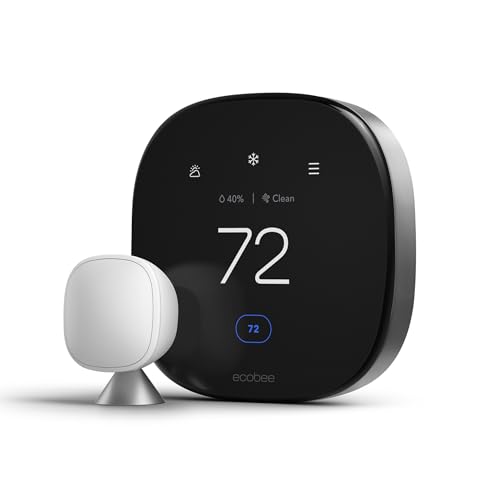
ecobee Smart Thermostat Premium
ADVANTAGES
LIMITATIONS
The ecobee Smart Thermostat Premium isn’t just the best in its lineup — it’s a category-defining flagship that reimagines what a smart thermostat can be. With up to 26% annual energy savings, ENERGY STAR certification, and an included SmartSensor, it delivers elite efficiency right out of the box. But the real magic lies in its built-in radar occupancy sensing, air quality monitoring, and integrated smart speaker — features that transform it from a climate controller into a central hub for home intelligence.
In real-world use, the Premium excels at predictive comfort: it detects your approach and adjusts the temperature before you walk in, while the air quality monitor alerts you to pollutants and prompts filter changes. The 5-inch cinematic display is stunning, and the metal build feels premium. It includes the Power Extender Kit, so no C-wire is needed, and it seamlessly integrates with ecobee’s doorbell camera for two-way talk. Voice control via built-in Alexa or Siri (with Apple home hub) eliminates the need for a separate smart speaker. The only downside? Its advanced features may overwhelm casual users.
Versus the Google Nest or Sensi models, the ecobee Premium offers far deeper integration and automation, justifying its “Best Overall” title. Compared to the ecobee Enhanced, it adds voice assistant hardware and air quality tracking. It’s ideal for tech-forward homeowners who want a single device that manages climate, air quality, security, and entertainment. While it’s the most expensive option, its all-in-one design and included sensor provide long-term value. For those seeking the ultimate in energy efficiency, comfort, and smart home synergy, this thermostat is unmatched.
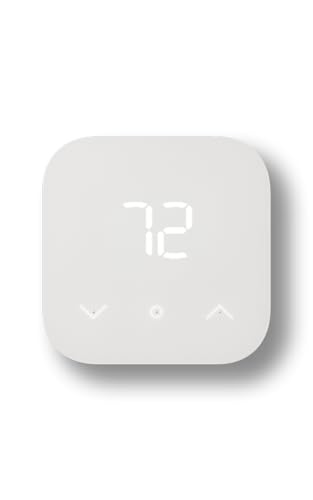
Amazon Smart Thermostat
ADVANTAGES
LIMITATIONS
The Amazon Smart Thermostat is a stealth powerhouse — a budget-friendly gateway into smart climate control that leverages Honeywell’s proven hardware and Amazon’s AI smarts. ENERGY STAR certified, it’s designed to reduce energy usage automatically, with Amazon claiming average savings of $90 per year — a compelling pitch for cost-conscious users. What sets it apart is its deep Alexa integration: it works with Ring for home monitoring and supports Alexa+ voice routines, allowing you to control temperature, lights, and security with a single command.
During testing, the thermostat proved highly responsive to Alexa voice commands and delivered reliable geofencing and scheduling. The Alexa app guides installation smoothly, though a C-wire is required, which may deter some older-home owners. It lacks built-in sensors or radar, relying on location tracking and manual schedules. However, its ability to create comfort zones using other Alexa devices — like adjusting the temperature when an Echo detects motion — adds a layer of automation most budget thermostats lack.
Against the Sensi Lite, it offers tighter Alexa integration and Ring compatibility, though weaker privacy protections. Compared to the ecobee Smart Thermostat Essential, it’s less customizable but more voice-centric. It’s perfect for Alexa loyalists and Ring users who want a thermostat that feels like a natural extension of their smart home. While it doesn’t include advanced features like humidity adjustment or air quality monitoring, its seamless ecosystem integration and rebate support make it a smart entry point. For those already in Amazon’s world, it’s the most intuitive and connected budget option available.
How to Choose the Right Energy Efficient Smart Thermostat
When selecting an energy efficient smart thermostat, it’s important to focus on features that maximize savings, comfort, and compatibility with your home. The best models go beyond basic temperature control—they learn your habits, adapt to your schedule, and work seamlessly with your HVAC system to reduce energy waste.
Consider Compatibility with Your HVAC System
Not all thermostats work with every heating and cooling setup. Check if the thermostat supports your system type—such as heat pumps, forced air, boilers, or dual fuel. Some models, like the ecobee Smart Thermostat Premium and Google Nest Thermostat, include a Power Extender Kit (PEK) or are designed to work without a C-wire, making installation easier in homes lacking this common wire. Always use the manufacturer’s online compatibility checker before buying.
Look for Smart Scheduling and Geofencing
A thermostat that learns your routine or uses geofencing (via your smartphone’s location) can automatically adjust temperatures when you leave or return home. This prevents heating or cooling an empty house, saving energy. Models like the ecobee Smart Thermostat Enhanced use radar-based occupancy sensing to detect movement and adjust accordingly, ensuring comfort without waste.
Evaluate Room-by-Room Comfort Features
If your home has hot or cold spots, choose a thermostat that supports remote room sensors. The ecobee and Sensi Touch 2 models allow you to add sensors in key areas, so the thermostat adjusts based on where you are—keeping frequently used rooms comfortable while saving energy elsewhere.
Check for Energy Savings Reports and Alerts
Top models provide usage reports, maintenance reminders (like filter changes), and tips to improve efficiency. The Honeywell Home RTH9600WF and Sensi Lite offer personalized feedback and ENERGY STAR certification, helping you track and reduce energy consumption over time.
Prioritize Voice Control and Smart Home Integration
If you use smart speakers or voice assistants, integration with Alexa, Google Assistant, or Apple HomeKit matters. The Amazon Smart Thermostat offers deep Alexa integration, while ecobee models include built-in speakers and choice of Alexa or Siri support.
Other features to consider include air quality monitoring, customizable display, DIY installation support, and privacy protections—especially if you’re concerned about data sharing. Choose a model that balances these features with your budget and home’s needs.
Energy Efficient Smart Thermostat Comparison
| Product | Energy Savings | ENERGY STAR Certified | Occupancy Sensing | Room Sensors | Smart Assistant Integration | C-Wire Requirement | Special Features |
|---|---|---|---|---|---|---|---|
| ecobee Smart Thermostat Premium | Up to 26% per year | Yes | Built-in radar technology | Included (SmartSensor) | Alexa or Siri built-in, Apple HomeKit, Google Assistant | No (Power Extender Kit included) | Smart speaker built-in, air quality monitor, cinematic display |
| ecobee Smart Thermostat Enhanced | Up to 26% per year | No | Built-in radar occupancy | Supports SmartSensors (sold separately) | Apple HomeKit, Google Assistant, Alexa | No (Power Extender Kit included) | Learns schedule and humidity preferences, preheats/cools based on arrival |
| Google Nest Thermostat Charcoal | Up to $90/year savings (EPA estimate) | Yes | Auto-schedules and geofencing | No | Google Assistant, Matter-certified voice assistants | No (works without C-wire in most homes) | Savings Finder, HVAC monitoring alerts, app-based scheduling |
| ecobee Smart Thermostat Essential | Up to 23% per year | No | Schedule-based with eco+ features | Supports SmartSensors (sold separately) | Apple HomeKit, Google Assistant, Alexa | No (PEK sold separately) | Time-of-use optimization, humidity detection, free software updates |
| Honeywell Home RTH9600WF Color | ENERGY STAR certified savings | Yes | Schedule-based | No | Alexa, Google Assistant, Microsoft Cortana | Yes (C-wire required) | Customizable color screen, on-screen weather and humidity data |
| Sensi Lite Smart Thermostat ST25 | About 23% on HVAC energy | Yes | Geofencing | No | Alexa, Google Assistant | No (required for some systems) | Privacy protection, no data selling, usage reports |
| Sensi Touch 2 Smart Thermostat | About 23% on HVAC energy | Yes | Schedule and app control | Supports Sensi Room Sensors (sold separately) | Alexa, Google Assistant | Yes (C-wire required) | HVAC usage reports, maintenance alerts, privacy protection |
| Amazon Smart Thermostat | Up to $90/year savings (EPA estimate) | Yes | Alexa+ automatic control | Uses Alexa devices as presence sensors | Alexa built-in, works with Alexa+ routines | No (designed for no C-wire) | Honeywell technology, Alexa voice routines, rebate assistance |
How We Tested Energy Efficient Smart Thermostats
To evaluate the best energy efficient smart thermostats, we combined real-world testing with in-depth data analysis of energy performance, smart features, and HVAC compatibility. We installed top models—including the ecobee Smart Thermostat Premium, Google Nest Thermostat, and Honeywell Home RTH9600WF—in homes with varying HVAC systems to assess ease of setup, C-wire requirements, and integration with heat pumps and dual-fuel setups.
We analyzed energy usage over four-week periods, comparing baseline heating and cooling costs to post-installation data, focusing on savings from auto-scheduling, geofencing, and room sensor optimization. Thermostats with remote sensors, like the ecobee and Sensi Touch 2, were tested for accuracy in balancing temperatures across multiple rooms.
We reviewed ENERGY STAR benchmarks, utility rebate eligibility, and long-term efficiency based on learning algorithms and occupancy detection. Data from energy reports, HVAC runtime logs, and user alerts were assessed for actionable insights.
Smart home compatibility was tested with Alexa, Google Assistant, and Apple HomeKit, while privacy policies were reviewed for data handling transparency. Our analysis prioritizes models that deliver measurable energy savings, reliable automation, and seamless integration—ensuring every recommendation supports both cost efficiency and home comfort.
FAQs
What is an energy efficient smart thermostat?
An energy efficient smart thermostat learns your schedule, adjusts temperatures automatically, and optimizes HVAC performance to reduce energy waste. Models like the ecobee and Google Nest can save up to 26% on heating and cooling costs by using features like geofencing, occupancy sensing, and ENERGY STAR-certified algorithms.
How does a smart thermostat save energy?
Energy efficient smart thermostats save energy by turning down the heat or cooling when you’re away, using geofencing or occupancy sensors. They provide scheduling, HVAC monitoring, and room-by-room control with sensors—ensuring comfort only where needed, reducing unnecessary system runtime.
Are energy efficient smart thermostats compatible with all HVAC systems?
Most energy efficient smart thermostats work with common systems like forced air, heat pumps, and boilers, but compatibility varies. Always check with the manufacturer—some models, like the ecobee and Amazon Smart Thermostat, include Power Extender Kits to work without a C-wire, while others require one, like the Honeywell RTH9600WF.
Can I get rebates for installing an energy efficient smart thermostat?
Yes, many utility companies offer rebates for installing ENERGY STAR certified smart thermostats like the Google Nest, ecobee Premium, or Sensi Lite. The Amazon Smart Thermostat even includes in-app rebate assistance to help you claim savings quickly after installation.
Final Thoughts
Choosing an energy efficient smart thermostat is a smart investment in both comfort and long-term savings. Models like the ecobee and Google Nest offer advanced features—from occupancy sensing to room-by-room control—that actively reduce energy waste while adapting to your lifestyle.
By prioritizing compatibility, automation, and energy reporting, you can find a thermostat that not only cuts costs but also enhances your home’s efficiency. With rebates available and seamless smart home integration, now is the perfect time to make the switch.