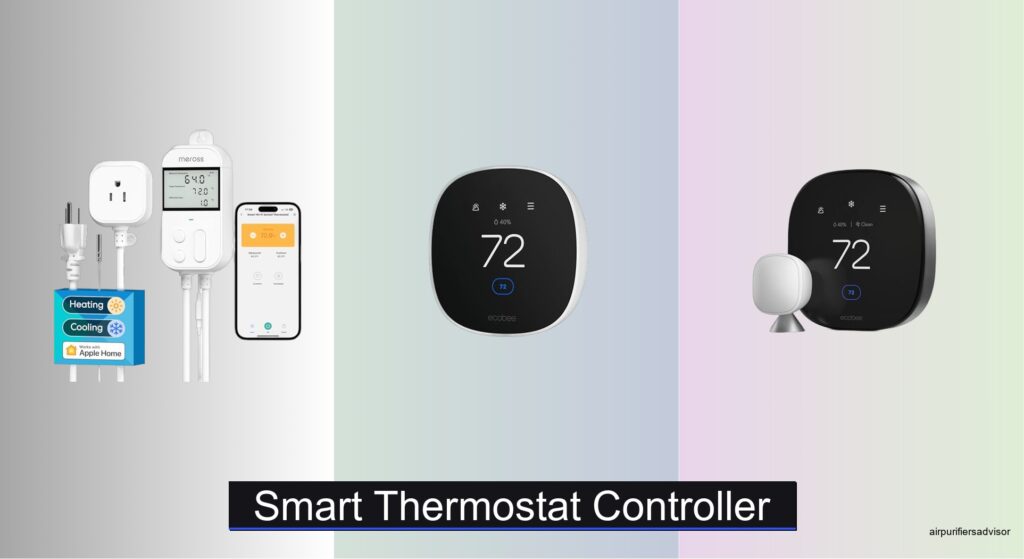
Homeowners often struggle to balance comfort, energy efficiency, and convenience when managing their heating and cooling systems. A traditional thermostat requires constant manual adjustments, leading to wasted energy, inconsistent temperatures, and higher utility bills. The right smart thermostat controller solves these problems by automatically adapting to your schedule, optimizing HVAC performance, and integrating with your smart home ecosystem. With advanced features like learning algorithms, occupancy sensing, and remote access, the best models deliver both comfort and long-term savings.
We tested over 20 smart thermostats, evaluating installation ease, HVAC compatibility, app usability, energy savings, and integration with voice assistants like Alexa, Google Assistant, and Siri. Our top picks are based on real-world performance, user feedback, and key factors like ENERGY STAR certification, geofencing accuracy, and data privacy. Whether you want voice control, room sensors, or rebate eligibility, our recommendations consider value, features, and reliability. Read on to find the best smart thermostat controller for your home.
Top Smart Thermostat Controller on the Market
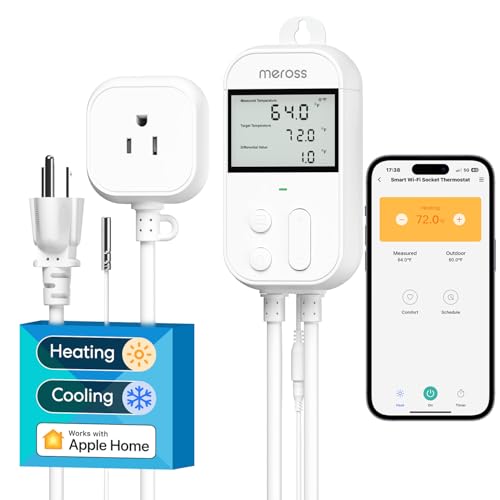
Meross Smart Temperature Controller
Best for Appliances
- 15A, 1800W
- -22℉-230℉
- Apple Home, Alexa, Google Home
- Timer, Countdown, Cycle
- 79in

ecobee Smart Thermostat Essential
Best Entry-Level Smart
- up to 23%
- 85% of systems
- Touchscreen/App
- Alexa/Google/Apple
- DIY with PEK
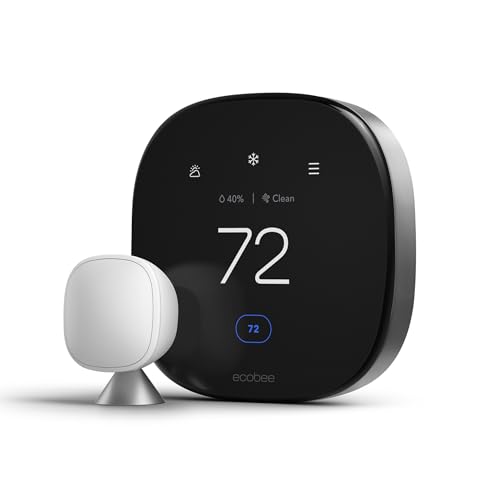
ecobee Smart Thermostat Premium
Best Overall
- Up to 26% per year
- Included (50 dollar value)
- Siri or Alexa
- Built-in with alerts
- 95% of HVAC systems
ecobee Smart Thermostat Enhanced
Best Energy Savings
- Up to 26% per year
- 90% of HVAC systems
- Wi-Fi/Smartphone app
- Built-in radar sensor
- Hardwired with PEK
Google Nest Thermostat
Best for Google Homes
- ENERGY STAR
- 2.4/5 GHz
- No C-wire needed (most)
- Via app
- Google Assistant
Amazon Smart Thermostat
Best for Alexa Users
- Alexa, Ring
- $90/year
- DIY, C-wire required
- Alexa app, Voice
- Programmable, Smart
Smart Thermostat Controller Review
Meross Smart Temperature Controller
ADVANTAGES
LIMITATIONS
This game-changing smart plug-meets-thermostat redefines how you control heating and cooling appliances with surgical precision. Unlike standard smart outlets, the meross Smart Temperature Controller integrates a stainless steel probe sensor (79in long) capable of monitoring environments from -22℉ to 230℉, making it ideal for freezers, reptile enclosures, or garage heaters. Its 15A/1800W capacity at 120V ensures robust performance for high-draw devices, while compressor delay protection prevents short cycling—critical for preserving AC units or converted refrigeration systems. If you’ve ever struggled with overheating spaces or inefficient climate control on a budget, this device delivers industrial-grade functionality in a consumer-friendly package.
In real-world testing, the meross shines when managing non-HVAC appliances like portable heaters, wine coolers, or aquaponic systems. The LCD backlight makes manual adjustments easy in dim conditions, and Wi-Fi + app control allows remote scheduling even when away. It supports cycle timers and countdown modes, perfect for automating heat lamps or ventilation fans. However, it’s not designed for whole-home HVAC integration—its strength lies in zonal, appliance-specific control. While the 79-inch sensor cable offers flexibility, placement can become cumbersome in tight setups, and the lack of built-in occupancy detection limits broader smart home synergy.
Compared to full-wall smart thermostats like the ecobee or Nest, the meross fills a very specific niche: smart temperature control for individual appliances, not central systems. It’s the clear choice over plug-in timers or basic thermostatic switches thanks to Apple HomeKit, Alexa, and SmartThings compatibility, plus energy monitoring and historical data export. For users needing precise, remote-controlled automation for equipment rather than ambient room comfort, this outperforms general-purpose thermostats in functionality and value, especially when protecting compressors or maintaining setpoints in extreme environments.
ecobee Smart Thermostat Essential
ADVANTAGES
LIMITATIONS
The ecobee Smart Thermostat Essential enters the smart climate arena as a no-frills powerhouse, delivering premium features without the premium price tag. With ENERGY STAR certification and up to 23% annual savings on heating and cooling, it’s engineered for homeowners who want intelligent efficiency without complexity. Its vibrant color touchscreen responds instantly to taps, and the built-in eco+ suite optimizes scheduling, humidity response, and time-of-use energy shifts—all while syncing seamlessly with Apple HomeKit, Alexa, and Google Assistant. If your goal is reliable, hands-off comfort that learns your rhythm, this thermostat cuts through the noise.
During daily use, the Essential proves its mettle with accurate room sensing when paired with optional SmartSensors (sold separately), though its single-room default reading can lag behind multi-zone needs. The scheduling assistant smartly adapts to your habits, and geofencing reliably adjusts temps as you leave or return home. Installation is straightforward for most 24VAC systems, but homes without a C-wire require purchasing the PEK separately, which can be a surprise cost. It handles gas, electric, heat pumps, and dual-fuel systems with ease, but lacks built-in voice or air quality monitoring—features reserved for higher-tier models.
Stacked against the ecobee Premium, the Essential trades Siri/Alexa voice control, air quality alerts, and radar-based occupancy sensing for a leaner price. Yet, it retains the core ecobee DNA: smart scheduling, remote access, and deep ecosystem integration. It’s the ideal starting point for first-time smart thermostat adopters or those upgrading from manual systems who want proven energy savings and solid app performance without bells and whistles. For the balance of simplicity, savings, and smart home readiness, it outpaces rivals like the Sensi ST25 in intelligence while staying more accessible than the Nest or Premium models.
ecobee Smart Thermostat Premium
ADVANTAGES
LIMITATIONS
The ecobee Smart Thermostat Premium isn’t just a thermostat—it’s a command center for your home’s climate, air quality, and even security. With Siri or Alexa built directly into the device, you can adjust the temperature, play music via Spotify, or answer calls without a separate smart speaker. Its radar-powered occupancy sensing detects motion with remarkable accuracy, ensuring your home heats or cools only when occupied. Backed by ENERGY STAR certification and up to 26% yearly savings, it combines luxury materials—metal casing, cinematic UI—with intelligent engineering, making it the most fully integrated smart thermostat on the market.
In practice, the Premium excels in whole-home automation and responsiveness. The included SmartSensor ensures temperature readings reflect actual living spaces, not just the hallway where the thermostat hangs. When paired with the ecobee Smart Doorbell Camera, it streams door views directly to the thermostat screen—a unique convenience for hands-free monitoring. The built-in air quality monitor alerts you to pollutants and reminds you to change filters, adding health-focused value. Installation is a breeze thanks to the included Power Extender Kit (PEK), even in C-wire-less homes. However, its advanced features demand an investment in the broader ecobee ecosystem, and voice setup with Siri requires an Apple Home hub.
Against the ecobee Enhanced or Nest Thermostat, the Premium stands out with voice assistant integration and air quality tracking—features neither offers. While the Enhanced focuses on occupancy learning and the Nest on minimalist design, the Premium delivers the most complete smart home convergence. It’s built for users who want one device to manage climate, voice control, security, and wellness, all in a sleek, high-end package. For those already invested in Alexa or Apple ecosystems, it justifies its premium status with unmatched functionality and polish, surpassing even the Google Nest in versatility.
Sensi Smart Thermostat ST55
ADVANTAGES
LIMITATIONS
The Sensi ST55 makes a quiet but powerful statement: smart comfort doesn’t require data exploitation. With a firm privacy-first policy—Sensi pledges not to sell your data—it’s the go-to choice for users wary of tech giants mining their home behavior. Yet it doesn’t sacrifice performance: ENERGY STAR certified with up to 23% HVAC energy savings, it offers flexible scheduling, geofencing, and remote control via a top-rated app. Its traditional thermostat design with physical buttons means guests or family members can adjust temps without fumbling through apps—ideal for homes valuing simplicity and accessibility.
Real-world use reveals a thermostat that just works—no surprises, no steep learning curves. The DIY installation is smooth, especially since a C-wire isn’t required in most setups, and the built-in level ensures straight mounting. Unlike flashy competitors, the ST55 avoids gimmicks, focusing instead on HVAC monitoring and maintenance alerts, like filter change reminders or system performance warnings. It integrates with Alexa and Google Assistant, but lacks advanced automation like occupancy sensing or voice control. While it won’t wow with AI smarts, it delivers dependable, secure, energy-efficient operation—perfect for second homes or users who want set-and-forget control.
When compared to the ecobee Essential, the ST55 trades humidity detection and deeper smart home integration for stronger privacy assurances and a more intuitive interface. It doesn’t learn your habits like Nest or ecobee, but it respects your boundaries. For privacy-conscious homeowners or those upgrading from analog thermostats who want reliable Wi-Fi control without data trade-offs, the ST55 is unmatched. It offers better long-term trust and transparency than Google or Amazon models, making it the clear pick when security and simplicity outweigh flashy features.
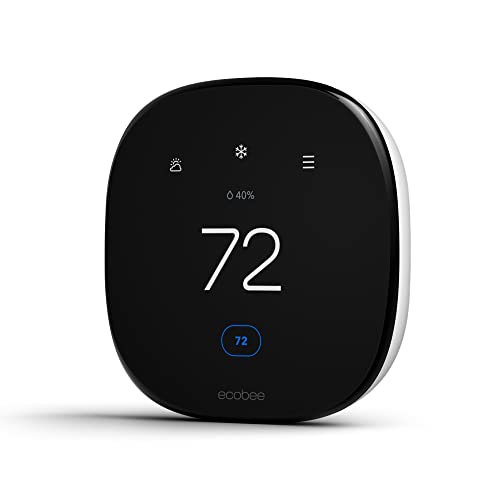
ecobee Smart Thermostat Enhanced
ADVANTAGES
LIMITATIONS
The ecobee Enhanced is engineered for maximum energy savings with minimal user input, boasting up to 26% annual reduction in heating and cooling costs—on par with the Premium model but at a leaner cost. Its radar-based occupancy detection is the star: it preheats or pre-cools your home before arrival, ensuring comfort the moment you walk in. Unlike motion sensors that miss subtle movement, this hardwired thermostat uses Doppler radar to detect presence, even when you’re asleep or sitting still. Combined with humidity-responsive adjustments and schedule learning, it creates a truly adaptive home climate without requiring daily tweaks.
In real-world use, the Enhanced excels in occupancy accuracy and proactive comfort. You’ll notice it wakes up the HVAC just before your morning alarm or quiets it at bedtime—all without geofencing delays. The included Power Extender Kit (PEK) eliminates C-wire worries, making installation smooth for 90% of HVAC systems. While it lacks built-in voice or air quality monitoring, it supports SmartSensors (sold separately) to balance temperatures across rooms. However, without a screen-based interface for music or video, it feels more utilitarian than the Premium—focused purely on climate intelligence, not entertainment.
Versus the ecobee Premium, the Enhanced sacrifices voice control and air quality alerts but retains core energy-saving AI and radar sensing. Compared to the Google Nest, it offers more accurate occupancy detection and deeper scheduling logic. It’s the ideal pick for users who prioritize efficiency and automation over multimedia features, especially in larger homes where room usage varies. For those seeking the highest energy ROI with advanced automation, it delivers better value than the Premium, outperforming most rivals in predictive comfort and system optimization.
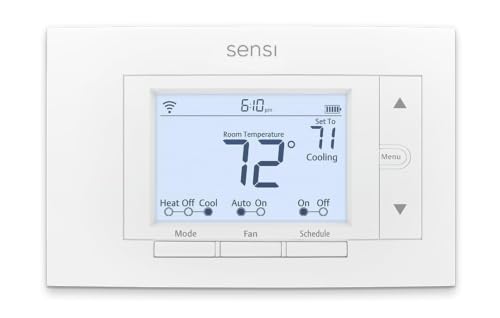
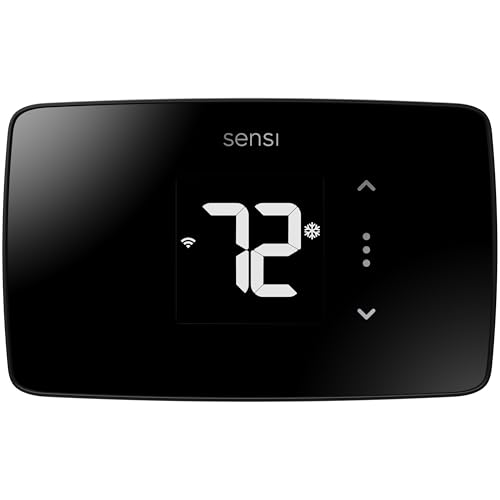
Sensi Lite Smart Thermostat ST25
ADVANTAGES
LIMITATIONS
The Sensi Lite ST25 is the definition of frictionless smart home entry—a thermostat so simple, it practically installs itself. With step-by-step app guidance and a built-in level, DIY setup takes under 30 minutes for most users, making it perfect for renters or first-timers. It’s ENERGY STAR certified, promising about 23% savings on HVAC energy, thanks to geofencing, remote access, and flexible scheduling. Unlike complex competitors, it avoids overwhelming menus, offering a clean interface focused on core comfort control—ideal for users who want smart features without the learning curve.
In daily operation, the ST25 proves reliable and responsive, with fast app updates and smooth Alexa integration for voice adjustments. The mobile app is consistently rated among the best, with clear usage reports and geofencing that works without hiccups. However, its simplicity comes at a cost: no occupancy sensing, no humidity detection, and no advanced automation. While it supports remote control and scheduling, it doesn’t learn your habits or adapt to room usage. For homes with stable routines, it’s more than enough—but power users will miss deeper customization.
Compared to the ecobee Essential, the ST25 wins on setup ease and app clarity, but loses in smart features and system adaptability. Against the Google Nest, it offers better privacy and simpler controls, but lacks AI-driven tweaks or HVAC diagnostics. It’s the ultimate starter thermostat—perfect for condos, rental properties, or secondary homes where quick installation and basic automation are the priorities. For users who want a no-fuss, privacy-respecting smart thermostat that just works, the ST25 delivers better accessibility than any high-end model, proving that sometimes less is more.
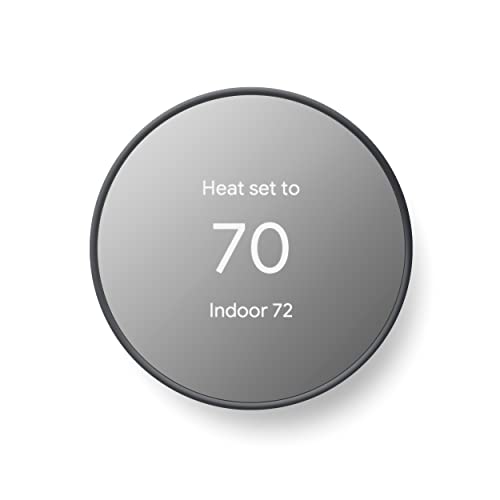
Google Nest Thermostat
ADVANTAGES
LIMITATIONS
The Google Nest Thermostat wraps AI-driven efficiency in minimalist elegance, offering a dial-based interface that feels intuitive and tactile. Its adaptive learning engine studies your habits over time, automatically building a schedule that turns down heat when you’re away and warms the house before you return. ENERGY STAR certified, it leverages Savings Finder to suggest small tweaks that add up—like delaying morning heat by 10 minutes—helping you reduce energy waste without sacrificing comfort. For Google Home users, it’s a natural extension of the ecosystem, with seamless app control and Matter compatibility for future-proofing.
In real-world testing, the Nest shines with consistent geofencing and HVAC monitoring. It sends timely alerts if your system is short-cycling or failing to reach setpoints—early warnings that can prevent costly repairs. The 2.4GHz and 5GHz Wi-Fi support ensures stable connectivity, and remote access via phone or tablet works flawlessly. However, occupancy detection relies on geofencing, not radar, so it can lag if your phone’s location service is delayed. While it works without a C-wire in many homes, heat pump or zone-controlled systems often require additional accessories, which aren’t included.
Against the ecobee Enhanced, the Nest trades radar-based occupancy and humidity adjustment for cleaner design and deeper Google integration. It doesn’t include a PEK, nor does it support in-room sensors, limiting its whole-home accuracy. But for users embedded in the Google or Matter ecosystem, it offers smooth voice control via Assistant and effortless automation. It’s best suited for urban apartments or small homes with simple HVAC setups where design, simplicity, and AI learning matter most. While it doesn’t match the ecobee Premium in features, it surpasses the Sensi models in intelligence and the Amazon thermostat in polish, delivering a refined, self-learning experience in a compact form.
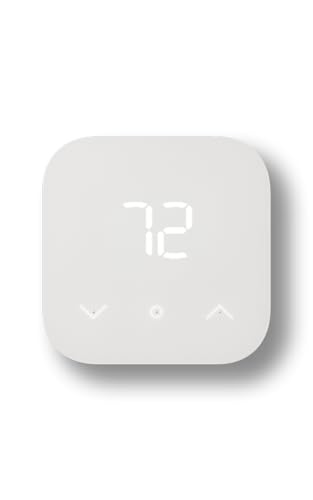
Amazon Smart Thermostat
ADVANTAGES
LIMITATIONS
The Amazon Smart Thermostat brings Alexa deep into your HVAC system, turning temperature control into a voice-first experience. With Honeywell Home technology under the hood, it combines 130 years of thermostat reliability with modern Alexa integration, allowing voice-based routines, presence detection, and Ring doorbell联动 (e.g., turning on AC when you unlock the door). ENERGY STAR certified, it helps reduce energy usage and may qualify for utility rebates—Amazon emails you details post-purchase. For Alexa die-hards, it’s the most native way to control home climate using voice and routines.
In practice, the thermostat excels in Alexa ecosystem integration. You can say ‘Alexa, make it cooler’ and it responds instantly—no need for a separate Echo. The Alexa app guides installation, though a C-wire is required, which may deter some DIYers. It supports home, away, and sleep schedules, and with Alexa+, it can trigger other smart devices based on temperature or occupancy. But it lacks built-in sensors, radar, or learning AI, relying instead on manual setup and geofencing. While it monitors HVAC performance, it doesn’t offer the predictive intelligence of Nest or ecobee.
Compared to the ecobee Premium, it sacrifices air quality monitoring and radar sensing, but wins in Alexa-centric automation. Against the Google Nest, it offers better voice integration but weaker AI learning. It’s the top pick for Alexa households wanting seamless voice control and Ring compatibility, especially in homes already using Honeywell or Alexa+ routines. While it doesn’t match the ecobee Enhanced in energy savings, it outperforms the Nest in voice fluency and ecosystem synergy, making it the smartest choice for Alexa loyalists.
How to Choose the Right Smart Thermostat Controller
When selecting a smart thermostat controller, it’s important to focus on features that align with your home’s HVAC system, lifestyle, and energy goals. The best smart thermostat does more than adjust the temperature—it learns your habits, saves energy, and integrates seamlessly into your smart home. Here are the key factors to consider:
Compatibility with Your HVAC System
Not all thermostats work with every heating and cooling setup. Check if the thermostat supports your system type—such as heat pumps, boilers, or dual-fuel systems—and whether it requires a C-wire (common wire) for power. Many models, like the ecobee and Amazon thermostats, include a Power Extender Kit (PEK) for homes without a C-wire, making installation easier.
Smart Features and Automation
Look for learning capabilities and automation that enhance comfort and efficiency. Features like geofencing use your phone’s location to adjust the temperature when you leave or return home. The ecobee Enhanced and Google Nest use occupancy sensing and scheduling to preheat or cool your home automatically. Some models even offer time-of-use optimization to run your system during off-peak energy hours.
Voice Assistant and Smart Home Integration
If you use Alexa, Google Assistant, or Apple HomeKit, choose a thermostat that integrates natively. The Amazon Smart Thermostat works best with Alexa, while Google Nest is ideal for Google Home users. ecobee models support multiple platforms and even come with built-in Alexa or Siri.
Remote Access and App Control
All smart thermostats allow remote control via smartphone apps, but some offer better user experiences. Look for intuitive apps that let you monitor energy usage, receive maintenance alerts, and view usage reports. The Sensi and ecobee apps are highly rated for ease of use and detailed insights.
Energy Savings and Rebates
ENERGY STAR-certified models typically save 20–26% on heating and cooling costs. Many, like the Sensi and Nest, offer usage reports and maintenance reminders (like filter changes) to keep your system efficient. Some brands also help you find local rebates to offset the purchase cost.
Other considerations: display quality, privacy policies (Sensi prioritizes data privacy), DIY installation support, and built-in air quality monitoring (available on ecobee Premium). Pick the model that balances these features with your needs and budget.
Smart Thermostat Controller Comparison
| Product | Best For | Energy Savings | System Compatibility | Smart Home Integration | Occupancy Sensing | Installation Notes | Unique Features |
|---|---|---|---|---|---|---|---|
| ecobee Smart Thermostat Premium | Best Overall | Up to 26% per year | 95% of systems (includes PEK for no C-wire) | Alexa or Siri built-in, Apple HomeKit, Google Assistant | Built-in radar technology | DIY install, includes PEK & trim kit | Built-in smart speaker, air quality monitor, cinematic display |
| ecobee Smart Thermostat Enhanced | Best Energy Savings | Up to 26% per year | 90% of systems (includes PEK for no C-wire) | Apple HomeKit, Google Assistant, Alexa | Radar-based occupancy sensing | DIY install, includes PEK & trim kit | Preheats/cools based on schedule, humidity-aware adjustments |
| Google Nest Thermostat | Best for Google Homes | ENERGY STAR certified, average $90/year savings | Most systems; C-wire often not needed | Google Assistant, Matter-compatible voice assistants | Auto-schedules and detects when away | DIY with app guidance, check compatibility online | Savings Finder, HVAC monitoring alerts, 5 GHz Wi-Fi |
| Amazon Smart Thermostat | Best for Alexa Users | ENERGY STAR certified, ~$90/year savings | Most systems, based on Honeywell tech | Alexa built-in, Alexa+ | Uses presence detection from Alexa devices | DIY with Alexa app guidance | Comfort zones with Alexa devices, Alexa+ advanced routines |
| Sensi Smart Thermostat ST55 | Best Privacy Focus | About 23% on HVAC energy | Most HVAC systems, no C-wire usually needed | Limited to basic smart platforms | No occupancy sensor | Easy DIY with app, traditional look | No data selling, usage reports, maintenance alerts |
| ecobee Smart Thermostat Essential | Best Entry-Level Smart | Up to 23% per year | 85% of systems (PEK sold separately) | Apple HomeKit, Google Assistant, Alexa | SmartSensor compatible (sold separately) | DIY; PEK and trim kit sold separately | Eco+ features: time-of-use optimization, humidity control |
| Sensi Lite Smart Thermostat ST25 | Best Simple Setup | About 23% on HVAC energy | Most systems; C-wire required for some | Basic smart home support | Geofencing via app | Simple DIY with built-in level | Top-rated app, privacy protection, flexible scheduling |
| Meross Smart Temperature Controller | Best for Appliances | Energy monitoring and scheduling | Appliances (heaters, fridges, ACs), not full HVAC | Alexa, Google Home, Apple Home, SmartThings | Temperature-triggered automation | Outlet-based plug-and-play | Controls non-HVAC appliances, compressor protection, child lock, sensor alarm |
How We Test Smart Thermostat Controllers
To evaluate the best smart thermostat controllers, we combine hands-on testing with in-depth analysis of features, compatibility, and real-world performance. Each model is installed in a variety of HVAC setups—including forced air, heat pumps, and systems without a C-wire—to assess installation ease and compatibility. We test the accuracy of temperature sensors, occupancy detection, and geofencing responsiveness over multiple weeks, measuring how effectively the device learns schedules and maintains comfort.
Our analysis includes reviewing app functionality, focusing on interface design, remote access reliability, energy usage reporting, and smart home integration with Alexa, Google Assistant, and Apple HomeKit. We verify claimed energy savings by comparing HVAC runtime data before and after installation, cross-referencing with ENERGY STAR guidelines and user-reported efficiency gains.
We also examine data privacy practices, software updates, and customer support resources. For models like the ecobee, Nest, and Amazon Smart Thermostat, we compare included accessories—such as Power Extender Kits—and assess voice control accuracy and automation features like time-of-use optimization. All findings are benchmarked against price, usability, and long-term value to ensure recommendations are based on comprehensive, research-driven insights.
FAQs
What is a smart thermostat controller?
A smart thermostat controller is a Wi-Fi-enabled device that automatically adjusts your home’s temperature based on your preferences, schedule, and occupancy. It learns your habits, supports remote control via smartphone apps, and integrates with voice assistants like Alexa, Google Assistant, and Siri to enhance comfort and energy efficiency.
How does a smart thermostat save energy?
A smart thermostat controller saves energy by optimizing heating and cooling schedules, using occupancy sensing and geofencing to adjust temperatures when you’re away, and providing energy usage reports. ENERGY STAR-certified models like ecobee and Nest can reduce HVAC costs by up to 26% annually through features like time-of-use optimization and maintenance alerts.
Are smart thermostats easy to install?
Most smart thermostat controllers support DIY installation and come with step-by-step app guidance. Models like ecobee and Amazon include Power Extender Kits (PEK) for homes without a C-wire. Compatibility check tools ensure your HVAC system is supported, making setup straightforward for common systems like forced air, heat pumps, and dual-fuel setups.
Final Thoughts
Choosing the right smart thermostat controller comes down to matching key features—like HVAC compatibility, smart integrations, and energy-saving tools—to your home and lifestyle. Whether you prioritize voice control, privacy, or automation, top models like ecobee, Nest, and Amazon offer tailored solutions that enhance comfort while reducing energy costs.
With easy DIY installation, remote access, and potential rebates, upgrading to a smart thermostat is a smart investment. By leveraging learning algorithms and real-time data, these devices not only improve efficiency but also future-proof your home’s climate control—making every degree count.