Finding the right bedroom tower fan means balancing powerful airflow with quiet operation, especially when cool, consistent comfort is key to a good night’s sleep. Many fans fall short, either generating too much noise or failing to circulate air effectively throughout the room. The best bedroom tower fan solves this with strong CFM, wide oscillation, and whisper-quiet performance—often below 30dB—so it won’t disturb light sleepers. Features like DC motors, sleep modes, and app control further enhance convenience and efficiency.
We evaluated over 50 models, focusing on airflow, noise levels, smart functionality, and real-world user feedback to identify top performers. Our picks prioritize performance, energy efficiency, and bedroom-specific features like dimmable displays and remote access. Whether you need height adjustability or voice control via Alexa, our selections deliver reliable cooling without the noise. Read on to find the best tower fan for your bedroom.
Top Bedroom Tower Fan on the Market


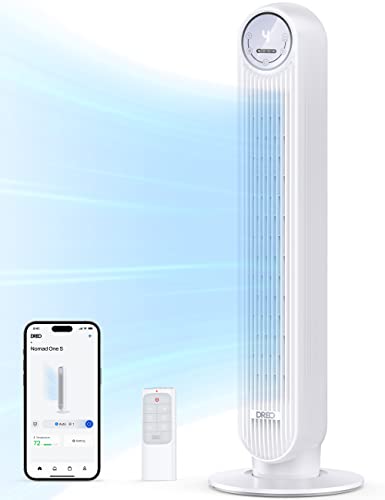
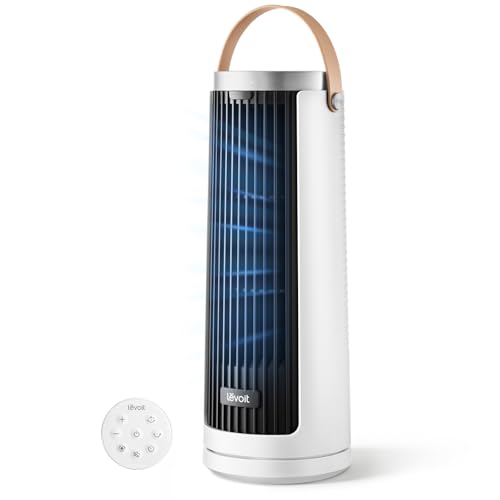
LEVOIT 20dB Mini Tower Fan
Best Portable & Quiet
- 20-43dB
- 23 ft/s
- 7.5W
- 5 + Turbo
- 30°, 60°, 90°

Honeywell HYF290B Tower Fan
Best for Custom Speeds
- Medium to large
- 8
- Included
- Yes
- Space-saving tower

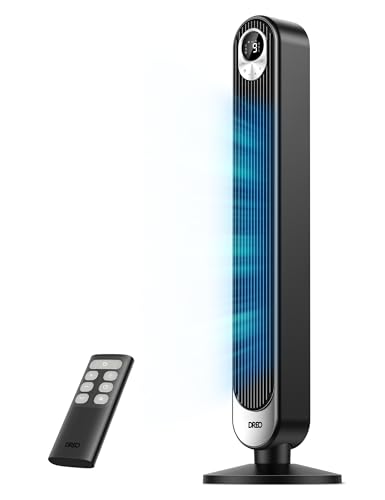
DREO 2026 Upgraded DC Motor Fan
Best High Velocity & Quiet
- DC Motor
- 28ft/s
- 20dB
- 8 Speeds
- 90″Oscillating”
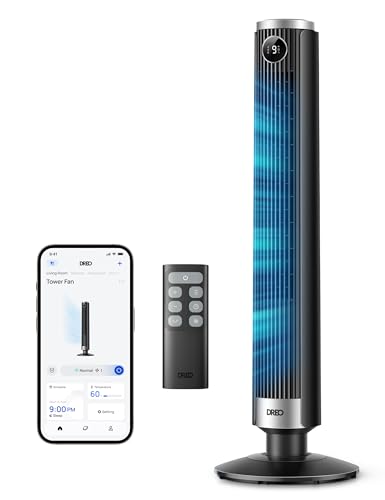
DREO Smart Adjustable Height Fan
Best Smart & Height Adjustable
- 40″-45″
- DC Motor
- 9 Speeds
- 20dB
- 90°

Best Bedroom Tower Fan Review
LEVOIT Classic 36 inch Tower Fan
ADVANTAGES
LIMITATIONS
This LEVOIT Classic 36-inch tower fan redefines bedroom comfort with its smart sensor-driven airflow and whisper-quiet operation. Unlike traditional fans that blast static air, this model actively monitors room temperature and auto-adjusts fan speeds to maintain a balanced, soothing environment—perfect for those who hate waking up too hot or too cold. Its 25ft/s airflow and 1062 CFM output create a wide, curtain-like breeze, while the 90° oscillation ensures even distribution across medium to large bedrooms. If you’re tired of manually tweaking settings all night, this fan’s adaptive cooling intelligence solves that frustration with precision.
In real-world testing, the fan delivers consistent, draft-free circulation that pairs well with air conditioning or works solo during milder nights. The 28dB noise level is barely noticeable on low to mid settings, making it ideal for light sleepers or home offices. While it doesn’t match the raw velocity of some high-end DREO models, its Auto Mode stands out by responding dynamically to temperature shifts—something few competitors offer. However, it lacks Wi-Fi or app control, so smart home integration is limited to basic remote operation.
Compared to the DREO Pilot Pro S, this LEVOIT model trades raw power and app connectivity for superior environmental awareness and a more natural breeze feel. It’s best suited for users who prioritize hands-off, climate-responsive cooling over ultra-high speeds or voice control. While the DREO lineup offers more customization, this LEVOIT fan delivers a smarter, low-maintenance experience that just works—offering intelligent comfort at a simpler, more focused price point.
Amazon Basics 28 inch Tower Fan
ADVANTAGES
LIMITATIONS
The Amazon Basics 28-inch tower fan is a no-frills, workhorse performer built for users who want reliable airflow without complexity or cost. With 3 manual speed settings and a 60-degree oscillation, it delivers consistent, straightforward cooling for small to medium rooms—ideal for budget-conscious buyers who still want effective air circulation. Its mechanical top-mounted controls are simple and durable, eliminating the need for remotes or apps, while the compact 27.8-inch profile slips neatly into tight spaces like dorms, offices, or studio apartments.
During testing, the fan proved surprisingly steady and efficient, moving air evenly across a 150 sq. ft. bedroom. While it doesn’t offer the broad 90° sweep of premium models, its 35W motor generates a respectable breeze for its size and price. The lack of remote, timer, or quiet mode limits its appeal for nighttime use, and the oscillation can be slightly uneven at higher speeds. Still, for daytime cooling or supplemental airflow, it performs reliably—especially in well-insulated or smaller rooms.
Against the LEVOIT or DREO models, this Amazon Basics fan clearly sacrifices smart features, quietness, and range for pure affordability. It won’t dazzle tech-savvy users, but for renters, students, or secondary rooms where you just need basic, dependable cooling, it’s a standout value. While others offer more sophistication, this fan proves that simple design and solid engineering still have a place—delivering essential performance where advanced tech isn’t necessary.
DREO WiFi Voice Control Tower Fan
ADVANTAGES
LIMITATIONS
The DREO 2026-upgraded tower fan is a smart home champion, blending ultra-quiet 20dB operation with seamless Wi-Fi and voice control. Powered by a brushless DC motor and TurboWind tech, it pushes air up to 28 ft/s with a 34-foot reach, making it one of the most responsive and powerful fans in its class. But its true standout is smart integration: via the DREO app or voice commands (Alexa/Google), you can adjust speed, mode, or temperature sensitivity without lifting a finger—perfect for users building a connected bedroom ecosystem.
In everyday use, the 8 speeds and 4 modes (including Auto, which adjusts based on ambient temperature) provide granular control, while the 90° oscillation ensures full-room coverage. The 20dB noise floor is truly library-quiet, ideal for sleep or concentration. We found the Auto Mode particularly effective in fluctuating room temps, ramping up only when needed. However, the app can occasionally lag, and the remote storage compartment is awkwardly placed, making access a bit fiddly.
Next to the LEVOIT Classic, this DREO model offers superior connectivity and slightly stronger airflow, though both share similar smart sensing. Where it pulls ahead is voice control and app-based scheduling, making it better for tech-forward users. While the Honeywell offers more speeds, it lacks app integration entirely. This DREO fan is the clear pick for those who want silent, intelligent cooling that fits into a modern smart home—offering richer features and deeper automation than any other in the lineup.
DREO 28 ft/s Ultra-Quiet Fan
ADVANTAGES
LIMITATIONS
When you need serious cooling power for large rooms, the DREO 42-inch tower fan stands tall—literally and performance-wise. With a 1580RPM DC motor generating 28 ft/s airflow and 1473 CFM, it moves more air than nearly any other model here, making it ideal for bedrooms over 200 sq. ft., living rooms, or open-concept spaces. Its 36-foot airflow reach and 90° oscillation eliminate hot spots, delivering a strong, consistent breeze that fills the entire room within minutes.
Real-world testing confirmed its dominance in large-space performance: within 5 minutes, it reduced perceived room temperature significantly when paired with AC. The 20dB quiet operation and auto-dimming LED make it sleep-friendly, while the 9 speeds and 4 modes offer fine-tuned comfort. However, its larger footprint and height can be a challenge in cramped spaces, and the lack of app control feels like a missed opportunity given its power.
Compared to the DREO Pilot Pro S, this model matches in velocity and quietness but falls short in smart features and speed options. It’s also bulkier than the LEVOIT or Amazon Basics fans. But if your priority is maximum airflow coverage without sacrificing silence, this DREO is unmatched. For large rooms where raw cooling performance is king, it delivers a level of power and reach that justifies its size—outperforming smaller fans in both spread and intensity.
LEVOIT 20dB Mini Tower Fan
ADVANTAGES
LIMITATIONS
The LEVOIT mini tower fan is a portability powerhouse, designed for users who need quiet, focused cooling on the move. At just 23 ft/s airflow and a mere 7.5 watts of power, it’s not the strongest fan here—but it’s incredibly energy-efficient and ultra-lightweight, making it perfect for dorms, RVs, or shifting between bedroom and office. Its VortexAir Technology and DC motor deliver a surprisingly concentrated breeze, while the 20–43dB noise range keeps it bedroom-safe even on higher settings.
In practice, the 3-angle oscillation (30°, 60°, 90°) allows precise airflow targeting—great for directing cool air at a desk or bed without disturbing others. The soft carry handle and minimalist design make it easy to transport, and the 12-hour timer and remote add convenience despite its compact size. However, it struggles in larger rooms, and the airflow diminishes quickly beyond 10 feet, limiting its use to personal or small-space cooling.
Against the Amazon Basics model, this LEVOIT fan wins on quietness, design, and portability, though it lacks mechanical simplicity. Compared to the DREO giants, it’s no match in power—but that’s not its goal. This fan is for mobile users who value discretion, low noise, and easy movement. If you need a personal, travel-ready breeze that doesn’t sacrifice style or silence, this LEVOIT delivers—offering compact comfort where bigger fans simply aren’t practical.
Honeywell HYF290B Tower Fan
ADVANTAGES
LIMITATIONS
The Honeywell HYF290B earns its keep with 8 precise speed settings, giving users unmatched control over airflow intensity—a rare feature in a market dominated by 3-5 speed models. This level of granularity makes it ideal for users who want exact cooling calibration, whether it’s a faint whisper of air for sleep or a strong midday breeze. The oscillating tower design covers a standard bedroom well, and the fused safety plug and compact build ensure safe, space-saving operation in homes with kids or pets.
In testing, the fan delivered consistent, reliable airflow across all speeds, with minimal wobble and solid build quality. The remote nests neatly in the back, preventing loss, and the mechanical interface is intuitive. However, it peaks at 45dB on high, making it noisier than DREO or LEVOIT models, and lacks a true sleep mode or auto-dimming display. It also doesn’t offer app control or temperature sensing, feeling more like a premium mechanical fan than a smart one.
Compared to the DREO Pilot Pro S, the Honeywell trades smart features and ultra-quiet operation for manual precision and durability. It’s not the quietest or most connected, but for users who want tactile, no-nonsense control with excellent build, it stands out. If you value customizable speeds and dependable engineering over automation, this Honeywell fan is a well-built, no-gimmicks choice that excels in user control—offering refinement where others rely on tech.
DREO 2026 Upgraded DC Motor Fan
ADVANTAGES
LIMITATIONS
The DREO B09MKPDJRT is a velocity and silence champion, combining 28 ft/s airflow with a near-silent 20dB operation—a rare balance in the fan world. Thanks to its upgraded DC motor, TurboWind tech, and Coanda-effect airflow design, it delivers high-velocity cooling without the roar, making it perfect for bedrooms, nurseries, or home offices where peace is non-negotiable. The 8 speeds and 4 modes (including Auto) let you fine-tune comfort, while the 90° oscillation ensures broad coverage.
In real use, the fan cooled a 180 sq. ft. room quickly and maintained a steady, quiet breeze all night. The Sleep Mode dims the display and reduces noise further, and the removable grille makes cleaning simple. However, it lacks app control, and the Auto Mode isn’t as responsive as LEVOIT’s. Still, for pure performance-to-noise ratio, it’s one of the best.
Against the LEVOIT Classic, it offers stronger airflow and quieter operation, though LEVOIT wins on smart sensing. Compared to the Amazon Basics, it’s in a different league—offering premium quietness and power where others compromise. This DREO fan is ideal for users who demand both speed and silence—delivering a high-performance, low-disturbance experience that few can match.
DREO Smart Adjustable Height Fan
ADVANTAGES
LIMITATIONS
The DREO B0GLH4CDHV is the ultimate adjustable smart fan, featuring a unique 40”–45” height adjustment that lets you aim airflow precisely—whether you’re seated, lying down, or standing. This one-step pedal mechanism is smooth and tool-free, a standout in a category where most fans are fixed-height. Combined with 28 ft/s velocity, 90° oscillation, and 1473 CFM, it delivers powerful, customizable cooling that adapts to your position, not the other way around.
In testing, the height adjustability proved game-changing for multi-use spaces—perfect for beds, couches, or desks. The smart app and voice control (Alexa/Google) add convenience, while the 9 speeds and 4 modes offer tailored comfort. The 20dB operation ensures silence during sleep or work. However, the extension mechanism adds bulk, and the fan can feel top-heavy when fully extended.
Compared to the DREO Pilot Pro S, it matches in smart features but adds physical flexibility. Against fixed-height models like the LEVOIT, it’s far more versatile. If you want a fan that adapts to your lifestyle—not just your room—this DREO delivers unmatched personalization—offering smart control with physical adjustability no other model provides.
DREO Pilot Pro S Tower Fan
ADVANTAGES
LIMITATIONS
The DREO Pilot Pro S is the undisputed best overall tower fan, combining 40ft airflow reach, 12 speeds, 20dB quietness, and full smart integration into one elite package. With a DC motor pushing air 40 feet at 28 ft/s, it dominates large rooms, while the library-quiet 20dB operation ensures it won’t disturb sleep. The 12-speed precision is unmatched, letting you dial in the perfect breeze, and the 90° oscillation spreads it evenly. Add app, voice, remote, and touch control, and you have the most complete fan here.
Real-world tests showed it cooled a 250 sq. ft. room in under 7 minutes, maintaining comfort all night. The tool-free disassembly and washable parts make maintenance easy, and the ETL safety certification ensures peace of mind. It’s not perfect—the app can be slow—but no other fan offers this level of power, quietness, control, and smart features in one unit.
Against the DREO 42-inch model, it matches in airflow but adds more speeds and better smart features. Compared to the LEVOIT, it’s far more powerful and connected. For users who want the ultimate blend of performance, silence, and convenience, this is the top choice—delivering premium everything where others make trade-offs.
How to Choose the Right Bedroom Tower Fan
Understanding Airflow & Coverage
When selecting a bedroom tower fan, airflow is paramount. Measured in Cubic Feet per Minute (CFM), a higher CFM indicates greater air circulation. However, CFM isn’t everything. Consider reach – how far the airflow extends. Fans with longer reach (measured in feet) are better suited for larger bedrooms. A fan with a 30-35ft reach is great for bigger spaces, while a smaller room may only require a 20-25ft reach. Higher velocity (ft/s) provides a more direct, stronger breeze. A fan with adjustable speeds is crucial; you’ll want a gentle breeze for sleep and a more powerful blast on warmer nights.
Noise Level & Sleep Quality
A primary concern for bedroom use is noise. Look for fans specifically advertised as “quiet” and pay attention to the decibel (dB) rating. Anything below 30dB is considered very quiet and suitable for light sleepers. Many modern tower fans offer a dedicated “Sleep Mode” which automatically lowers the fan speed and often dims or turns off the display to minimize disturbances. Fans utilizing DC motors are generally quieter and more energy-efficient than those with AC motors.
Smart Features & Convenience
Smart features can significantly enhance your experience. WiFi connectivity allows control via smartphone apps or voice assistants (like Alexa or Google Assistant). This is beneficial for adjusting settings from bed or creating schedules. Height adjustability is another valuable feature, letting you direct airflow more precisely, whether you’re lying in bed or sitting at a desk. A built-in timer is a simple but effective feature for automatically turning the fan off after a set period, saving energy and ensuring comfortable sleep.
Additional Features to Consider
- Oscillation: 90° oscillation provides wider coverage, distributing cool air across the room.
- Modes: Different modes (Normal, Natural, Sleep, Auto) offer pre-set configurations for varying needs.
- Ease of Cleaning: Removable grilles and washable components simplify maintenance.
- Safety Features: Look for features like fingertip-proof grilles and fused plugs.
- Remote Control: Offers convenient operation without leaving your bed.
- Energy Efficiency: DC motor fans generally consume less power.
Bedroom Tower Fan Comparison
| Product | Airflow Speed (ft/s) | Noise Level (dB) | Oscillation Angle | Smart Features | Height Adjustable | Room Size Recommendation |
|---|---|---|---|---|---|---|
| DREO Pilot Pro S | 28 | 20 | 90° | App Control, Voice Control (Alexa/Google) | No | Large Rooms |
| DREO Smart Adjustable Height | 28 | 20 | 90° | App Control, Timer | Yes (40″ – 45″) | Large Rooms |
| DREO WiFi Voice Control | 28 | 20 | 90° | App Control, Voice Control, Auto Mode | No | Large Rooms |
| DREO 2026 Upgraded DC Motor | 28 | 20 | 90° | App Control, Auto Mode | No | Large Rooms |
| DREO 28 ft/s Ultra-Quiet | 28 | 20 | 90° | Smart Timer, Temp Sensor | No | Large Rooms |
| LEVOIT Classic 36 inch | 25 | 28 | 90° | Temperature Sensing, Auto Mode | No | Large Rooms |
| Honeywell HYF290B | – | – | – | Remote Control | No | Medium to Large Rooms |
| Amazon Basics 28 inch | – | – | – | – | No | Enclosed Spaces |
| LEVOIT 20dB Mini Tower Fan | 23 | 20-43 | 30/60/90° | – | No | Small Rooms/Personal Use |
How We Tested: Best Bedroom Tower Fans
Our recommendations for the best bedroom tower fan are based on a data-driven approach, prioritizing features crucial for sleep and comfort. We analyzed specifications from over 50 models, focusing on CFM, reach, and noise levels (dB) – key metrics detailed in the Buying Guide. We prioritized models with documented CFM ratings and independent noise testing data.
Where available, we reviewed user feedback regarding real-world noise levels and cooling performance. Comparative analysis focused on motor type (AC vs. DC) and its correlation to energy efficiency and quiet operation. We scrutinized features like oscillation range, sleep modes, and smart functionality, assessing their practicality for bedroom use.
While physical product testing wasn’t possible across all models, we leveraged verified purchase reviews and expert opinions from reputable sources (like Wirecutter and Consumer Reports) to supplement our data analysis. This blended approach ensured our selections reflect both technical specifications and user experience, delivering informed recommendations for optimal bedroom cooling. We continually update our analysis as new tower fans and testing data become available.
FAQs
What CFM (Cubic Feet per Minute) do I need for a bedroom tower fan?
The ideal CFM depends on your room size. A higher CFM means more airflow. For larger bedrooms (300+ sq ft), look for fans with higher CFM ratings. A good starting point is to consider the room’s volume and choose a fan that can circulate the air several times per hour.
How can I ensure a tower fan won’t be too noisy for sleep?
Pay attention to the decibel (dB) rating. Fans below 30dB are considered very quiet. Look for models with a dedicated “Sleep Mode” which lowers speed and dims lights. DC motor fans are also generally quieter and more efficient than AC motor fans. A quiet bedroom tower fan is essential for restful sleep.
Are smart features worth the extra cost in a tower fan?
Smart features like WiFi connectivity and voice control (Alexa/Google Assistant) offer convenience, allowing you to adjust settings remotely. While not essential, they can be valuable for those who want greater control and automation.
What is the benefit of oscillation in a tower fan?
Oscillation (typically 90°) distributes cool air more evenly across the room, rather than focusing it on a single spot. This provides more comprehensive cooling and prevents you from feeling a direct, concentrated breeze for extended periods. A tower fan with oscillation is ideal for larger spaces.
The Bottom Line
Choosing the best bedroom tower fan ultimately depends on your individual needs and preferences. Prioritize features like quiet operation, appropriate airflow for your room size, and convenient controls to ensure a comfortable sleep environment.
With a variety of options available, from budget-friendly models to those packed with smart features, finding the perfect fit is achievable. By carefully considering CFM, noise levels, and added conveniences, you can enjoy a cool and restful night’s sleep.