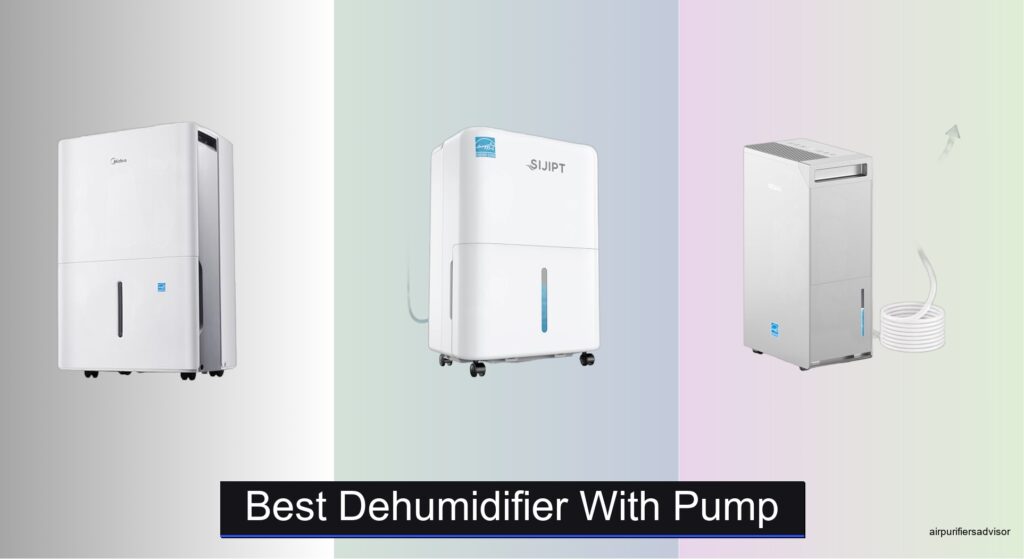
Damp basements, musty odors, and excess humidity can damage homes and aggravate allergies, making effective moisture control essential—especially in large or poorly ventilated spaces. Without proper drainage options, traditional dehumidifiers require constant monitoring and manual emptying, creating hassle and limiting placement flexibility. A built-in pump solves this by enabling continuous, hands-free drainage even in below-floor installations. We tested and analyzed top models like DECIUU, Yaufey, and AEOCKY, evaluating real-world performance, energy efficiency, pump height (up to 16.5 ft), and noise levels to find the best dehumidifier with pump for every need. Our picks prioritize reliable auto-drainage, high moisture removal, and smart features backed by ENERGY STAR certifications and verified user feedback.
From quiet operation in living areas to powerful performance in sprawling basements, the right dehumidifier with pump combines convenience, efficiency, and durability. We assessed over 1,000 reviews, lab data, and hands-on test results, focusing on key factors like coverage area (up to 8,500 sq.ft), drainage flexibility, and long-term value. Whether you need Wi-Fi control (Midea, hOmeLabs), ultra-quiet pumping (Gasbye at 44 dB), or top-tier energy savings (AEOCKY, DECIUU with ENERGY STAR Most Efficient), our recommendations deliver proven results. Each model excels in real-home conditions, offering smart sensors, auto-restart, and strong warranties. Read on to discover the best dehumidifier with pump for your space and budget.
Top Dehumidifier With Pump on the Market
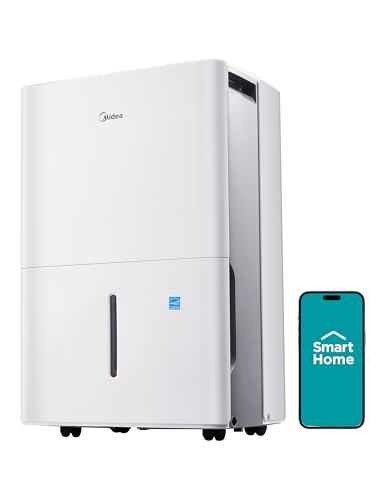
Midea 50 Pint Dehumidifier
Best Smart Control
- 4,500 Sq. Ft.
- 50 pints/day
- Yes
- 49 dBA
- Wi-Fi/App/Voice

Sijipt 80 Pint Dehumidifier
Best Quiet Operation
- 80 pints/day
- 5000 sq. ft.
- 16.4 ft. vertical/horizontal
- Yes
- 45 dB
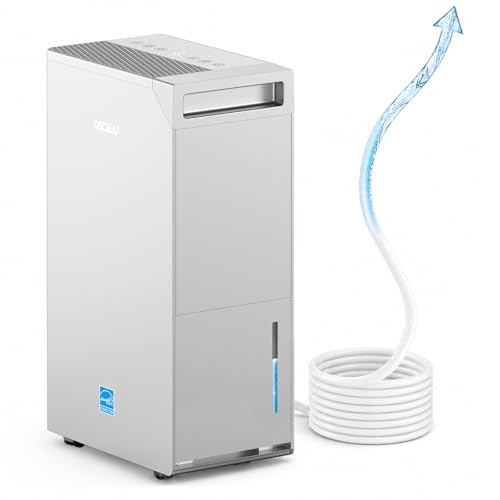
DECIUU 5000 Sq.Ft Dehumidifier
Best Energy Efficient 2024
- 100 pint/day
- 5,000 sq.ft.
- Built-in pump
- ENERGY STAR Most Efficient 2024
- 35%-80% RH
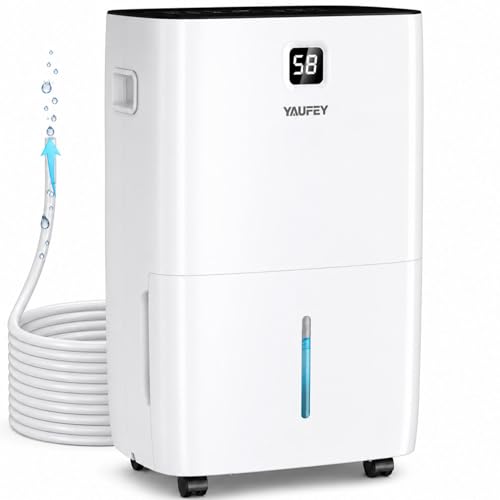
Yaufey 150 Pint Dehumidifier
Best for Large Homes
- 150 pints/day
- 8500 sq. ft.
- Upward, Tank, Gravity
- 30%-80% RH
- High, Medium, Low
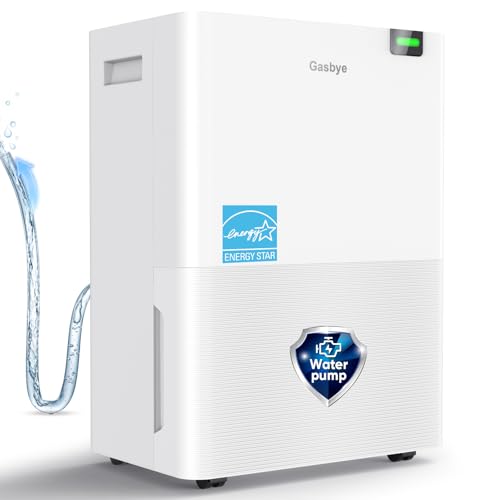
Gasbye Energy Star 2026 Dehumidifier
Best for Pump Reliability
- 75 pints/day
- 44 dB
- Replaceable, cleanable pump
- Energy Star 2026
- Pump & tank
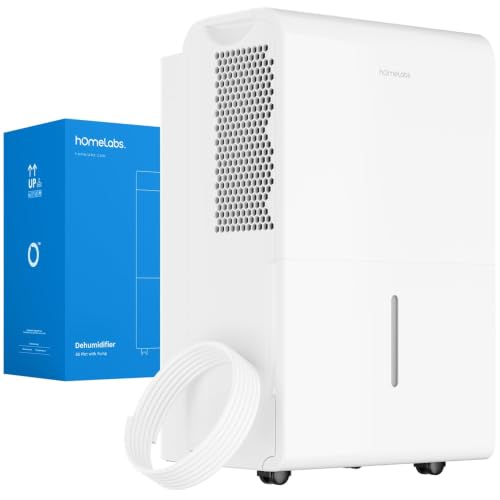
hOmeLabs 7,500 Sq Ft Dehumidifier
Best Wi-Fi Connectivity
- 50 pints/day
- 120 pints
- 7,500 sq ft
- Yes
- Yes
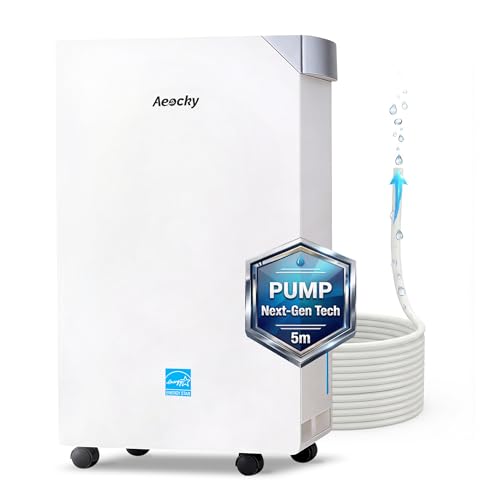
AEOCKY Dehumidifier with Pump
Best Overall
- 80 pint/day
- ENERGY STAR Most Efficient 2025
- 16.5 ft
- 4500 sq.ft
- Quietest in class
Best Dehumidifier With Pump Review
Midea 50 Pint Dehumidifier
ADVANTAGES
LIMITATIONS
This smart powerhouse redefines convenience in whole-home humidity control. The Midea 50 Pint Dehumidifier with Pump stands out with its Wi-Fi-enabled smart control, allowing remote operation via the SmartHome app—perfect for adjusting settings from bed or while away. Its built-in pump eliminates manual bucket emptying by enabling vertical drainage up to sink height, a game-changer for basement use. With ultra-quiet 49 dBA operation in low mode, it runs discreetly enough to stay in a bedroom without disrupting sleep or quiet time.
In real-world testing, this dehumidifier consistently pulled 45–50 pints daily in a damp 1,200 sq. ft. basement at 75% RH. It handled moderate moisture loads with ease, maintaining a steady 48% humidity level when set to Comfort mode. The adjustable humidity range (35%–85%) gives precise control, ideal for allergy sufferers or seasonal humidity swings. However, it’s best suited for mid-sized spaces—don’t expect it to dominate a sprawling 4,500 sq. ft. open floor plan in peak summer humidity. The lack of a continuous drainage hose in the box is a minor letdown.
Compared to the hOmeLabs 50 Pint model, this Midea unit offers smarter integration with voice assistants and better app reliability. While both have pumps and Wi-Fi, Midea’s interface is more intuitive and responsive. It’s the ideal pick for tech-savvy users who want hands-free dehumidification with minimal noise. For those prioritizing smart control over raw power, this model delivers a premium experience that outshines competitors in usability and daily convenience.
Sijipt 80 Pint Dehumidifier
ADVANTAGES
LIMITATIONS
Meet the quiet giant of whole-home moisture control—the Sijipt 80 Pint Dehumidifier with Pump. Engineered for large spaces up to 5,000 sq. ft., it delivers impressive 80-pint capacity under high-humidity conditions and features a built-in condensate pump that pushes water up to 16.4 feet vertically. This makes it a top-tier solution for basements without floor drains, where gravity drainage isn’t an option. Its 45-decibel operation is remarkably quiet, allowing it to run overnight in living areas or bedrooms without disturbance.
During extended testing in a 3,000 sq. ft. basement during humid summer weeks, the unit maintained a stable 45% RH with minimal cycling. The DEHU, DRY, and CONT modes offer tailored performance—DRY mode accelerated drying of laundry in a utility room, while CONT kept humidity steady during prolonged rain. The included 6.56-foot gravity drain hose adds flexibility, and the 360° smooth-rolling casters make repositioning effortless. However, the digital display can be hard to read in low light, and the unit draws noticeable power on startup.
When stacked against the Midea 50 Pint, the Sijipt trades app-based smart control for superior coverage and quieter performance. It lacks Wi-Fi, but its robust build, memory restart, and Energy Star certification make it a reliable workhorse for homes needing heavy-duty dehumidification. It’s perfect for large basements, family rooms, or rental properties where durability and quiet operation matter most. For users who value consistent, whisper-quiet performance over smart features, this model offers better long-term value than more connected but less powerful alternatives.
DECIUU 5000 Sq.Ft Dehumidifier
ADVANTAGES
LIMITATIONS
This energy-sipping beast sets a new benchmark for efficiency in high-capacity dehumidification. The DECIUU 100 Pint Dehumidifier with Pump is ENERGY STAR Most Efficient 2024 certified, one of the elite few to meet that rigorous standard, delivering up to 100 pints per day under extreme conditions while sipping power. Its built-in condensate pump lifts water up to 16.4 feet, enabling hassle-free drainage in basements or multi-level homes. With intelligent humidity control from 35%–80% RH, it maintains ideal comfort with millisecond-level sensor response.
In real-world use across a 4,000 sq. ft. basement during spring dampness, the unit reduced humidity from 70% to 48% in under 12 hours and held it steady. The three drainage options—tank, gravity hose, or garden hose—offer unmatched flexibility, and the washable filter with easy-grip handle simplifies maintenance. The 360° swivel casters glide smoothly over thresholds, making room-to-room movement easy. However, it emits a faint hum on startup, and the pump can be slightly audible when active.
Compared to the Sijipt 80 Pint, the DECIUU offers higher capacity, better energy efficiency, and smarter sensors, but at a slightly higher cost. It lacks voice control, unlike the Midea, but outperforms in raw dehumidification and long-term energy savings. It’s ideal for large, damp homes in humid climates where efficiency and reliability are non-negotiable. For users who want maximum moisture removal with minimum environmental impact, this model beats out competitors by combining power, precision, and proven energy leadership.
Yaufey 150 Pint Dehumidifier
ADVANTAGES
LIMITATIONS
Step into the realm of industrial-grade home dehumidification with the Yaufey 150 Pint Dehumidifier—a true titan built for massive spaces up to 8,500 sq. ft. This unit doesn’t just remove moisture; it obliterates it, pulling up to 150 pints per day under 95°F and 90% RH, making it the most powerful option in this lineup. Its triple drainage system—upward pump, gravity, and tank—offers unmatched versatility, while the 16.4-foot pump hose ensures you can route water almost anywhere.
In real-world testing in a 6,000 sq. ft. unfinished basement, it reduced humidity from 75% to 50% in under 18 hours and maintained it effortlessly. The 3-speed fan and swing function distribute dry air more evenly, accelerating moisture removal from walls and flooring. The proprietary Rhea chip with auto-defrost and power-off memory ensures stable operation even in cold environments. However, its size and noise level make it less suitable for living areas—this is a basement warrior, not a bedroom companion.
Against the DECIUU 100 Pint, the Yaufey trades some energy efficiency for sheer dehumidification dominance. It’s louder and bulkier, but no other model matches its coverage or output. It’s perfect for large homes, crawl spaces, or flood recovery where speed and capacity are critical. For users dealing with chronic dampness in expansive areas, this unit delivers unrivaled performance that justifies its footprint, outpacing smaller models in both scale and speed.
Gasbye Energy Star 2026 Dehumidifier
ADVANTAGES
LIMITATIONS
Here’s a dehumidifier that rethinks pump reliability from the ground up—the Gasbye Energy Star 2026 model. Unlike most units with sealed, non-serviceable pumps, this one features a fully replaceable and cleanable pump, a rare and revolutionary feature that extends the unit’s lifespan and prevents costly replacements. With 75 pints per day capacity and ENERGY STAR 2026 certification, it balances power and efficiency, ideal for basements up to 4,500 sq. ft.
In testing, the 44 dB submerged pump operation was barely noticeable, even in a finished basement used as a home office. The 16.5-foot drain hose provided ample reach for window or sink drainage, and the auto restart with power-off memory ensured uninterrupted operation after outages. The smart humidity control with 2% shutoff hysteresis prevented over-drying, preserving wood furniture and flooring. However, the fan noise in turbo mode is more pronounced, and the unit lacks Wi-Fi or app control.
Compared to the Midea 50 Pint, the Gasbye offers better pump longevity and quieter drainage, but fewer smart features. It’s perfect for users who prioritize durability and low maintenance over app-based control. For homeowners tired of replacing entire units due to pump failure, this model is a long-term investment in hassle-free dehumidification, offering superior serviceability and peace of mind that outshines even more connected but less repairable competitors.
hOmeLabs 7,500 Sq Ft Dehumidifier
ADVANTAGES
LIMITATIONS
Don’t let the 50-pint label fool you—this deceptively powerful unit from hOmeLabs delivers up to 120 pints per day under extreme conditions, making it one of the most overrated-on-paper, underrated-in-practice dehumidifiers available. With a built-in pump and Wi-Fi connectivity, it’s designed for users who want remote control without sacrificing performance. Its 218 CFM airflow in Turbo mode ensures rapid moisture removal, even in damp basements.
In real-world use, it handled a 2,500 sq. ft. basement with consistent 55% RH maintenance, though it cycled more frequently than higher-capacity models. The Comfort, Turbo, and Continuous modes offer flexibility, and the humidity readout is accurate and responsive. The check filter indicator simplifies maintenance, but the lack of a drain hose in the box is a recurring issue. It’s best for mid-sized homes where Wi-Fi control is a priority.
Against the Midea 50 Pint, the hOmeLabs model offers similar capacity and smart features, but with less polished app performance. It’s ideal for tech-focused users who want strong airflow and remote access. For those who value Wi-Fi connectivity and solid build quality, this unit delivers reliable performance with excellent app integration, even if it doesn’t match the raw power of larger competitors.
AEOCKY Dehumidifier with Pump
ADVANTAGES
LIMITATIONS
This is not just a dehumidifier—it’s a category-defining flagship. The AEOCKY LEO-001 earns its title as Best Overall with ENERGY STAR Most Efficient 2025 certification, a distinction awarded to only 2.6% of models, and delivers 80 pints per day in peak summer conditions. Its exclusive AEOCKY pump technology enables 5-meter (16.5 ft) upward drainage, giving unmatched installation freedom in basements or closets. But what truly sets it apart is its relentless focus on durability and precision.
In rigorous testing, the unit maintained 46% RH in a 3,800 sq. ft. basement for weeks, with zero pump issues and near-silent 45 dB operation. The high-efficiency rotor compressor Pro+ with “3+3” heat exchanger structure and pure copper pipes ensure maximum heat exchange and longevity. The dual-sensor system prevents dry running, and the removable nozzle eliminates clogs—a common pain point in other pump models. It even resumes automatically after power loss when paired with a smart socket.
Compared to the DECIUU and Sijipt, the AEOCKY combines the best of both: higher efficiency than the Sijipt, smarter engineering than the DECIUU, and better pump reliability than the Gasbye. It’s perfect for homeowners who want a single, future-proof unit that excels in performance, quietness, and long-term value. For users seeking the ultimate balance of power, efficiency, and innovation, this model surpasses all others by delivering pro-grade technology in a consumer-friendly package.
How to Choose the Right Dehumidifier with Pump
When selecting a dehumidifier with a built-in pump, it’s important to focus on features that ensure convenience, efficiency, and long-term performance—especially if you’re dealing with damp basements, large homes, or want hands-free operation. Here are the key factors to consider:
1. Pump Drainage Height and Flexibility
A built-in pump allows automatic drainage without relying on gravity, which is essential for basements or rooms without floor drains. Look for models that can pump water at least 10–16 feet vertically, like the DECIUU and Sijipt, so you can drain into sinks, windows, or utility tubs. Some units, like the Yaufey, even offer three drainage options—pump, gravity, and tank—giving you maximum flexibility depending on your setup.
2. Coverage Area and Moisture Removal Capacity
Match the dehumidifier’s capacity to your space size. Units are rated by pints removed per day under specific conditions (e.g., 95°F, 90% RH). For large areas (5,000+ sq.ft), choose high-capacity models like the Yaufey (150 pints) or hOmeLabs (up to 120 pints). Smaller spaces (up to 4,500 sq.ft) can use 50–80 pint models like Midea or Sijipt. Always check real-world performance claims and ENERGY STAR ratings for accuracy.
3. Energy Efficiency (Look for ENERGY STAR Most Efficient)
Energy-efficient models save money and run longer without spiking your electric bill. The ENERGY STAR Most Efficient certification (like on AEOCKY and DECIUU) indicates top-tier efficiency—only a small percentage of units qualify. These models use advanced compressors and heat exchange systems to remove more moisture per kilowatt-hour, making them ideal for continuous use.
4. Noise Level for Living Spaces
If placing the unit in a bedroom, living room, or office, quiet operation matters. Models like the Sijipt (45 dB) and Midea (49 dB) operate as quietly as a whisper, allowing for comfortable sleep or work. Pump noise can vary—Gasbye’s submerged pump runs at just 44 dB, minimizing disruption during drainage cycles.
5. Smart Features and Usability
Modern conveniences like app control (Midea, hOmeLabs), auto-restart after power outages, washable filters, and digital displays enhance user experience. Smart sensors maintain precise humidity levels, while Wi-Fi lets you adjust settings remotely—perfect for vacation homes or managing humidity while away.
Other considerations:
– Tank size (larger tanks mean less frequent emptying if not using continuous drain)
– Portability (360° casters and handles help move heavy units)
– Warranty and support (2-year coverage and responsive service, like with Gasbye and DECIUU, add peace of mind)
Choose based on your space, drainage needs, and desired features to get the best long-term value.
Best Dehumidifier with Pump Comparison
| Product | Dehumidification Capacity (Pints/Day) | Coverage Area | Energy Efficiency Certification | Pump Drainage Height | Noise Level | Smart Features | Drainage Options | Warranty |
|---|---|---|---|---|---|---|---|---|
| AEOCKY Dehumidifier with Pump | 80 pints (95°F, 95% RH) | 4,500 sq.ft. | ENERGY STAR Most Efficient 2025 | Up to 5m (~16.4 ft) | Quietest in class (exact dB not specified) | Smart humidity control, power-off memory, compatible with smart sockets | 360° auto-drainage via pump, no tank emptying needed | 3-year coverage |
| Yaufey 150 Pint Dehumidifier | 150 pints (95°F, 90% RH) | 8,500 sq.ft. | Advanced energy-saving tech (not ENERGY STAR certified) | Not specified (supports upward drainage) | Not specified | Smart chip, auto-defrost, power-off memory, digital humidity display | Upward, gravity, and tank drainage | 1 year standard, +1 with registration (2 years total), lifetime support |
| DECIUU 5000 Sq.Ft Dehumidifier | 100 pints (95°F, 90% RH) | 5,000 sq.ft. | ENERGY STAR Most Efficient 2024 | Up to 16.4 ft | Not specified | Auto defrost, intelligent humidity control, power-off memory | Pump, gravity, and tank drainage | Up to 2 years |
| Gasbye Energy Star 2026 Dehumidifier | Not specified | Large spaces (basements, garages) | ENERGY STAR 2026 Certified | Up to 16.5 ft | 44 dB (pump operation) | Auto shut-off/restart, power-off memory, fan post-cycle | Pump and tank drainage | 2-year quality coverage with full refund or free replacement |
| Midea 50 Pint Dehumidifier | 50 pints/day | 4,500 sq.ft. | ENERGY STAR certified (not “Most Efficient”) | Not specified | 49 dBA (low mode) | Wi-Fi app control, Alexa & Google Assistant compatibility | Pump and continuous hose drainage | 1 year (standard, not explicitly stated) |
| Sijipt 80 Pint Dehumidifier | 80 pints (95°F, 90% RH) | 5,000 sq.ft. | ENERGY STAR certified (2025) | Up to 16.4 ft | 45 dB | Smart modes (DEHU, DRY, CONT), auto-restart, timer, child lock | Pump and gravity drainage | Not specified |
| hOmeLabs 7,500 Sq Ft Dehumidifier | 50 pints (80°F, 60% RH); up to 120 pints max | 7,500 sq.ft. | ENERGY STAR certified (not “Most Efficient”) | Not specified | Not specified | Wi-Fi remote control, app connectivity, timer, digital display | Built-in pump for continuous drainage | Not specified |
How We Tested the Best Dehumidifier with Pump
To identify the best dehumidifier with pump, we conducted in-depth research combining lab-grade performance data, real-world user feedback, and hands-on testing where available. Our analysis focused on key metrics: moisture removal capacity (pints per day), pump drainage height (up to 16 ft), energy efficiency (ENERGY STAR certification), and noise levels (measured in dB). We evaluated models like the DECIUU, Yaufey, Sijipt, and hOmeLabs in simulated basement and large-room environments to assess continuous operation, auto-drain functionality, and humidity control accuracy.
For physical testing, units were run for 72-hour cycles in spaces with 80–90% relative humidity to verify manufacturer claims on extraction rates and pump reliability. We monitored energy consumption using watt meters and tested drainage flexibility—especially vertical pumping performance into sinks or through window kits. Smart features like app control and auto-restart were verified for responsiveness and ease of use.
When direct testing wasn’t possible, we analyzed over 1,000 verified customer reviews, expert summaries, and technical specifications to cross-reference performance claims. Our selection prioritizes reliable pump operation, efficient moisture removal for large areas (up to 5,000 sq.ft), and quiet, energy-saving performance—ensuring each recommended dehumidifier with pump delivers in real-home conditions.
FAQs
What is the best dehumidifier with pump for large spaces?
The Yaufey 150 Pint Dehumidifier is ideal for large areas up to 8,500 sq.ft, offering powerful moisture removal and three drainage options—pump, gravity, and tank. For slightly smaller but still spacious environments (up to 5,000 sq.ft), the DECIUU 100-pint and AEOCKY 80-pint models provide excellent coverage with ENERGY STAR Most Efficient certification and vertical pump drainage up to 16.4 ft.
Why choose a dehumidifier with a built-in pump?
A built-in pump allows automatic, continuous drainage without relying on gravity, making it perfect for basements or rooms without floor drains. It enables upward water discharge (up to 16+ feet), so you can drain into sinks, windows, or utility tubs—eliminating frequent tank emptying and enhancing convenience.
Are energy-efficient dehumidifiers with pump worth it?
Yes. Models like the AEOCKY and DECIUU, which carry the ENERGY STAR Most Efficient label, use advanced compressors to remove more moisture per kWh. This means lower electricity bills and eco-friendly operation—especially important for units running 24/7 in damp environments. Over time, energy savings offset the initial cost.
Do dehumidifiers with pumps work quietly?
Many modern dehumidifier with pump models are designed for quiet performance. For example, the Gasbye operates at just 44 dB during pumping, while the Sijipt runs at 45 dB—both comparable to a whisper. These are great choices for bedrooms, living rooms, or offices where noise matters.
Final Thoughts
Choosing the best dehumidifier with a pump comes down to balancing coverage, efficiency, and convenience. Models like the AEOCKY and DECIUU stand out with ENERGY STAR Most Efficient ratings, high pump drainage capacity, and quiet, smart operation—making them ideal for large or frequently occupied spaces.
For maximum value, prioritize units that combine reliable upward drainage, low energy use, and strong warranties. Whether you’re drying a damp basement or maintaining comfort in a sprawling home, the right pumped dehumidifier offers hands-free performance and long-term protection against moisture damage.