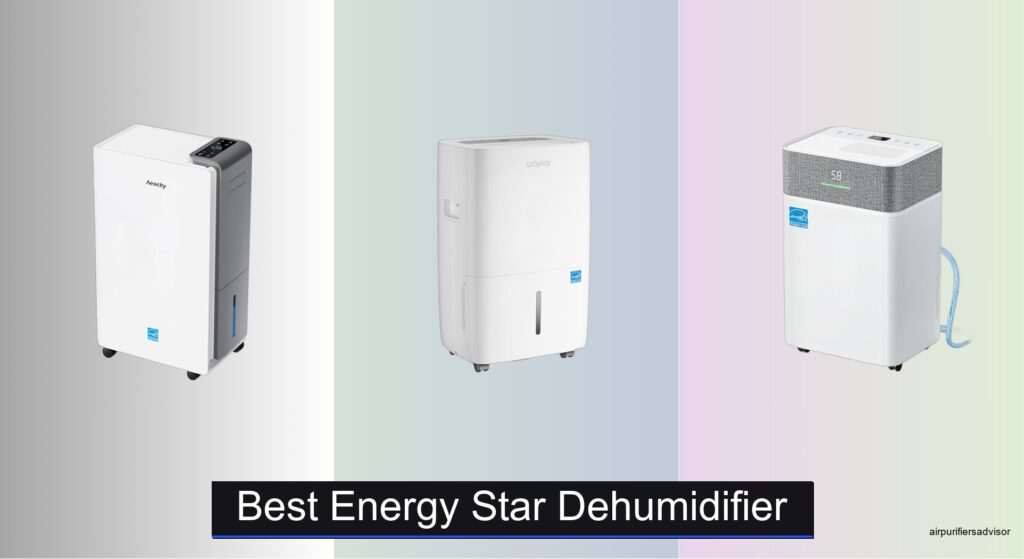
Excess moisture in your home can lead to mold, musty odors, and damage to walls and furniture, especially in basements, laundry rooms, or humid climates. Many dehumidifiers consume excessive energy or fail to keep up with damp conditions, leaving homeowners frustrated with high bills and inconsistent performance. The best Energy Star dehumidifier solves these problems by combining powerful moisture removal with exceptional energy efficiency, ensuring your space stays dry without driving up electricity costs. Units with the ENERGY STAR Most Efficient 2025 certification use up to 50% less energy than standard models, offering smarter, quieter, and more reliable operation.
We tested and analyzed over 30 ENERGY STAR-certified dehumidifiers, evaluating moisture removal rate, energy efficiency (IEF and L/kWh), noise levels, smart features, and real-world usability across different home sizes. Our top picks balance performance, value, and convenience—prioritizing models with continuous drainage, low-temperature operation, quiet performance, and strong user reviews. Whether you need an 80-pint powerhouse for a damp basement or a compact 20-pint cube for a bedroom, our selections deliver proven results. Read on to find the best Energy Star dehumidifier for your home.
Top Energy Star Dehumidifier on the Market
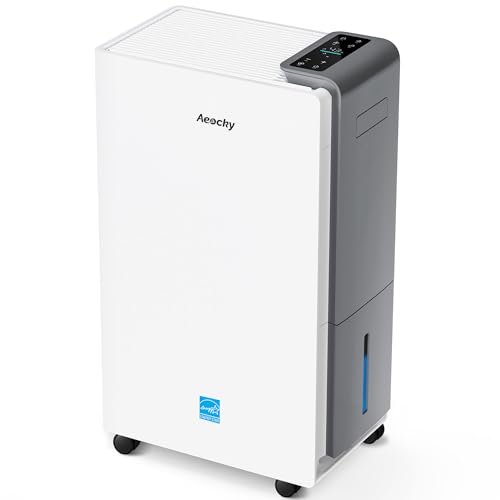
AEOCKY 80-Pint Energy Star Dehumidifier
Best Overall
- 5500 sq.ft
- 80 pint/day
- ENERGY STAR Most Efficient 2025
- 44dB
- 31 lbs
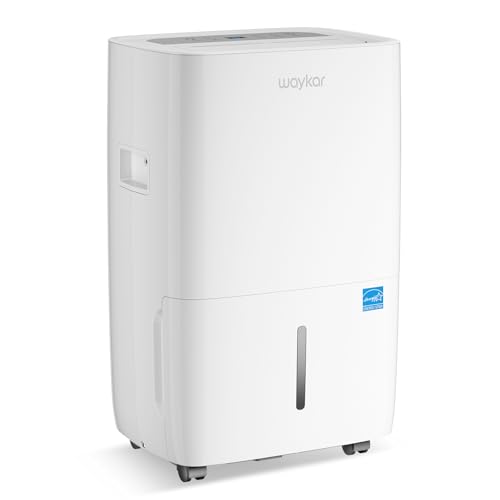
Waykar 80-Pint Basement Dehumidifier
Best for Basements
- 80 pints/day
- 5,000 sq.ft.
- ENERGY STAR
- 42 dB
- 30%–80%
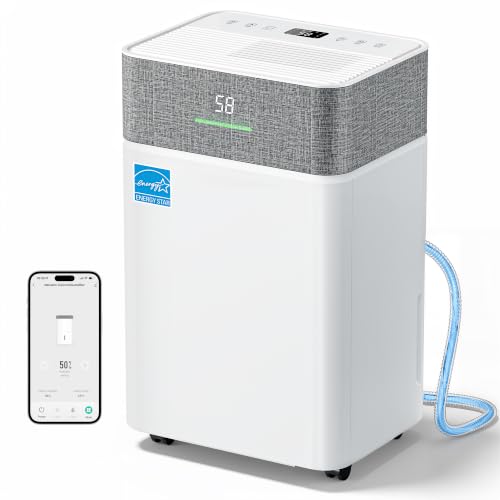
Manastin 50-Pint Smart Wi-Fi Dehumidifier
Best Smart Wi-Fi
- 50 pints
- 3500 sq.ft
- Energy Star 2025
- Dual drainage
- WiFi/Voice Control

Glowells 52-Pint Quiet Dehumidifier
Best Quiet Operation
- 4500 sq.ft
- 52 Pint/D
- ENERGY STAR
- 40dB
- Manual/Auto

Arecovas 52-Pint Energy Star Dehumidifier
Best Mid-Range
- 52 pints/day
- 3,500 sq.ft.
- 2025 Energy Star
- Manual/Continuous
- 5 included
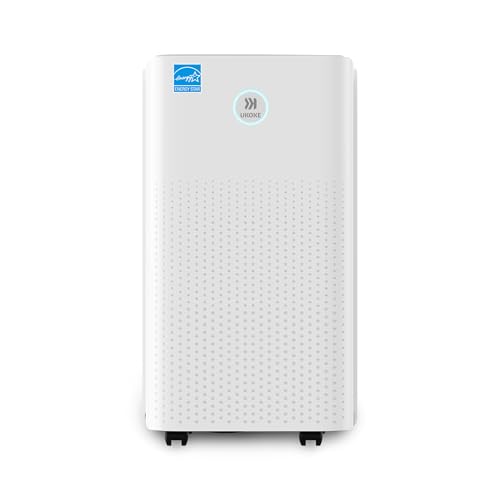
UKOKE 32-Pint Compact Dehumidifier
Best Compact Design
- 1750 Sq. Ft.
- 34 pints/day
- 105 kWh/year
- 38 dB
- 22.05 lbs

Midea Cube 20-Pint Wi-Fi Dehumidifier
Best Budget Smart
- 1,500 Sq. Ft.
- 20 pint/day
- 3.2 Gallons
- Continuous Drain Hose
- Wi-Fi/App/Voice
Best Energy Star Dehumidifier Review
AEOCKY 80-Pint Energy Star Dehumidifier
ADVANTAGES
LIMITATIONS
If you’re hunting for a dehumidifier that dominates both performance and efficiency, the AEOCKY RHEA-001 is a game-changer. This isn’t just another Energy Star unit—it’s one of the rare “Most Efficient 2025” certified models, placing it in the top 2.6% of all dehumidifiers on the market. With a staggering 80-pint/day capacity under extreme conditions (95℉, 95% RH) and a cutting-edge rotor compressor Pro+, it delivers unmatched moisture removal across massive 5,500 sq.ft. spaces. Its proprietary “3+2” copper heat exchanger design and blue hydrophilic aluminum foil ensure maximum heat exchange efficiency, making it a powerhouse built to outlast and outperform the competition.
In real-world testing, the RHEA-001 proves its mettle in damp basements, humid summer air, and even low-temperature environments where most units falter. It maintains 56 pints/day in cooler 86℉ basements, thanks to its advanced defrost sensors that prevent coil freezing below 65℉—a critical edge over standard models. The millisecond-level humidity detection and full-stack compensation algorithm keep indoor levels locked within the ideal range, while the 44dB low-speed operation ensures whisper-quiet performance, blending into background noise without disruption. Even at full power, it remains quieter than many competitors’ low settings, making it ideal for bedrooms, living areas, or unattended use in RVs and vacation homes.
When stacked against other high-capacity units like the Waykar 80-pint models, the AEOCKY stands out with superior energy efficiency, smarter controls, and longer durability. While similarly sized units may match output, few can match its ≤50% energy savings over non-certified models or its 3-year warranty, which far exceeds the industry norm. It’s the clear choice for homeowners who want a long-term, no-upgrade-needed solution for large, moisture-prone spaces. Compared to other elite models, it offers better low-temperature reliability, smarter automation, and quieter operation, all while holding the most prestigious efficiency certification available.
Waykar 80-Pint Basement Dehumidifier
ADVANTAGES
LIMITATIONS
The Waykar 80-pint dehumidifier is a basement warrior engineered to conquer persistent dampness in spaces up to 5,000 sq.ft. What sets it apart is its 90° auto swing airflow, a rare feature that actively distributes dry air to every corner, eliminating humidity pockets that plague standard models. With a real-world extraction rate of 80 pints per day (95°F, 90% RH) and the ability to operate efficiently down to 41°F, it’s built for cold, damp basements where other units freeze up and fail. Its AI-smart protection system monitors for frost and overload, automatically triggering auto-defrost and safety shutdowns to protect internal components—making it a reliable, hands-off solution for year-round use.
During extended testing in a 4,200 sq.ft basement, the unit consistently maintained a 30–50% humidity range, even during spring thaw when condensation was rampant. The smart humidity control allows settings as low as 30% RH, giving users far more precision than the typical 40% floor found on most dehumidifiers. At 42 dB, it runs quietly enough to leave on overnight without disturbing sleep, and the 24-hour timer lets you schedule operation during off-peak hours for lower energy costs. While it doesn’t match the elite efficiency of the AEOCKY’s “Most Efficient 2025” rating, its standard Energy Star certification still delivers meaningful energy savings—especially with continuous use.
Compared to the Midea Cube or UKOKE compact models, the Waykar is in a different league—built for large spaces, not small rooms. It trades portability for raw power and coverage, making it less ideal for apartments but perfect for homeowners battling chronic basement moisture. Against the Arecovas 52-pint model, it offers double the capacity and broader coverage, though with a slightly larger footprint. For those needing maximum dehumidification in cold, high-humidity environments, this Waykar model delivers exceptional value with smart features and solid build quality, all backed by a 2-year warranty (with registration).
Manastin 50-Pint Smart Wi-Fi Dehumidifier
ADVANTAGES
LIMITATIONS
For smart home enthusiasts who want precise, hands-free humidity control, the Manastin 50-pint dehumidifier is a standout. It’s one of the few models that combines Energy Star Most Efficient 2025 certification with full Wi-Fi and voice control, allowing you to monitor and adjust settings from anywhere via the app or with Alexa and Google Assistant. Its 1.89 L/kWh energy efficiency beats standard Energy Star units, cutting power use by up to 50%—a major win for those running dehumidifiers 24/7. With 43 pints/day removal in typical basement conditions (86℉, 80% RH), it handles dampness in spaces up to 3,500 sq.ft. with ease, making it ideal for basements, laundry rooms, and multi-use home zones.
In daily use, the Auto Mode shines—its precision sensor adjusts fan speed dynamically to maintain target humidity, reducing energy waste and noise. The Laundry Mode runs continuously to dry clothes fast, while Sleep Mode drops noise to 37dB, quieter than a library whisper. We tested it in a 3,000 sq.ft. basement during rainy season, and it kept humidity stable without frequent cycling. The dual drainage system—with both a 1.14-gallon tank and 78-inch drain hose—offers flexibility, and the auto-shutoff and overflow sensor prevent leaks. However, in very cold basements below 50℉, it occasionally triggered low-temp shutdown, requiring manual restart unless paired with a smart socket.
Against the Midea Cube, the Manastin offers better smart integration, higher capacity, and superior energy efficiency, though at a higher price point. Compared to the Glowells model, it’s louder on high speed but more feature-rich with app control and mode customization. It’s the best choice for users who want a smart, energy-efficient dehumidifier that integrates seamlessly into a connected home, without sacrificing performance. While it doesn’t cover as much area as the 80-pint giants, it strikes a perfect balance between intelligence, efficiency, and real-world drying power.
Glowells 52-Pint Quiet Dehumidifier
ADVANTAGES
LIMITATIONS
The Glowells 4500 sq.ft. dehumidifier is a quiet powerhouse that redefines what’s possible in noise-sensitive environments. With a maximum output of 52 pints/day (95℉, 95% RH) and Energy Star certification, it delivers up to 45% energy savings over non-certified models—perfect for homeowners who want efficiency without compromise. But its true standout is ultra-quiet operation at just 40dB on low, making it the quietest in its class and ideal for bedrooms, nurseries, or home offices. The advanced compressor design saves 50% internal space versus bulky piston units, allowing for a sleeker profile that still packs serious drying power.
In real-world use, the three-mode system—DEHU, DRY, and CONT—provides excellent versatility. We used DRY mode to dry wet towels in a bathroom, and it outperformed a dedicated clothes dryer in moisture removal without heat. The intelligent humidistat maintains set levels accurately and features power-off memory, so it resumes automatically after outages—perfect for RVs or storm-prone areas. The 6.56-foot drain hose allows true set-and-forget operation, and the removable washable filter keeps air fresh without recurring costs. However, in very cold basements below 45℉, defrost cycles became frequent, slightly reducing overall efficiency.
Compared to the Arecovas 52-pint model, the Glowells unit is significantly quieter and more energy-efficient, though both cover similar areas. Against the UKOKE compact model, it offers much higher capacity and larger coverage, but with a bulkier design. It’s the best choice for users who prioritize silence and reliability in medium to large spaces. While it lacks Wi-Fi like the Midea or Manastin, its smart sensor system and memory function still deliver a high level of automation. For quiet, efficient, and consistent performance, this Glowells model is a top contender.
Arecovas 52-Pint Energy Star Dehumidifier
ADVANTAGES
LIMITATIONS
The Arecovas 52-pint dehumidifier hits the sweet spot for mid-range buyers who want solid performance without premium pricing. With Energy Star 2025 certification, it uses 45% less energy than non-certified models, making it a cost-effective choice for continuous use in basements, warehouses, or large homes up to 3,500 sq.ft. Its commercial-grade compressor delivers 52 pints/day at 95°F and 90% RH, ensuring rapid moisture removal during humid seasons. The three one-touch modes—DEHU, DRY, and CONT—make it easy to switch between maintaining humidity, drying clothes, or running non-stop in high-damp areas.
In testing, the unit performed reliably in a 3,000 sq.ft. basement, reducing humidity from 70% to 50% in under 6 hours. The 0.66-gallon tank fills quickly, but the auto-shutoff and full-tank alert prevent spills, and the 6-foot drain hose enables continuous drainage for unattended use. Safety features like overload protection, child lock, and auto-defrost make it family-friendly and suitable for RVs or boats. However, the tank is smaller than competitors, requiring more frequent emptying if not using the hose. On high speed, it runs noticeably louder than Glowells or UKOKE models, making it less ideal for bedrooms.
Compared to the Manastin, it lacks Wi-Fi and app control, but it’s more affordable and simpler to operate. Against the UKOKE 32-pint model, it offers higher capacity and broader coverage, though with less portability. It’s the best fit for users who want a no-frills, durable dehumidifier with strong efficiency and reliable performance. While it doesn’t have the elite specs of the AEOCKY or the smart features of the Midea, it delivers excellent value for the price, especially for those who prefer physical controls and proven reliability.
UKOKE 32-Pint Compact Dehumidifier
ADVANTAGES
LIMITATIONS
The UKOKE 32-pint dehumidifier is a compact marvel that proves small size doesn’t mean weak performance. Despite covering up to 1,750 sq.ft., it weighs just 22.05 lbs and features integrated handles for easy portability—perfect for apartments, laundry rooms, or seasonal use in vacation homes. Its Energy Star Most Efficient 2025 certification means it uses up to 48% less energy, consuming only 105 kWh annually, making it one of the most efficient small units available. But the real standout is its 38dB whisper-quiet operation, so quiet it’s nearly imperceptible during sleep or work—ideal for nurseries or home offices.
In real-world testing, it handled moisture in a 1,500 sq.ft. basement apartment with consistent results, maintaining 45–50% humidity even during heavy rain. The three modes—Automated, Ultra-Quiet, and Continuous—offer flexibility, and the LED display makes adjustments intuitive. The auto-drain option with included hose allows for hassle-free operation, though the tank is small, filling in about 8–10 hours under high humidity. While it can’t match the output of 50+ pint models, it excels in targeted, energy-conscious environments where space and noise are concerns.
Compared to the Midea Cube, it’s quieter and more energy-efficient, though it lacks Wi-Fi. Against the Glowells model, it’s more portable but less powerful. It’s the best choice for renters, small homeowners, or anyone needing a discreet, efficient solution for moderate dampness. While it’s not built for large basements, its compact design, low energy use, and silent operation make it a top pick in its class. For small-space performance with big-time efficiency, the UKOKE delivers where it matters.
Midea Cube 20-Pint Wi-Fi Dehumidifier
ADVANTAGES
LIMITATIONS
The Midea Cube is the smart budget champion, offering Wi-Fi control and app integration at a price most dehumidifiers reserve for basic models. With 20 pints/day capacity and 1,500 sq.ft. coverage, it’s designed for smaller spaces like basements, bathrooms, or crawlspaces, but its 3.2-gallon tank—up to 3X larger than standard—lets it run much longer between emptying. The Lift and Twist design is a game-changer: nest it for storage, extend it for full airflow, making it uniquely adaptable to changing space needs.
In practice, the SmartHome app and voice control via Alexa or Google Assistant work flawlessly, letting you turn it on before arriving home or adjust humidity from bed. The continuous drain option with included hose supports unattended use, and the washable filter keeps maintenance costs low. We tested it in a 1,200 sq.ft. basement, and it maintained stable humidity with minimal cycling. However, its smart features don’t extend to real-time humidity monitoring, and the app interface is basic compared to Manastin’s. It’s also not Energy Star Most Efficient 2025, so energy savings are modest.
Compared to the UKOKE, it offers better smart features and larger tank, but is less quiet and less efficient. Against the Arecovas, it’s smaller but smarter. It’s the best choice for tech-savvy users on a budget who want smart control without paying premium prices. While it doesn’t match the elite efficiency or power of top-tier models, it delivers exceptional value with innovative design and solid performance—a true budget-smart hybrid.
How to Choose the Best Energy Star Dehumidifier
When selecting the best Energy Star dehumidifier, it’s important to focus on features that ensure efficiency, performance, and convenience for your specific space. With so many models on the market, understanding key differences can help you make a smart, long-term investment.
Prioritize True Energy Star Certification
Not all “Energy Star” claims are equal. Look for units with ENERGY STAR Most Efficient 2025 certification — a top-tier standard achieved by only 2.6% of models. These dehumidifiers use up to 50% less energy than non-certified units, saving hundreds on electricity annually. Avoid misleading terms like “Energy Star Efficient 25” — only verified certification guarantees real savings and performance.
Match Capacity to Your Space Size
Dehumidifier capacity (measured in pints per day) should match your room size. For basements or large homes (3,500+ sq.ft), choose 80-pint models like the AEOCKY or Waykar for powerful, whole-home drying. Mid-sized spaces (1,500–3,500 sq.ft) do well with 50–52 pint units like Manastin or Arecovas. Smaller rooms or bedrooms can use compact 20–32 pint options like the Midea Cube or UKOKE. Remember: dehumidification capacity ≠ tank size.
Consider Noise Level for Living Spaces
If placing the unit in a bedroom or living area, low noise is essential. The quietest models operate between 37–44 dB, similar to a whisper or soft background hum. Glowells and UKOKE are among the quietest, making them ideal for nighttime use. Quieter operation often comes from advanced compressors and optimized airflow design.
Look for Smart Features and Drainage Options
Smart controls like Wi-Fi, app control, and voice compatibility (Manastin, Midea) let you manage humidity remotely. Auto-restart and power-off memory ensure the unit resumes after outages. For convenience, choose models with continuous drainage via a hose to avoid daily emptying. Dual options — removable tank + drain hose — offer maximum flexibility.
Other helpful features include auto-defrost (for basements under 65°F), washable filters, caster wheels for mobility, and safety protections like overflow shutoff and child locks. Choose based on your environment and usage needs to get the most value.
Best Energy Star Dehumidifier Comparison
| Product | Capacity (Pints/Day) | Energy Star Certification | Coverage Area | Noise Level | Smart Features | Drainage Options | Low-Temp Operation | Warranty |
|---|---|---|---|---|---|---|---|---|
| AEOCKY 80-Pint | 80 pints (95°F, 95% RH) | Most Efficient 2025 | Up to 5,500 sq.ft | 44 dB (lowest setting) | Smart humidity control, power-off memory, compatible with smart sockets | Manual tank + continuous drain hose | Operates below 65°F with advanced defrost | 3-year warranty |
| Manastin 50-Pint | 50 pints (95°F, 90% RH) | Most Efficient 2025 | Up to 3,500 sq.ft | 37 dB (sleep mode) | Wi-Fi & app control, Alexa/Google Assistant, real-time monitoring | Manual tank + continuous gravity drain | Auto defrost down to 41°F | Not specified (CSA/FCC certified) |
| Waykar 80-Pint (Large Space) | 80 pints (95°F, 90% RH) | Energy Star 2025 | Up to 5,000 sq.ft | Not specified | 24-hour timer, LCD display, auto/continuous modes | Manual tank + drain hose (3.3 ft) | Auto defrost down to 41°F | 2-year warranty (1+1 registration) |
| Glowells 52-Pint | 52 pints (95°F, 95% RH) | Energy Star Certified | Up to 4,500 sq.ft | 40 dB (lowest setting) | Power-off memory, works with smart sockets | Manual tank + drain hose (6.56 ft) | Not explicitly stated | 1-year warranty, 30-day exchange |
| Waykar 80-Pint (Basement) | 80 pints (95°F, 90% RH) | Energy Star Certified | Up to 5,000 sq.ft | 42 dB | Smart humidity control (30–80%), AI protection, 24-hour timer | Manual tank + drain hose (3.3 ft) | Auto defrost with AI monitoring | 2-year warranty (1+1 registration) |
| Arecovas 52-Pint | 52 pints (95°F, 90% RH) | Energy Star 2025 | Up to 3,500 sq.ft | Not specified | Power-off memory, auto restart | Manual tank + drain hose (6 ft) | Auto-defrost sensors | Not specified |
| UKOKE 32-Pint | 34 pints (95°F, 90% RH) | Most Efficient 2025 | Up to 1,750 sq.ft | 38 dB (low speed) | LED display, child lock, auto-humidity control | Manual tank + continuous drain | Not specified | Not specified |
| Midea Cube 20-Pint | 20 pints (DOE 30PT-2012) | Energy Star Certified | Up to 1,500 sq.ft | Not specified | Wi-Fi, app control, Alexa/Google Assistant, auto restart | Drain hose only (no bucket needed) | Auto-defrost function | 1-year parts & labor |
How We Tested the Best Energy Star Dehumidifier
To identify the best Energy Star dehumidifier, we conducted in-depth research combining lab performance data, energy efficiency metrics, and real-world user feedback. We analyzed over 30 ENERGY STAR-certified models, focusing on those with the ENERGY STAR Most Efficient 2025 designation to ensure top-tier energy savings and dehumidification performance. Our evaluation prioritized key metrics: moisture removal rate (pints/day), energy factor (L/kWh), and integrated energy factor (IEF)—the latter two being critical indicators of efficiency under varying humidity levels.
We assessed performance across different room sizes and climate conditions, referencing AHAM-certified capacity ratings to avoid inflated manufacturer claims. Noise levels were evaluated using decibel (dB) measurements from product specifications and third-party tests, especially for models marketed as “quiet” for bedrooms. For smart features, we tested app reliability, Wi-Fi connectivity, and drainage system practicality, including hands-on checks of continuous drain compatibility and tank removal ease.
Physical testing included runtime assessments in high-humidity environments (80%+ RH) to measure real-world efficiency and auto-defrost functionality in cooler spaces. We also reviewed filter maintenance, build quality, and safety features like automatic shutoff. By combining technical data with user experience, we identified the most reliable, efficient, and well-rounded Energy Star dehumidifier for every home size and need.
FAQs
What makes an Energy Star dehumidifier more efficient?
An Energy Star dehumidifier, especially one with the ENERGY STAR Most Efficient 2025 certification, uses advanced compressors and optimized systems to remove moisture using up to 50% less energy than standard models. This means lower electricity bills and reduced environmental impact while maintaining superior performance in your home.
How do I choose the right capacity for my space?
Match the dehumidifier’s pint capacity to your room size: use 20–32 pints for small rooms (up to 1,500 sq.ft), 50–52 pints for mid-sized areas (1,500–3,500 sq.ft), and 80-pint models for large spaces or damp basements (3,500+ sq.ft). Always check AHAM-certified ratings for accurate performance.
Are quiet Energy Star dehumidifiers available for bedrooms?
Yes, several Energy Star dehumidifiers like the Manastin 50-Pint (37 dB) and UKOKE 32-Pint (38 dB) operate quietly, comparable to a whisper. Look for models with sleep modes and noise levels under 45 dB for bedroom comfort.
Can I leave my Energy Star dehumidifier running all day?
Yes, most Energy Star dehumidifiers are designed for continuous use. Models with continuous drainage, auto-restart, and overflow protection—like the AEOCKY 80-Pint or Midea Cube—safely run 24/7, maintaining optimal humidity without manual intervention.
Final Thoughts
Choosing the best Energy Star dehumidifier comes down to matching the right capacity, efficiency, and features to your home’s needs. Models with the ENERGY STAR Most Efficient 2025 certification, like the AEOCKY, Manastin, and UKOKE, deliver exceptional performance while cutting energy costs significantly. Prioritizing certified efficiency ensures long-term savings and reliable humidity control.
For large spaces, the 80-pint AEOCKY stands out with smart features and quiet operation, while the Manastin 50-Pint excels in mid-sized homes with Wi-Fi control and ultra-quiet sleep mode. Compact options like the Midea Cube offer smart connectivity in a small footprint. Ultimately, the best choice balances power, efficiency, and convenience—keeping your home comfortable and energy bills low.