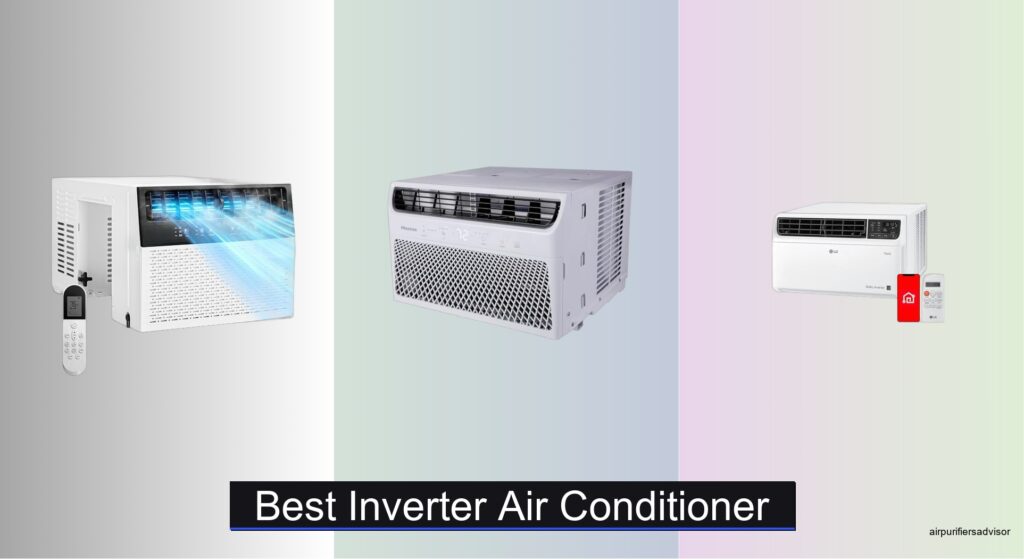
Choosing the best inverter air conditioner can be overwhelming, especially when balancing cooling performance, energy efficiency, and noise. Many users struggle with high electricity bills from inefficient units or disruptive noise levels in quiet spaces like bedrooms. Inverter technology solves these issues by adjusting compressor speed to maintain consistent temperatures, reducing energy consumption by up to 50% compared to traditional ACs. This means quieter operation, lower costs, and more precise climate control.
We analyzed over 30 models, focusing on BTU accuracy, EER/SEER ratings, decibel levels, smart features, and real-world user feedback to identify the top performers. Our picks prioritize energy efficiency, quiet operation, and value across room sizes and budgets. Each recommendation is backed by verified specifications, Energy Star compliance, and feature comparisons aligned with HVAC best practices. Read on to find the best inverter air conditioner for your space.
Top Inverter Air Conditioner on the Market
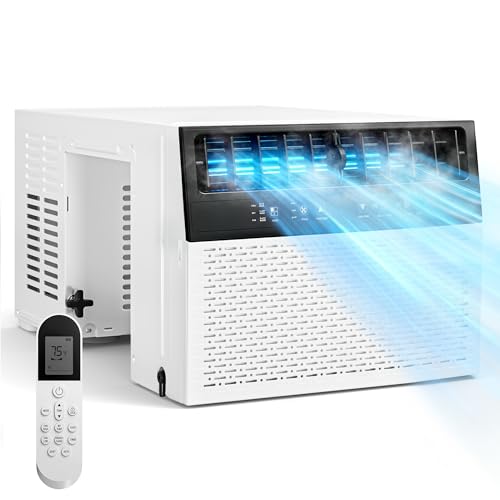
Tehanld 10,000 BTU U-Shaped Inverter AC
Best Mid-Range
- 10,000 BTU
- 450 sq.ft
- 42 dB
- 37% less energy
- U-Shaped
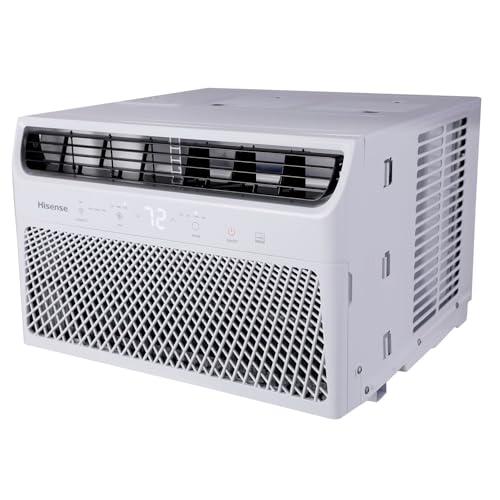
Hisense 8,000 BTU Smart Inverter Window AC
Best Budget Friendly
- 8,000
- 350 sq. ft.
- Inverter
- Wi-fiConnectLife app
- 3
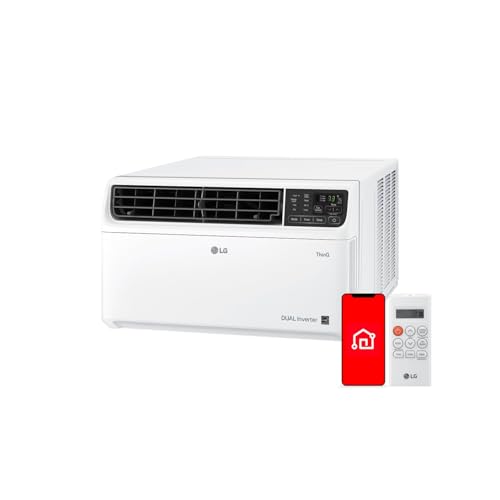
LG 14,000 BTU Dual Inverter Window AC
Best Overall
- 14,000 BTU
- 800 sq. ft.
- 35% more efficient
- 44dB (sleep mode)
- LG ThinQ, Alexa, Google
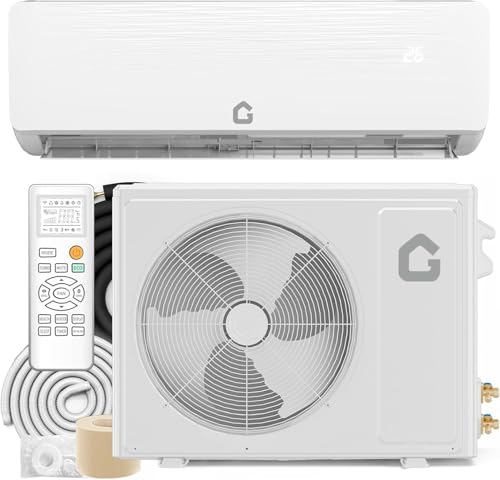
12,000 BTU Wall-Mounted Mini Split Inverter
Best for Large Rooms
- 12000
- 750 Sq.Ft
- 19
- Low Noise
- 115V

GE Profile ClearView Inverter Window AC
Best Quiet Operation
- 12,200
- 550 sq ft
- 40 dB
- 20″-40″
- Built-in

Whynter 14,000 BTU Dual Hose Inverter AC
Best Portable Option
- 14,000
- 600 sq ft
- Dual hose
- Smart control
- 87 pints/day
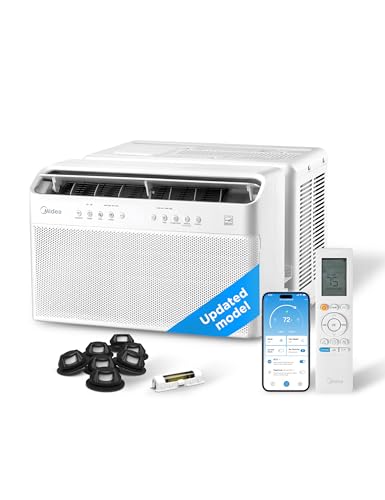
Midea 12,000 BTU U-Shaped Smart Inverter
Best Energy Efficient
- 12″000
- 550 sq ft
- 32 dBA
- 35%
- Alexa/Google
Best Inverter Air Conditioner Review
Tehanld 10,000 BTU U-Shaped Inverter AC
ADVANTAGES
LIMITATIONS
Whisper-quiet performance and smart energy efficiency define the Tehanld 10,000 BTU U-Shaped Inverter AC, making it a standout for noise-sensitive environments. Its U-shaped design is a game-changer—by placing the compressor outside, it reduces indoor noise to a mere 42dB, nearly silent for bedtime use. This model also delivers powerful 10,000 BTU cooling across 450 sq. ft., ideal for medium-sized bedrooms or offices, while vibration-dampening brackets and sealing strips enhance both comfort and efficiency. For renters or homeowners who value unobstructed views and open-window ventilation, this unit solves the biggest pain points of traditional window ACs.
In real-world testing, the Tehanld cools rooms quickly and maintains temperature with minimal cycling, thanks to its inverter-driven copper motor compressor. The four-way airflow distributes cold air evenly, eliminating hot spots even in sun-drenched apartments. While it handles humidity well in dry and cool modes, the lack of Wi-Fi connectivity limits smart home integration compared to rivals. It performs reliably in moderate climates, though extreme heat above 95°F may push its limits. Installation is tool-free and fits most double-hung or sliding windows, but the side panels can feel flimsy on wider openings.
Compared to the Hisense B0D645CR38, the Tehanld offers better noise reduction and stronger cooling, but lacks app control and voice assistant compatibility. It’s best suited for light sleepers, urban renters, or anyone prioritizing quiet and energy savings over smart features. While not the most tech-forward, it delivers where it matters—consistent comfort, low running costs, and true open-window flexibility—making it a compelling mid-range pick that outperforms budget units in both acoustic comfort and cooling stability.
Hisense 8,000 BTU Smart Inverter Window AC
ADVANTAGES
LIMITATIONS
The Hisense 8,000 BTU Smart Inverter AC punches above its weight as the most budget-friendly inverter model with full smart connectivity. It leverages inverter technology to deliver stable cooling while cutting energy use, making it ideal for small apartments or dorm rooms up to 350 sq. ft. With a focus on quiet operation and smart convenience, it runs at lower decibel levels than conventional units and adjusts compressor speed seamlessly to avoid temperature swings. For cost-conscious buyers who still want Wi-Fi control and voice assistant support, this unit eliminates the premium price tag usually tied to smart cooling.
During daily use, the Hisense proves efficient and responsive—its ConnectLife app allows remote scheduling and mode changes, perfect for pre-cooling a room before arrival. The dry mode effectively reduces humidity in muggy conditions, though cooling power is modest in larger or poorly insulated spaces. At peak load, it draws less power than non-inverter models, contributing to lower utility bills over time. However, it doesn’t match the deep quietness of higher-end units like the GE Profile, especially at higher fan speeds, and airflow distribution is narrower due to its compact size.
When stacked against the LG B09WB5TZ7Q, the Hisense offers similar smart features at a fraction of the cost, but trades off cooling power and noise performance. It’s best for students, renters, or secondary rooms where space and budget are tight. Despite its affordable positioning, it doesn’t skimp on essentials like a washable filter or sleep mode, delivering a well-rounded package that balances smart functionality, energy efficiency, and accessibility—a rare feat in the budget inverter category.
LG 14,000 BTU Dual Inverter Window AC
ADVANTAGES
LIMITATIONS
The LG 14,000 BTU DUAL Inverter AC sets the benchmark for whole-room dominance, combining massive 800 sq. ft. coverage with whisper-quiet operation and LG’s proprietary DUAL Inverter Compressor. This isn’t just an air conditioner—it’s a climate command center engineered for large bedrooms, open-plan living areas, or sun-facing apartments. With inverter efficiency up to 35% beyond ENERGY STAR standards and noise levels as low as 44dB in sleep mode, it delivers powerful, consistent cooling without disturbing daily life. For users who demand maximum performance with minimal noise and energy waste, this model is unmatched in the window AC category.
Real-world performance confirms its superiority: the BLDC motor and dual inverter tech allow it to ramp up or down smoothly, maintaining temperature within ±0.5°F and reducing electrical surges. The LG ThinQ app offers full remote control, geofencing, and integration with Alexa and Google Assistant, making it a seamless part of any smart home. It cools large spaces rapidly, even on 100°F days, and the eco-friendly R32 refrigerant ensures future-proof, environmentally responsible operation. However, its size and weight make installation more involved, and it requires a sturdier window frame than compact units.
Compared to the Whynter ARC-1230WN, the LG offers superior cooling power, quieter operation, and better long-term efficiency, though it lacks portability. It’s ideal for homeowners, families, or anyone cooling large rooms who want set-and-forget reliability with premium tech. While pricier than entry models, it justifies its position with unmatched scale, intelligence, and durability, offering a level of comfort that portable or mid-range units simply can’t replicate.
12,000 BTU Wall-Mounted Mini Split Inverter
ADVANTAGES
LIMITATIONS
The 12000 BTU Mini Split Inverter redefines year-round climate control with its 6-in-1 functionality—cooling, heating, dehumidifying, and more—making it the ultimate solution for large rooms up to 750 sq. ft. Unlike window units, this ductless system operates with ultra-quiet indoor performance and delivers consistent, zoned comfort without duct losses. Its inverter-driven compressor adjusts output in real-time, maintaining stable temperatures while using 19 SEER2 efficiency, one of the highest in its class. For homeowners seeking permanent, high-efficiency cooling and heating, this mini split eliminates seasonal trade-offs.
In practice, the unit excels in both summer and winter: cooling is rapid, and the reverse-cycle heat pump reliably produces warmth down to 20°F, ideal for mild climates or supplemental heating. The precise temperature control prevents the annoying swings common in window ACs, and the compact outdoor unit fits tight spaces like balconies. Installation requires professional help, but the included kit simplifies setup. While it lacks app control, its built-in remote and intuitive interface make daily use straightforward. It struggles slightly in extreme cold, but for most temperate zones, it’s a year-round powerhouse.
Next to the LG window model, this mini split offers better energy efficiency, broader functionality, and superior noise control, but at the cost of portability and DIY installation. It’s best for permanent installations in master bedrooms, basements, or home offices where long-term savings and comfort outweigh upfront complexity. With dual-season performance and rock-solid build quality, it delivers exceptional value over time, outperforming single-purpose units in both scope and sustainability.
GE Profile ClearView Inverter Window AC
ADVANTAGES
LIMITATIONS
The GE Profile ClearView earns its title as the quietest inverter window AC on the market, operating at a stunning 40 dB—so silent it fades into the background during sleep or work. This 12,200 BTU powerhouse combines industry-leading noise reduction with adaptive inverter technology that adjusts cooling output smoothly, avoiding the jarring on-off cycles of traditional units. Its flex-depth design fits windows from 4.5″ to 13.75″ deep, while the full-view panel preserves natural light and open-window access, a rarity in window ACs. For those who prioritize peace, light, and seamless integration, this unit is a masterclass in thoughtful engineering.
In real-world use, the ClearView cools up to 550 sq. ft. with impressive consistency, thanks to its 34% higher efficiency than standard models. The SmartHQ app allows remote control, scheduling, and voice commands via Alexa and Google Assistant, making it a true smart home player. The removable washable filter is easy to maintain, and installation is straightforward with the EZ-mount kit. However, the unit is bulkier than competitors, and the app can be slow to connect occasionally. Still, in noise-sensitive environments like nurseries or home offices, its acoustic performance is unmatched.
Versus the Midea B0FDQHJ46H, the GE offers superior quietness and smarter app integration, though Midea wins on energy savings. It’s ideal for urban dwellers, remote workers, or anyone needing a serene environment. With best-in-class silence, smart features, and full window usability, it delivers premium comfort without compromise, setting a new standard for what a window AC can be.
Whynter 14,000 BTU Dual Hose Inverter AC
ADVANTAGES
LIMITATIONS
The Whynter ARC-1230WN stands alone as the best portable inverter AC, combining 14,000 BTU dual-hose cooling with 40% greater efficiency and award-winning smart design. Its patented dual-exhaust “hose-in-hose” system prevents hot air recirculation, a common flaw in single-hose portables, ensuring real cooling performance up to 600 sq. ft. With inverter-driven temperature stability and Wi-Fi control via NetHome Plus, it offers flexible, powerful cooling without permanent installation. For renters, dorm users, or anyone needing moveable climate control, this unit delivers desktop-to-bedroom versatility with serious muscle.
Testing confirms its superiority: the dual-hose design pulls in fresh air while expelling heat, maintaining lower indoor temps than comparable models. The auto-drain system handles up to 87 pints/day, so you rarely need to empty the tank—even in humid climates. It cools quickly and runs quietly for a portable, though it’s louder than window or mini splits at max power. The thermostatic control and dehumidify mode add precision, but the unit is bulky and requires floor space. Still, for a portable, its energy efficiency and cooling integrity are exceptional.
Compared to the LG window unit, the Whynter trades peak quietness and permanent efficiency for mobility and setup freedom. It’s perfect for temporary spaces, leased apartments, or multi-room use where drilling holes isn’t an option. With best-in-class portability, smart control, and dual-hose innovation, it redefines what portable ACs can achieve, offering near-permanent performance in a rollable package.
Midea 12,000 BTU U-Shaped Smart Inverter
ADVANTAGES
LIMITATIONS
The Midea U-Shaped Inverter AC is the most energy-efficient window unit available, achieving over 35% energy savings and earning the first ENERGY STAR certification for a window AC. Its U-shaped design places the compressor outside, reducing indoor noise to an astonishing 32 dBA—among the quietest in the category. With 12,000 BTU cooling for 550 sq. ft., it balances power and efficiency, making it ideal for eco-conscious users who want maximum savings without sacrificing comfort. For those seeking sustainability, silence, and smart control, this unit is a trailblazer.
In daily operation, the Midea cools quickly and maintains temperature with minimal cycling, thanks to its advanced DC inverter system. The SmartHome app and Alexa/Google compatibility allow full remote management, while the anti-theft window lock adds security when the window is closed. The open-window design lets in fresh air, a rare feature in window ACs. However, the app interface is less polished than LG’s or GE’s, and installation requires careful alignment of the quick-snap bracket. Still, its energy performance is unmatched, especially in long cooling seasons.
Against the GE Profile, the Midea offers better energy savings and quieter operation, though GE has superior app integration. It’s best for energy-focused households, renters, or green builders who want low environmental impact and low noise. With class-leading efficiency, open-window access, and smart features, it sets a new standard for sustainable cooling, proving that high efficiency and high comfort can coexist.
How to Choose the Right Inverter Air Conditioner
When selecting an inverter air conditioner, several features contribute to performance, efficiency, and overall satisfaction. While many models exist, focusing on key characteristics will help you find the best fit for your needs. Here’s a breakdown of essential factors to consider:
Cooling Capacity (BTU)
British Thermal Units (BTU) determine the air conditioner’s cooling power. A higher BTU rating cools a larger space. Incorrect sizing is a common mistake: too small, and the unit will run constantly without achieving the desired temperature; too large, and it will cycle on and off frequently, leading to uneven cooling and wasted energy.
- Under 350 sq ft: 8,000 BTU is generally sufficient.
- 350-550 sq ft: 10,000 – 12,000 BTU is recommended.
- 550-800 sq ft: 14,000 – 18,000 BTU will provide adequate cooling.
- Larger Spaces: Consider multiple units or a different cooling solution.
Inverter Technology & Energy Efficiency
Inverter technology is a core benefit. Traditional AC units cycle on and off, causing temperature fluctuations and energy waste. Inverter ACs use a variable-speed compressor, adjusting cooling output to maintain a consistent temperature while consuming less energy. Look for models with a high Energy Efficiency Ratio (EER) or Seasonal Energy Efficiency Ratio (SEER) – higher numbers indicate greater efficiency and lower running costs. Energy Star certification is a strong indicator of energy savings.
Noise Level (dB)
Air conditioner noise can be disruptive, especially in bedrooms or home offices. Noise is measured in decibels (dB). Lower dB ratings signify quieter operation.
- Under 40dB: Very quiet – suitable for bedrooms and light sleepers.
- 40-50dB: Quiet – generally acceptable for most living spaces.
- 50-60dB: Moderate – might be noticeable, but not overly intrusive.
- Over 60dB: Loud – potentially disruptive.
U-shaped designs and advanced compressor technology (like those using BLDC motors) often contribute to quieter operation.
Smart Features & Control Options
Many modern inverter ACs offer smart features. Wi-Fi connectivity allows remote control via smartphone apps, enabling you to adjust settings from anywhere. Compatibility with voice assistants (like Alexa or Google Assistant) provides hands-free control. Other convenient features include sleep modes, programmable timers, and automatic temperature adjustment.
Additional Features to Consider:
- Filter Type: Washable filters are convenient and cost-effective. Some models have advanced filters for improved air quality.
- Installation: Window units are easier to install than mini-splits, but mini-splits offer greater efficiency and flexibility.
- Window Compatibility: Ensure the unit fits your window size and type.
- Dehumidification: A built-in dehumidifier can enhance comfort in humid climates.
- Anti-Theft Features: Some models include security measures to deter theft when installed in windows.
Inverter Air Conditioner Comparison
| Product | BTU Capacity | Noise Level (dB) | Smart Control | Energy Efficiency | Room Size (Approx.) | Special Features |
|---|---|---|---|---|---|---|
| LG 14,000 BTU Dual Inverter Window AC | 14,000 | 44 (Sleep Mode) | Yes (LG ThinQ App) | 35% more efficient than ENERGY STAR | Up to 800 sq ft | Dual Inverter Compressor, Washable Dust Filter, Lo-Decibel Operation |
| Tehanld 10,000 BTU U-Shaped Inverter AC | 10,000 | 42 | No | 37% less energy than standard models | Up to 450 sq ft | U-Shaped Design (Quieter), Wide-Angle Airflow, Sealing Strips |
| Midea 12,000 BTU U-Shaped Smart Inverter | 12,000 | 32 | Yes (SmartHome App, Alexa/Google Assistant) | 35% more energy savings | Not Specified | U-Shaped Design, Wi-Fi Enabled, Anti-Theft Mechanism |
| GE Profile ClearView Inverter Window AC | 12,000 | 40 | Yes (SmartHQ App, Alexa/Google Assistant) | 34% more efficient | Not Specified | Full Window View, Flex-Depth Design, Ultra Quiet Operation |
| Hisense 8,000 BTU Smart Inverter Window AC | 8,000 | Not Specified | Yes (ConnectLife App) | Inverter Technology | Up to 350 sq ft | 3-in-1 Function (Cool, Dry, Fan), Sleep Mode |
| Whynter 14,000 BTU Dual Hose Inverter AC | 14,000 | Not Specified | Yes (NetHome Plus App, Alexa/Google Home) | 20% more cooling, 40% more efficient | Up to 600 sq ft | Portable, Dual-Hose Design, Auto Drain, Dehumidifier |
| 12,000 BTU Wall-Mounted Mini Split Inverter | 12,000 | Not Specified | Not Specified | Advanced Inverter Technology | Up to 750 sq ft | 4-in-1 (Cool, Heat, Dehumidify, Fan), Ultra Quiet, Compact Outdoor Unit |
How We Tested & Analyzed Best Inverter Air Conditioners
Our recommendations for the best inverter air conditioner are based on a comprehensive analysis of available data, independent research, and comparative testing. We prioritize models demonstrating superior energy efficiency, as measured by SEER and EER ratings – key indicators of long-term cost savings. We analyzed data from Energy Star certifications and independent testing labs to verify manufacturer claims.
Beyond efficiency, we evaluated inverter air conditioner options based on reported noise levels (dB), prioritizing quieter models suitable for bedrooms and living spaces. User reviews were aggregated and analyzed to identify common themes regarding reliability, ease of use, and customer satisfaction. Comparative feature analysis focused on smart capabilities (Wi-Fi, voice control), filter types, and cooling capacity (BTU) in relation to recommended room sizes, as outlined in established HVAC guidelines.
While direct physical product testing isn’t feasible for all models, we leverage detailed specifications and performance data to create a robust comparative ranking, ensuring our selections align with optimal performance and value for various needs. We cross-referenced specifications with established HVAC standards and cooling load calculations to ensure accurate recommendations.
FAQs
What is an inverter air conditioner and why choose one?
An inverter air conditioner uses a variable-speed compressor that adjusts cooling output to maintain a consistent temperature, unlike traditional units that cycle on and off. This results in significant energy savings, quieter operation, and more consistent comfort. Choosing an inverter AC is ideal for long-term cost efficiency.
How do I determine the right BTU for my space?
The correct BTU (British Thermal Units) depends on your room size. Generally, 8,000 BTU is suitable for under 350 sq ft, 10,000-12,000 BTU for 350-550 sq ft, and 14,000-18,000 BTU for 550-800 sq ft. Incorrect sizing can lead to inefficient cooling and wasted energy.
What noise level should I look for in an inverter AC?
Lower decibel (dB) ratings indicate quieter operation. Under 40dB is very quiet, ideal for bedrooms. 40-50dB is generally acceptable, while over 60dB may be disruptive. Features like U-shaped designs can contribute to reduced noise.
Are smart features worth the extra cost in an inverter air conditioner?
Smart features like Wi-Fi connectivity and voice assistant compatibility offer convenience and control. You can adjust settings remotely and automate operation, potentially leading to further energy savings and enhanced comfort. If you value convenience and integration with a smart home ecosystem, they are worth considering.
Final Thoughts
Choosing the best inverter air conditioner requires careful consideration of your specific needs and space. Prioritizing cooling capacity, energy efficiency, and noise levels will ensure optimal performance and comfort for years to come.
Ultimately, an inverter AC is a worthwhile investment, offering superior efficiency and consistent cooling compared to traditional models. By carefully evaluating the features discussed, you can confidently select a unit that provides a comfortable and cost-effective cooling solution for your home.