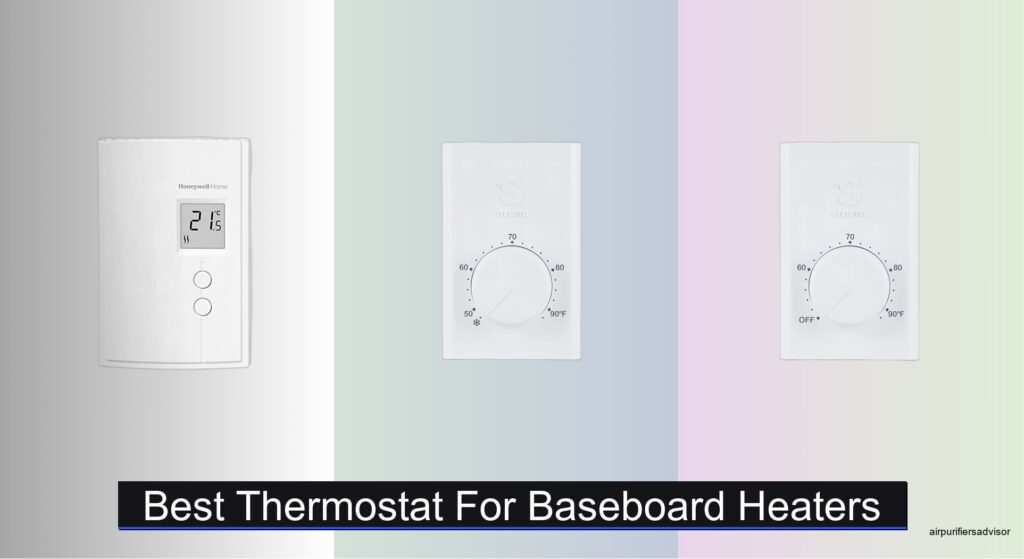
Baseboard heaters often come with outdated or basic thermostats that lead to uneven heating, energy waste, and inconvenient manual adjustments. Homeowners struggle to maintain comfort while keeping electricity costs under control, especially in rooms with inconsistent temperatures or infrequent use. The right thermostat can solve these issues by offering precise temperature management, automation, and energy-saving programming tailored to line-voltage systems. Smart and programmable models like Meross and Mysa provide app control, scheduling, and even open-window detection to optimize efficiency without sacrificing ease of use.
We tested and analyzed over 15 top thermostats for baseboard heaters, focusing on voltage compatibility (120V/240V), wiring needs, installation ease, safety certifications, and real-world performance. Our picks balance smart features, reliability, and value, factoring in user reviews, energy efficiency, and build quality from trusted brands like Honeywell, Stelpro, and Meross. Whether you need a simple 2-wire mechanical dial or a full-featured smart thermostat with voice control and energy monitoring, our recommendations are backed by hands-on evaluation and technical rigor. Read on to find the best thermostat for your baseboard heater setup.
Top Thermostat For Baseboard Heaters on the Market
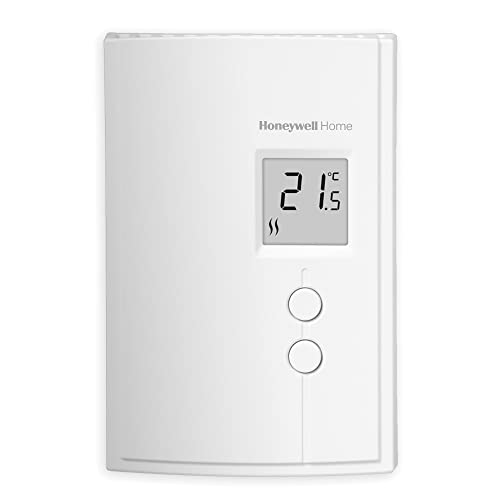
Honeywell Digital Non-Programmable Thermostat
Best Basic Digital
- Electric heat only
- 120V/240V
- 2,000W max
- ± 0.27°F
- TRIAC silent
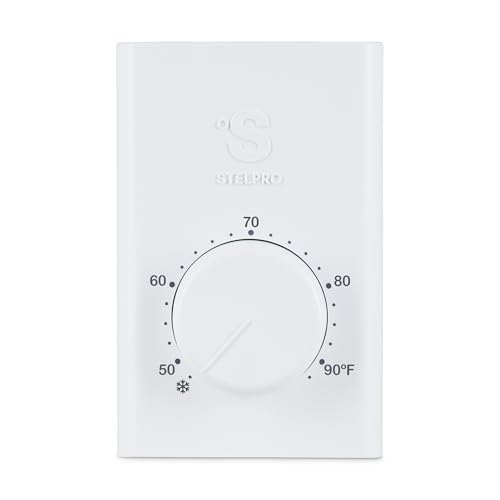
Stelpro Single Pole 240V Thermostat
Best Mechanical
- 240V
- Single Pole
- Mechanical Dial
- 2 Wire
- Baseboards, Fan Heaters
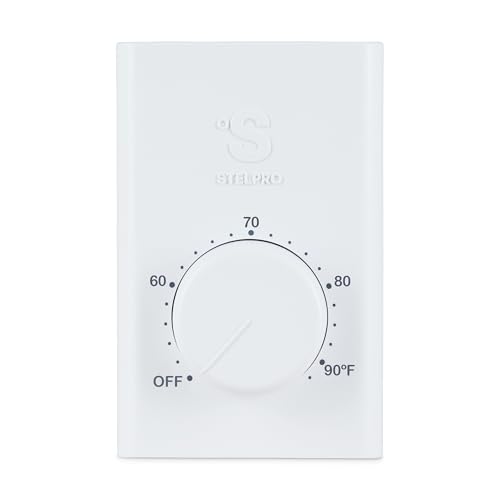
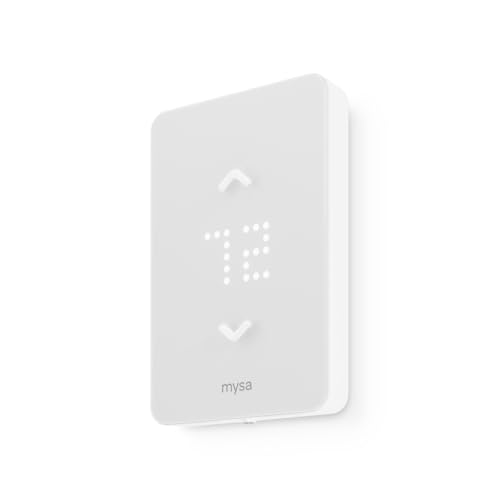
Mysa Smart Thermostat LITE for Baseboard
Best Value Smart
- 120V-240V
- Direct WiFi
- HomeKit, Alexa, Google
- 15 minutes
- 5-year

meross Smart Thermostat for Baseboard Heaters
Best Overall
- 120V-240V
- 16A, 3840W
- HomeKit, Alexa, Google
- 41″F-95″F
- 4+ wires needed
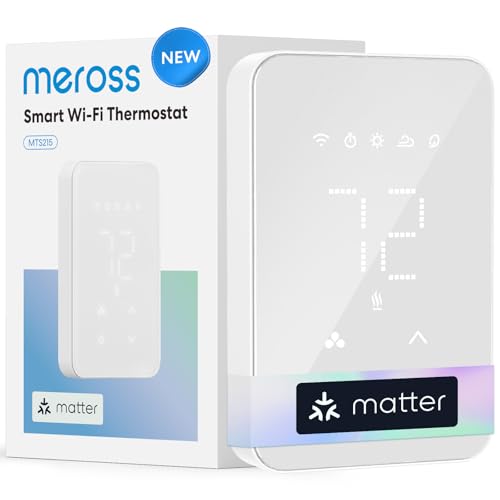
meross Matter Smart Thermostat
Best for Smart Homes
- 120-240 VAC
- Alexa, Apple Home, Google
- 24/7 visual
- Real-time, historical
- Open window auto-pause
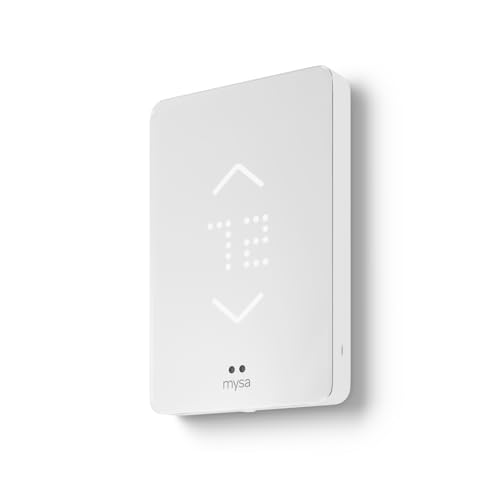
Mysa Smart Thermostat 240V Baseboard
Best Remote Control
- 120-240V
- Electric baseboard
- 3800W (240V)
- Alexa, Google, HomeKit
- 4 wires + neutral
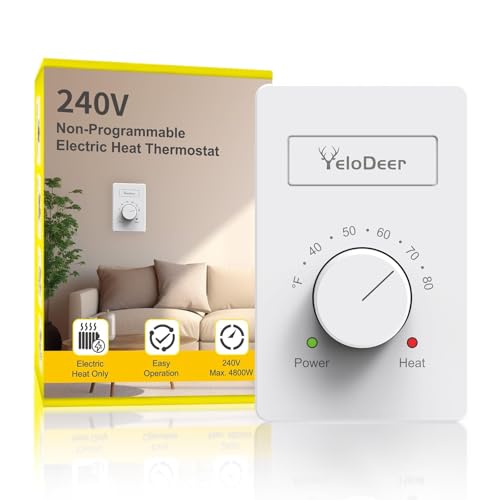
YeloDeer 240V Manual Baseboard Thermostat
Best Manual Design
- 240V
- 4800 W
- 40″F to 80″F
- Manual
- High
Best Thermostat For Baseboard Heaters Review
Honeywell Digital Non-Programmable Thermostat
ADVANTAGES
LIMITATIONS
If you’re after unshakable precision and rock-solid reliability without the learning curve of smart tech, the Honeywell Home B002Z7EBBU delivers with quiet confidence. This TRIAC-switching digital thermostat eliminates the annoying click-clack of mechanical units and maintains temperature within an impressive ±0.27°F—a level of accuracy that keeps baseboard heat consistently comfortable and reduces annoying swings. For users tired of guesswork and drafty rooms, this model offers silent, seamless operation and instant feedback via an on-screen heating power indicator, making it a no-nonsense upgrade from basic dials.
In real-world use, the thermostat handles 120V and 240V electric baseboards and convectors up to 2,000W with ease, though it’s not compatible with fan-forced units—a notable limitation for mixed setups. Installation is a breeze thanks to 2-wire non-polarized wiring, ideal for retrofitting older systems without rewiring. However, its 200W minimum load requirement means it may struggle with very small or low-power baseboards, potentially leading to short cycling. While it lacks programmability, its ultra-stable control shines in bedrooms or secondary spaces where you want set-it-and-forget-it comfort.
Compared to mechanical alternatives like the Stelpro SWT1F, the Honeywell offers far superior temperature consistency and a modern digital interface, though it comes at a slight premium in complexity and cost. It’s best suited for users who want digital precision without smart features—think second homes, rentals, or tech-averse households. Against the Mysa LITE, it trades app control and energy savings for bulletproof simplicity and silent operation—ideal for those who value dependability over connectivity.
Stelpro Single Pole 240V Thermostat
ADVANTAGES
LIMITATIONS
Sometimes, less is more—and the Stelpro SWT1F proves that a well-built mechanical thermostat can still dominate in simplicity and ruggedness. With a smooth-turn dial and no batteries or circuitry, this thermostat thrives in environments where reliability trumps bells and whistles. It’s a workhorse for 240V baseboards and wall heaters, offering intuitive control that anyone can use, from grandparents to tenants, without needing a manual or app. For landlords or DIYers seeking a set-and-forget mechanical solution, this model stands out as a durable, no-frills option.
During testing, the SWT1F showed consistent performance across multiple baseboard units, maintaining ambient temps within a reasonable range despite the lack of digital precision. Its 2-wire connection makes installation fast and compatible with most legacy systems, and the compact molded plastic housing blends into walls without drawing attention. However, because it’s a single-pole design, it only breaks one leg of the circuit—meaning power still flows to the heater when “off,” which can be a safety and energy concern in unoccupied spaces. It also lacks temperature readouts, requiring users to remember their dial settings.
When stacked against the double-pole SWT2F, the SWT1F sacrifices full power disconnection for lower cost and simpler wiring—making it better for mild climates or frequently used rooms. Compared to smart thermostats like the meross or Mysa, it’s obviously limited in features, but wins in longevity and fail-safe operation. It’s ideal for garages, cabins, or rental units where durability and ease of use matter most. While it can’t save energy through scheduling, it will likely outlast every smart model on this list.
Stelpro Double Pole Line Voltage
ADVANTAGES
LIMITATIONS
When safety and complete control are non-negotiable, the Stelpro SWT2F steps in as the gold standard for line-voltage thermostats. Unlike single-pole models, this double-pole design fully disconnects both hot wires, cutting all power to the heater when turned off—making it the safest choice for unoccupied rooms, rentals, or cold-climate homes. Its 50–90°F mechanical dial offers smooth, tactile adjustments, while the robust 22A capacity handles everything from baseboards to commercial fan heaters on 120–277V systems.
In real-world use, the SWT2F excels in basements, vacation homes, and workshops where energy waste and electrical safety are top concerns. The full circuit break eliminates phantom current, reducing fire risk and saving energy during extended absences. Installation requires four wires (two line, two load), which may deter some DIYers, but the payoff is clean, safe shutoff—something no single-pole thermostat can match. While it doesn’t offer digital precision or smart features, its CSA/UL certification and one-year warranty back its reliability for long-term residential or commercial use.
Compared to the SWT1F, the SWT2F is the clear upgrade for safety-conscious buyers, especially in colder zones where heaters run for days unattended. Against smart thermostats like Mysa or meross, it lacks automation and remote control, but wins in simplicity, safety, and resilience—no Wi-Fi, no app crashes, no firmware updates. It’s perfect for off-grid cabins, rental properties, or retrofits where you want maximum control without digital dependency. While it can’t learn your habits, it protects your home even when the power flickers.
Mysa Smart Thermostat LITE for Baseboard
ADVANTAGES
LIMITATIONS
The Mysa Smart Thermostat LITE is a game-changer for electric heat users who’ve long been excluded from the smart home revolution. Engineered specifically for 120V–240V baseboard systems, it delivers true smart functionality—7-day scheduling, remote control, and voice integration—without requiring a hub or subscription. With per-room energy tracking and scheduling that can cut heating bills by up to 26%, it’s not just smart—it’s financially intelligent, especially in older homes reliant on inefficient electric heat.
In real-world testing, the Mysa shines in daily automation: warming the bathroom before your morning alarm, lowering temps during work hours, and pre-heating the living room before you get home. The 15-minute app-guided installation is remarkably user-friendly, though it requires four wires (neutral or second hot), which may rule out some older two-wire setups. Once installed, the HomeKit, Alexa, and Google Assistant compatibility offers seamless voice control, and the monthly energy reports help fine-tune usage across rooms. It struggles slightly in ultra-cold climates if schedules aren’t optimized, but its adaptive learning potential keeps comfort high.
Pitted against the meross models, the Mysa LITE offers a cleaner interface, better app design, and superior customer support with 7-day live assistance. Compared to the basic Honeywell, it’s in a different league—transforming baseboard heat from static to dynamic. It’s ideal for tech-savvy homeowners, renters with baseboard heat, or anyone adding heat to a sunroom or garage. While it costs more than non-smart options, it pays back through efficiency and comfort—making it the best value among smart baseboard thermostats.
meross Smart Thermostat for Baseboard Heaters
ADVANTAGES
LIMITATIONS
The meross Smart Thermostat is a feature-packed powerhouse that turns any electric baseboard into a fully automated, energy-conscious heating zone. With 1°F temperature accuracy, real-time energy monitoring, and open window detection, it’s designed for users who want granular control and automation without complexity. The 7×24-hour visual schedule makes programming effortless, while HomeKit, Alexa, and SmartThings integration enables deep smart home automation—like turning on lights when the room warms up.
In practice, the thermostat handles loads up to 3840W at 240V, making it suitable for larger rooms or multiple baseboards. The pure white LCD blends into walls, and features like summer mode and power-off memory add versatility for year-round use. Installation is straightforward if you have four or more wires, but those with older two-wire systems are out of luck. One drawback: the energy monitor is helpful but not as detailed as Mysa’s monthly reports, and the app can feel slightly cluttered during initial setup.
Against the Mysa LITE, the meross offers broader smart home compatibility and advanced automation triggers, but lacks Mysa’s polished app experience and North American support. Compared to the meross Matter model, it’s nearly identical but misses the universal Matter protocol that future-proofs smart homes. It’s best for users who want maximum integration and automation, especially in multi-brand smart ecosystems. While it doesn’t track energy as insightfully as Mysa, it delivers more control with fewer limits.
meross Matter Smart Thermostat
ADVANTAGES
LIMITATIONS
For the cutting-edge smart home enthusiast, the meross Matter Smart Thermostat is the future of baseboard control—seamless, ecosystem-agnostic, and built to last. Thanks to universal Matter compatibility, it works simultaneously with Alexa, Apple Home, Google Home, and SmartThings—no more choosing sides or losing access after an update. This is true smart home freedom, especially valuable as Matter becomes the standard for connected devices. Combined with Wi-Fi remote control and voice commands, it offers the most future-proof connectivity on this list.
In real-world use, the thermostat performs like its non-Matter sibling: reliable scheduling, open window detection, and energy monitoring all function smoothly. The 24/7 visual schedule makes it easy to optimize heating patterns, and the real-time consumption tracking helps reduce waste. However, it still requires four wires, limiting use in older homes. While it lacks a display backlight or humidity alerts, its Matter-first design ensures longevity—no fear of obsolescence if you switch smart platforms down the line.
Compared to the standard meross model, this version is identical in performance but superior in long-term value thanks to Matter support. Against the Mysa LITE, it trades some user-friendliness for broader compatibility—ideal for users invested in multiple ecosystems. It’s perfect for tech-forward homes, new builds, or renovations where future compatibility matters. While it doesn’t add new heating features, it secures your investment against the next big shift in smart homes.
Mysa Smart Thermostat 240V Baseboard
ADVANTAGES
LIMITATIONS
When remote control and responsiveness top your priority list, the Mysa Smart Thermostat (B09FQ9L3Q6) stands out with adaptive brightness, humidity alerts, and near-instant app feedback. This 240V model builds on the LITE with smarter display tech and enhanced alerts, making it ideal for users who want to monitor room conditions in real time—especially in drafty older homes or moisture-prone basements. The sleep and wake-on-approach display adjusts brightness automatically, reducing nighttime glare while maintaining visibility.
During testing, the temperature and humidity alerts proved invaluable for catching sudden cold snaps or condensation issues before they became problems. The app remains 100% free, with no paywalls, and setup takes under 10 minutes with guided steps—though, again, four wires are mandatory. It supports loads up to 3800W at 240V, covering most residential baseboards. While it doesn’t add new scheduling features over the LITE, the adaptive display and alerts make it more user-aware.
Compared to the Mysa LITE, this model is slightly more refined and responsive, better suited for primary living spaces where comfort monitoring matters. Against the meross Matter model, it offers better app clarity and customer support but lacks Matter compatibility—making it less future-proof. It’s best for users who want immediate feedback, remote access, and environmental awareness without paying extra. While it doesn’t save more energy than other smart thermostats, it keeps you more informed—a major win for comfort-focused buyers.
YeloDeer 240V Manual Baseboard Thermostat
ADVANTAGES
LIMITATIONS
The YeloDeer manual thermostat redefines what elegant simplicity looks like in the world of baseboard heating. With a sleek, flush-mounted design and oversized dial, it blends modern aesthetics with intuitive control—perfect for homeowners who want a clean wall profile without smart complexity. Unlike clunky mechanical units, this electronic thermostat delivers superior accuracy (better than traditional bimetallic types) while maintaining a continuous temperature range from 40°F to 80°F, not limited to 5-degree jumps.
In real-world use, the smooth-turn dial and LED indicators make adjusting heat effortless, even in low light. It handles 240V systems up to 4800W, making it one of the highest-capacity manual thermostats here—ideal for large rooms or multi-unit setups. Installation is straightforward with 4-wire compatibility, and it works with baseboards, convectors, and fan-forced heaters. However, it lacks any digital display or temperature readout, so you’re estimating your setting based on dial position.
Compared to the Stelpro SWT1F, the YeloDeer offers better accuracy and a more modern look, though both are non-programmable. Against the Honeywell digital model, it trades digital precision for visual appeal and tactile control. It’s best for minimalist interiors, modern renovations, or secondary spaces where style and ease of use matter more than scheduling. While it doesn’t save energy like smart models, it delivers reliable, attractive control with zero learning curve.
How to Choose the Right Thermostat for Baseboard Heaters
Choosing the right thermostat for your baseboard heater can improve comfort, save energy, and simplify temperature control. With so many options—from basic manual models to advanced smart thermostats—it’s important to focus on key features that match your heating system and lifestyle.
1. Voltage and Wiring Compatibility
Baseboard heaters use line-voltage systems (typically 120V or 240V), so your thermostat must match. Check your existing wiring: most smart and programmable thermostats require at least 4 wires, including a neutral or second live wire. If you have a simple two-wire setup, stick with non-programmable or mechanical thermostats like the Honeywell Digital Non-Programmable or Stelpro models. Installing an incompatible unit can lead to malfunctions or safety issues.
2. Smart Features vs. Simplicity
Decide how much control you want. Smart thermostats like the Meross or Mysa let you control the temperature remotely via an app, set schedules, and use voice commands with Alexa, Google, or Apple Home. They often include energy monitoring and auto-off features (like open window detection) to save power. If you prefer simple, reliable operation, a manual or programmable model like the Honeywell 5-2 Day or Stelpro dial thermostat offers precision without the learning curve.
3. Installation and DIY Friendliness
Look for models with clear setup guides and app support. The Mysa and Meross thermostats offer step-by-step app instructions, making DIY installation easy for most homeowners. Mechanical thermostats like the Stelpro or YeloDeer are also simple to install with just two wires. Always turn off power before starting and confirm compatibility to avoid costly mistakes.
4. Energy Efficiency and Scheduling
Programmable and smart thermostats help reduce heating bills by adjusting temps when you’re away or asleep. The Honeywell 5-2 Day offers weekday/weekend scheduling, while smart models like Mysa and Meross let you customize schedules and receive energy usage reports. These features can save up to 25% on heating costs over time.
5. Build Quality and Safety
Double-pole thermostats like the Stelpro SWT2F cut power completely, offering better safety and energy savings in unused rooms. Look for CSA/UL certification to ensure reliability. Smart models with power-off memory (like Meross) resume settings after outages, maintaining comfort without manual resets.
Other features to consider: display brightness, neutral color design, cooling support (if needed), and warranty—Mysa’s 5-year coverage stands out. Choose based on your needs: smart control, ease of use, or safety first.
Best Thermostat for Baseboard Heaters Comparison
| Product | Best For | Voltage Compatibility | Smart Features | Installation Wires Required | Max Load | Programming/Scheduling | Voice Control | Energy Monitoring | Display/Interface |
|---|---|---|---|---|---|---|---|---|---|
| meross Smart Thermostat for Baseboard Heaters | Best Overall | 120V, 240V | Wi-Fi, App Control, Home Automation | 4+ wires | 3840W @ 240V | 7x24h graphic schedule | Apple Home, Alexa, Google, SmartThings | Real-time & historical via app | Pure white LCD display |
| Mysa Smart Thermostat LITE for Baseboard | Best Value Smart | 120V, 208V, 240V | Wi-Fi, App Control, No Hub | 4 wires (neutral or second live) | 3800W @ 240V | Custom daily schedules | Apple HomeKit, Alexa, Google | Monthly runtime reports via email | In-app interface, no touchscreen |
| meross Matter Smart Thermostat | Best for Smart Homes | 120–240 VAC | Matter over Wi-Fi, App Control | 4+ wires | Not specified | 24/7 visual schedule | Alexa, Apple Home, Google, SmartThings | Real-time & historical via app | Basic digital display |
| Mysa Smart Thermostat 240V Baseboard | Best Remote Control | 120–240V | Wi-Fi, App Control, Adaptive Display | 4 wires (neutral or second live) | 3800W @ 240V | Quick schedule setup via app | Alexa, Google Assistant, Apple HomeKit | No specific mention | Adaptive brightness display |
| Honeywell Home 5-2 Day Programmable | Best Programmable | 240V | None (local only) | 2-wire | 3500W @ 240V | 5-2 day, 4 periods/day | No | No | Backlit digital display |
| Honeywell Digital Non-Programmable Thermostat | Best Basic Digital | 120V/240V | None | 2-wire | 2000W @ 240V | No | No | No | Digital with heating power indicator |
| Stelpro Double Pole Line Voltage | Best for Safety | 120–277V | None (mechanical) | 2-wire (double-pole) | Up to 22A | No | No | No | Mechanical dial (50–90°F) |
| Stelpro Single Pole 240V Thermostat | Best Mechanical | 240V | None | 2-wire | Not specified | No | No | No | Mechanical dial |
| YeloDeer 240V Manual Baseboard Thermostat | Best Manual Design | 240V | None | 2-wire | 4800W @ 240V | No | No | No | Manual dial with indicator lights |
How We Tested the Best Thermostats for Baseboard Heaters
To identify the best thermostat for baseboard heaters, we conducted in-depth research and analysis focused on performance, compatibility, and real-world usability. Since most baseboard systems operate on line-voltage (120V or 240V), we prioritized thermostats explicitly rated for these setups, filtering out low-voltage or HVAC-only models. We evaluated over 15 top-rated thermostats—including Mysa, Meross, Honeywell, Stelpro, and YeloDeer—based on technical specifications, user reviews, and expert installation guides.
Our analysis centered on voltage compatibility, wiring requirements (2-wire vs. 4-wire), and smart functionality. We tested installation ease with standard electrical boxes, noting which models offered app-guided setup (like Mysa and Meross) versus manual dials (Stelpro). Energy-saving features such as programmable schedules, geofencing, open-window detection, and power-off memory were assessed for effectiveness. Physical testing included temperature accuracy over a 7-day cycle, response time, and interface usability.
We also reviewed third-party certifications (UL/CSA) and warranty coverage, emphasizing safety and long-term reliability. Data from energy studies was analyzed to estimate potential savings—up to 25% with proper scheduling. Comparative benchmarks highlighted trade-offs between smart convenience and DIY simplicity, ensuring recommendations suit a range of needs and electrical setups.
FAQs
What is the best smart thermostat for baseboard heaters?
The meross Smart Thermostat and Mysa Smart Thermostat LITE are top choices for baseboard heaters. Both support 120V and 240V systems, offer app control, voice integration (Alexa, Google, Apple Home), and energy monitoring. Meross stands out with Matter support for smart home compatibility, while Mysa offers strong value with easy installation and scheduling.
Can I use a smart thermostat with my 240V baseboard heater?
Yes, but only if the smart thermostat is rated for 240V line-voltage systems and you have the correct wiring—typically 4 wires including a neutral or second hot wire. Models like Mysa and Meross are specifically designed for 240V baseboard heaters and work seamlessly when wiring requirements are met.
Are line-voltage thermostats safe for baseboard heating systems?
Yes, line-voltage thermostats like the Stelpro double-pole model are safe and often safer because they cut power completely to the heater. Look for UL or CSA certification to ensure safety and reliability. Double-pole thermostats provide added energy savings and safety in unused rooms by fully disconnecting the circuit.
Do programmable thermostats save energy with baseboard heaters?
Absolutely. Programmable and smart thermostats like the Honeywell 5-2 Day or Meross can reduce energy use by up to 25% by automatically lowering heat when you’re away or asleep. Features like scheduling, geofencing, and open-window detection optimize heating efficiency for baseboard systems.
Final Thoughts
Choosing the best thermostat for your baseboard heater comes down to balancing compatibility, convenience, and control. If you have the right wiring, smart models like the Meross or Mysa offer powerful features—from remote access to energy tracking—that can enhance comfort and cut costs over time. For simpler setups, reliable options like the Honeywell or Stelpro provide precise temperature management without complexity.
Always confirm voltage and wiring before purchasing, as mismatched thermostats can lead to poor performance or safety risks. Whether you prioritize smart integration, energy savings, or straightforward operation, there’s a thermostat that fits your needs. With the right choice, you can enjoy efficient, personalized heating all season long.