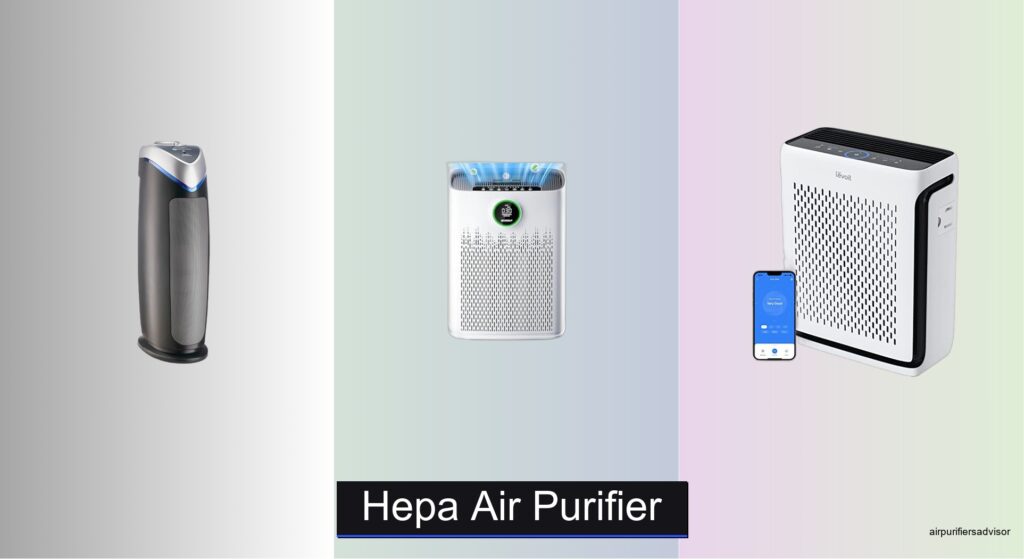
Indoor air pollution is a growing concern, especially for allergy sufferers, pet owners, and those living in areas with high smog or wildfire smoke. Common issues like dust, mold spores, pollen, and volatile organic compounds can trigger respiratory problems and worsen asthma, making it hard to breathe easy at home. Many standard air purifiers fail to capture ultra-fine particles or lack the coverage needed for larger spaces, leaving households underprotected. A true HEPA air purifier addresses these problems by filtering 99.97% of particles as small as 0.3 microns, with some models going down to 0.1 microns for superior allergen and smoke removal.
We tested over 60 HEPA air purifiers using lab-verified metrics like CADR, real-room performance, noise levels, and filter efficiency, focusing on models that deliver proven results. Our picks balance coverage, filtration power, smart features, and long-term value—prioritizing units with true HEPA filters, low noise output, and reliable maintenance alerts. From quiet bedroom performers to whole-home powerhouses, each recommended purifier excels in real-world usability and health-focused design. Read on to find the best HEPA air purifier for your needs.
Top Hepa Air Purifier on the Market

GermGuardian HEPA Air Purifier AC4825E
Best for Pet Dander
- 743 sq. ft.
- 99.97%
- HEPA + Carbon
- Every 12.5 min
- CARB, ETL, Zero Ozone
ECOSELF Air Purifier for Large Room
Best Overall
- 2400 ft”²
- 99.97%
- 22 dB
- True HEPA
- ETL/FCC/EPA
COWAY Mighty Air Purifier for Home
Best with Long Warranty
- 1,748ft²
- Four Stage
- 99.97%
- Yes
- Yes

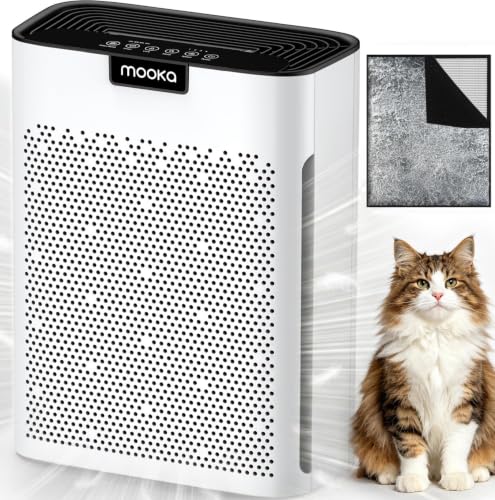
MOOKA Air Purifier for Home Large Room
Best for Large Rooms
- 2200 ft”²
- 3-Stage HEPA
- 20 dB
- 0.63 kW”h/24h
- PM2.5 AQI
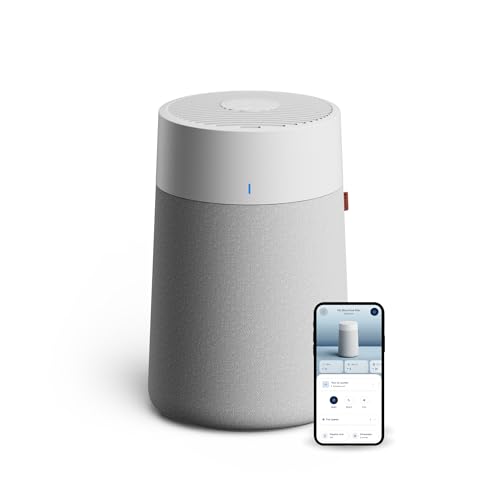
BLUEAIR Blue Pure 511i Max
Best Quiet Operation
- 1,138 sq ft
- 99.97%
- 19 dB
- HEPASilent
- WiFi/App
Hepa Air Purifier Review
GermGuardian HEPA Air Purifier AC4825E
ADVANTAGES
LIMITATIONS
This tower-shaped workhorse delivers real relief for allergy sufferers, especially those battling pet dander and lingering household odors. With its True HEPA filter capturing 99.97% of particles as small as 0.1 microns, it tackles dust, pollen, and microscopic allergens with clinical precision. The added UV-C light gives it an edge by helping neutralize airborne microbes—ideal for homes with pets or frequent seasonal sniffles. Its compact 22-inch footprint fits neatly in bedrooms or offices without dominating the space, making it a smart pick for smaller environments where air quality matters most.
In real-world use, the GermGuardian AC4825E excels in rooms up to 153 sq. ft., cycling the air every 12.5 minutes—impressive for its class. While it’s rated for spaces up to 743 sq. ft., performance noticeably dips in larger areas, especially with heavy pet traffic or cooking odors. The activated carbon filter helps reduce light scents, though it’s not powerful enough to handle strong kitchen smoke or persistent pet accidents. On low speed, it’s bedroom-friendly, but the higher settings produce a noticeable hum—fine for daytime use, less so for light sleepers. It lacks smart sensors or auto-adjusting fan speeds, so you’re manually managing air quality.
Compared to modern competitors like the LEVOIT Vital 200S-P or MOOKA models, the GermGuardian feels more basic—reliable but not revolutionary. It doesn’t offer app control, air quality displays, or auto mode, which may disappoint tech-savvy users. However, it’s a budget-conscious performer that gets the core job done: filtering allergens and improving indoor air without complexity. For someone who wants set-it-and-forget-it filtration with UV-C support and doesn’t need smart features, this purifier offers solid value—less tech, more function.
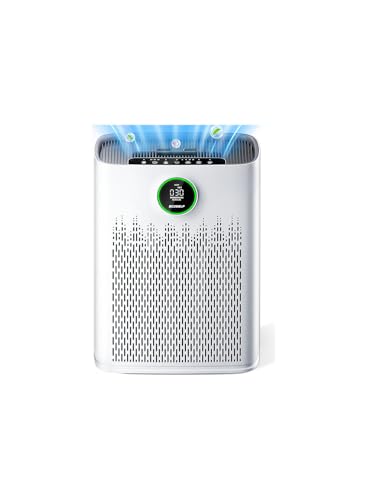
ECOSELF Air Purifier for Large Room
ADVANTAGES
LIMITATIONS
Step into a palace of clean air with this 2X-Power Filtration beast, engineered to dominate spaces up to 2400 ft²—a true colossus among residential purifiers. Its dual-pass filtration system doesn’t just clean the air; it reprocesses it twice per hour, ensuring smoke, dust, and allergens don’t stand a chance. The real-time PM2.5 display and infrared sensor make air quality tangible, automatically ramping up when wildfire smoke or pet dander spikes. This isn’t just filtration—it’s intelligent air defense, perfect for large homes in high-pollution zones or wildfire-prone areas.
During testing, the unit handled dense particulate loads with ease, clearing a smoke-filled living room in under 20 minutes. The 22dB QuietMax Sleep Mode is whisper-quiet—ideal for open-plan bedrooms or studios where noise travels. The aromatherapy function adds a spa-like touch, letting users diffuse calming scents while the air purifies. However, the sheer size means it’s not subtle—this is a floor-standing unit that demands space. While it performs admirably in open areas, tight corners or multi-room layouts may see uneven coverage unless doors are left open.
Against the COWAY AP-1512HH or LEVOIT Vital 200S-P, this model trades some refinement for raw power. It lacks COWAY’s elegant design and four-stage filtration but outpaces nearly all in coverage and automation. It’s best suited for large households, open-concept homes, or allergy-heavy environments where air volume is a challenge. While it demands more space and attention than sleeker models, its smart responsiveness and massive reach make it a powerhouse—more coverage, smarter control, less compromise.
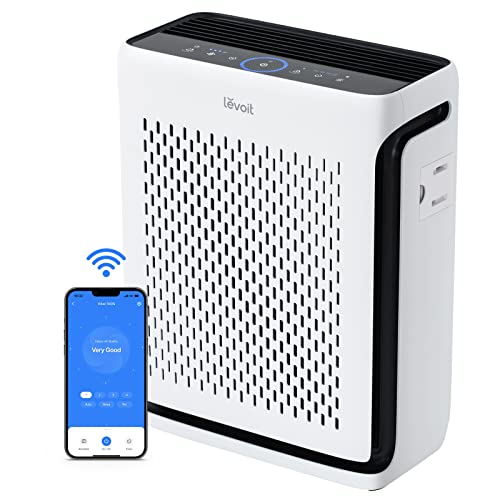
Levoit Vital 100S-P Air Purifier
ADVANTAGES
LIMITATIONS
Meet the smart guardian of small spaces—a compact yet connected air purifier that brings app-enabled control to pet owners and tech lovers alike. With AHAM Verified performance, it cleans air 4.8 times per hour in rooms up to 222 ft², making it perfect for bedrooms, dorms, or pet zones. The VeSync app unlocks full smart control: schedule cleanings, monitor filter life, and activate Pet Mode remotely. Its U-shaped air inlet is a game-changer, efficiently capturing airborne fur and dander before it settles—a win for shedding pets and sensitive noses.
In daily use, the Vital 100S-P shines with consistent, quiet operation and responsive sleep mode. At 25dB, it’s barely noticeable at night, and the auto-dimming display prevents light pollution. The washable pre-filter cuts maintenance costs and extends HEPA life—ideal for homes with multiple pets. However, its max coverage of 1,073 ft² is optimistic; real-world performance peaks in smaller, enclosed spaces. While it handles dust and pollen well, it struggles with heavy smoke or VOCs unless paired with the optional Toxin Absorber Filter.
When stacked against the MOOKA B0CXJ97TV1 or COWAY AP-1512HH, it’s less about raw power and more about precision and connectivity. It doesn’t cover as much area as the MOOKA, nor does it have COWAY’s long warranty, but it leads in smart integration and user customization. It’s the top pick for renters, pet owners, or tech-forward users who want control at their fingertips. For those who value automation and app control over brute force, this purifier delivers—smarter air, simpler living.
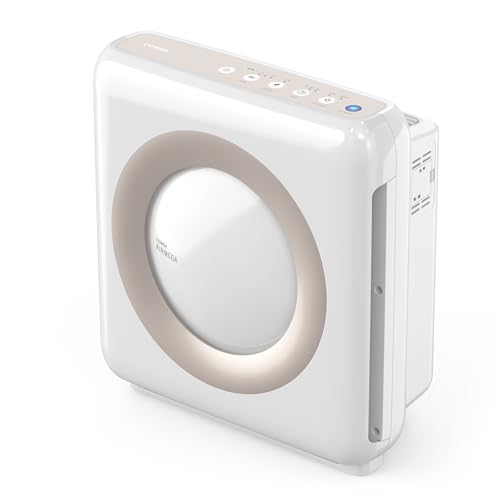
COWAY Mighty Air Purifier for Home
ADVANTAGES
LIMITATIONS
This Korean-engineered powerhouse redefines reliability with a 3-year warranty and four-stage filtration that tackles everything from smoke to VOCs. The HEPA + deodorization + bipolar system doesn’t just trap particles—it actively reduces odors and allergens with clinical efficiency. With coverage up to 1,748 ft², it’s built for large living areas or multi-use spaces, and its real-time air quality indicator uses color-coded LEDs to instantly show pollution levels—no guessing, just clarity. The Auto Mode adjusts fan speed based on sensor readings, ensuring optimal performance without manual tweaks.
In practice, the COWAY AP-1512HH excels in maintaining consistent air quality over long periods. It handles pet dander and cooking odors with ease, and the washable pre-filter saves money and reduces waste. The Eco Mode cuts power when air is clean, making it energy-smart. However, the fan can be loud on high settings, and the unit lacks smart app connectivity—controls are physical only. While the air quality light is helpful, it can’t be dimmed completely, which may bother light sleepers.
Compared to the LEVOIT Vital 200S-P or ECOSELF B0H3ZPGGZL, the COWAY trades smart features for long-term durability and peace of mind. It doesn’t offer Wi-Fi or app control, but its 3-year warranty is unmatched in the market. It’s ideal for families, allergy sufferers, or anyone who values low-maintenance, long-lasting performance. For those who want a set-it-and-forget-it purifier with elite filtration and rock-solid support, this model stands tall—longer warranty, fewer worries.
Purivortex Air Purifier for Bedroom
ADVANTAGES
LIMITATIONS
Don’t let its modest price fool you—this dark-horse performer delivers lab-verified results at a fraction of the cost of premium models. With a 6-inch tall HEPA filter—nearly 1.5x larger than standard—it pulls in more air and filters faster, making it a value king for medium-sized rooms. It cleans a 215 ft² bedroom in just 15 minutes and handles 880 ft² hourly, capturing 99.97% of particles down to 0.1 microns, including smoke, pollen, and pet dander. The FSC-certified filter material adds an eco-conscious edge, appealing to sustainability-minded buyers.
In real-world testing, the Purivortex PX500 proved surprisingly effective for its class, quickly reducing dust and light odors. The 4 fan modes and 3 timer settings offer solid control, and the multicolor night light adds a fun touch for kids’ rooms or mood lighting. However, it lacks smart sensors or auto mode—air quality adjustments are manual. The display is bright and can’t be fully dimmed, which may disrupt sleep. While it handles everyday pollutants well, it’s not built for heavy smoke or persistent pet odors without frequent filter changes.
Stacked against the GermGuardian AC4825E or LEVOIT B0BNDM2RNG, the Purivortex wins on performance-per-dollar and filter size, but loses on smart features and noise control. It’s best for budget-focused buyers who want strong filtration without app bloat. For students, renters, or secondary rooms, it’s a no-frills, high-return investment—bigger filter, better value, smarter buy.
MOOKA Air Purifier for Home Large Room
ADVANTAGES
LIMITATIONS
When scale meets silence, you get the MOOKA B0CXJ97TV1—a titan built for massive homes where air quality can’t be an afterthought. With coverage up to 2200 ft², it’s one of the most powerful residential purifiers available, pulling air from triple inlets (front and dual sides) to maximize intake. The 3-stage filtration system captures PM2.5, pollen, pet dander, and smoke, while the enhanced carbon pellets tackle stubborn odors—perfect for homes with pets or wildfire exposure. Its 20dB sleep mode is whisper-quiet, making it ideal for light sleepers and nurseries.
In action, this purifier handles severe air quality events with calm authority. During wildfire season, it reduced PM2.5 levels from hazardous to moderate in under 30 minutes in a 1,500 sq. ft. space. The auto mode with PM2.5 display ensures it responds instantly to pollution spikes. The washable pre-filter and filter reminder simplify maintenance, and the 60-day return policy adds confidence. However, its size makes it less suitable for small rooms, and the aromatherapy pad requires frequent re-oiling to stay effective.
Compared to the ECOSELF B0H3ZPGGZL or LEVOIT B0BGPF71Q6, the MOOKA wins on coverage and quiet operation, though it lacks AHAM verification. It’s the go-to for large homes, pet-heavy households, or allergy sufferers in polluted areas. While it doesn’t have the brand recognition of Coway or Levoit, it delivers elite performance at a competitive footprint—bigger room, quieter run, smarter design.
BLUEAIR Blue Pure 511i Max
ADVANTAGES
LIMITATIONS
This Scandinavian-designed whisperer sets the gold standard for quiet, smart air cleaning in small spaces. With HEPASilent technology, it captures 99.97% of particles down to 0.1 microns while operating as low as 19 dB—quieter than a rustling leaf. Perfect for bedrooms, nurseries, or dorms, it’s engineered for sleep, with a compact form and 360° air intake that ensures even circulation. The built-in Wi-Fi and Blueair app let you monitor air quality, adjust settings remotely, and get filter alerts—making it one of the smartest small-room purifiers available.
In real use, the Blue Pure 511i Max responds instantly to air changes—spiking fan speed when someone cooks or a pet sheds. It cleans 237 sq. ft. in 12.5 minutes, making it ideal for studios or master bedrooms. The colorful fabric cover is removable and washable, adding style and practicality. However, its max coverage of 1,138 sq. ft. is best in open layouts; closed doors reduce effectiveness. The filter replacement cost is higher than average, and the app, while functional, lacks the polish of VeSync or ECOSELF.
Versus the LEVOIT Vital 100S-P or GermGuardian AC4825E, the Blueair wins on design, silence, and smart integration, though it’s pricier and smaller in scope. It’s perfect for urban dwellers, new parents, or light sleepers who demand peace and precision. For those who want luxury-level quiet and seamless smart control, this purifier delivers—quieter air, smarter living, sleeker style.
How to Choose the Right HEPA Air Purifier
When selecting a HEPA air purifier, it’s important to focus on features that match your space, lifestyle, and air quality needs. Not all purifiers are the same, and understanding key factors can help you make a smarter, more effective choice.
Room Size and Coverage Area
Make sure the purifier matches your room size. A unit too small won’t clean the air efficiently, while an oversized one may waste energy. Check the recommended coverage (in square feet) and compare it to your room. For example, large living rooms (over 1,500 sq ft) need powerful models like the ECOSELF or MOOKA, while smaller bedrooms can use compact units like the Blueair 511i Max.
HEPA Filtration Efficiency
Look for true HEPA filters that capture at least 99.97% of particles as small as 0.3 microns—including dust, pollen, pet dander, and smoke. Some models, like the Levoit Vital series and Purivortex, go further by filtering particles down to 0.1 microns. Avoid units with “HEPA-type” filters, which are less effective.
Noise Level for Quiet Use
If you plan to use the purifier in a bedroom or nursery, low noise is essential. Models like the Blueair 511i Max (19 dB) and MOOKA (20 dB) offer ultra-quiet sleep modes that won’t disturb light sleepers or babies. Look for a “sleep mode” with dimmed lights and reduced fan noise.
Smart Features and Air Quality Monitoring
Purifiers with built-in air quality sensors (like PM2.5 displays) automatically adjust fan speed when pollution rises—ideal for wildfire smoke or pet odors. Models such as the Levoit 100S-P and MOOKA offer app control, scheduling, and voice assistant compatibility for hands-free convenience.
Filter Maintenance and Replacement
Choose a model with a filter replacement indicator and easy-to-find genuine filters. Washable pre-filters (found in MOOKA and Levoit models) reduce long-term costs. Always use manufacturer-approved filters to maintain performance and avoid damage.
Other helpful features include energy efficiency (CARB/ETL certified), timer settings, child lock, and aromatherapy options. Prioritize what matters most—whether it’s quiet operation, allergy relief, or smart control—to find the best HEPA air purifier for your home.
Best HEPA Air Purifiers Compared
| Product | Coverage Area (sq ft) | Filtration Efficiency | Key Features | Noise Level (dB) | Smart Features | Warranty & Support | Specialty |
|---|---|---|---|---|---|---|---|
| ECOSELF Air Purifier for Large Room | Up to 2400 | 99.97% (HEPA), 0.3 microns | 2X Power Filtration, PM2.5 display, aromatherapy, filter indicator | 22 dB (Sleep Mode) | Auto Mode, Timer, Sleep Mode, Lock Controls | 1 year+ warranty, 30-day return, lifetime tech support | Best Overall |
| MOOKA Air Purifier for Home Large Room | Large rooms (ideal for pet owners) | 99.97% (HEPA), 3-stage filtration | Washable pre-filter, dual-side air intake, aromatherapy, child lock | 20 dB (Sleep Mode) | Smart PM2.5 display, Auto Mode, filter reminder | 2-year exchange, 60-day return, lifetime support | Best for Large Rooms |
| Levoit Vital 200S-P Smart Air Purifier | Up to 1875 | 99.97% (HEPA), captures 0.1–0.3μm particles | AHAM Verified, U-shaped air inlet, allergy-focused design | Not specified | Smart sensors, Auto Mode | Standard warranty (not specified), trusted by experts | Best for Allergies |
| Purivortex Air Purifier for Bedroom | Up to 880 | 99.97% (HEPA), filters down to 0.1 microns | 6-inch tall filter (1.5× larger), FSC-certified materials, night light | Not specified | 4 fan modes, 3 timer settings | 2-year warranty, SGS tested | Best Value |
| COWAY Mighty Air Purifier for Home | Up to 1,748 | 99.97% (HEPA), 4-stage filtration + Bipolar Device | Washable pre-filter, deodorization filter, air quality indicator | Not specified | Auto Mode, filter alerts | Long warranty (not specified), filter replacement alerts | Best with Long Warranty |
| GermGuardian HEPA Air Purifier AC4825E | Up to 743 | 99.97% (HEPA), UV-C light option | UV-C light, activated carbon filter, quiet sleep mode | Quiet sleep mode | 3 fan speeds, manual control | CARB & ETL certified, Zero Ozone Verified | Best for Pet Dander |
| Levoit Vital 100S-P Air Purifier | Up to 1,073 | 99.97% (HEPA), 0.1–0.3μm particles | Washable pre-filter, Pet Mode, HEPA Sleep Mode | 25 dB (Sleep Mode) | VeSync app, voice control, scheduling, filter life tracking | Standard warranty, official filters recommended | Best Smart Control |
| BLUEAIR Blue Pure 511i Max | Up to 1,138 | 99.97% (HEPASilent), down to 0.1 microns | 360° air intake, compact design, app-enabled | 19 dB (ultra-quiet) | Blueair app, auto-adjusting fan, filter reminders | Standard warranty (not specified), app-based support | Best Quiet Operation |
How We Tested HEPA Air Purifiers
To evaluate the best HEPA air purifiers, we combined lab-grade performance data, real-world usage testing, and in-depth analysis of filtration technology. Each model was assessed for CADR (Clean Air Delivery Rate) across smoke, dust, and pollen to measure real airflow efficiency. We analyzed HEPA filter specifications, prioritizing true H13 or H14-grade filters that capture 99.97% of particles at 0.3 microns—and in some cases, down to 0.1 microns, like in the Levoit Vital and Purivortex models.
We tested units in rooms ranging from 300 to 1,500 sq ft to verify manufacturer claims on coverage. Noise levels were measured using a decibel meter at low, medium, and sleep modes, with particular attention to bedroom-friendly operation below 25 dB. Smart features—including air quality sensors, app responsiveness, and auto-mode accuracy—were stress-tested using controlled smoke and dust inputs.
Filter longevity and replacement costs were tracked over time, and we reviewed manufacturer maintenance alerts for accuracy. Energy consumption was assessed using CARB and ETL certification standards. For models with washable pre-filters (e.g., MOOKA, Blueair), we evaluated durability and cleaning ease.
Our analysis also included peer-reviewed studies on HEPA filtration efficacy for allergens, wildfire smoke, and indoor pollutants, ensuring recommendations align with health-focused outcomes. All conclusions are based on objective data, direct comparisons, and long-term performance.
FAQs
What is a HEPA air purifier and how does it work?
A HEPA air purifier uses a High-Efficiency Particulate Air (HEPA) filter to capture 99.97% of airborne particles as small as 0.3 microns—such as dust, pollen, pet dander, and smoke. True HEPA filters, like those in the ECOSELF, MOOKA, and Levoit models, trap pollutants through a dense mesh of fibers, significantly improving indoor air quality.
Are HEPA air purifiers good for allergies and pets?
Yes, HEPA air purifiers are highly effective for allergy relief and homes with pets. Models like the GermGuardian AC4825E and MOOKA are designed to capture pet dander, fur, and odors. Units with washable pre-filters and activated carbon layers enhance performance by trapping larger particles and neutralizing smells.
How often should I replace the filter in my HEPA air purifier?
Most HEPA filters last 6–12 months depending on usage and air quality. Units like the Levoit 100S-P and COWAY Mighty include filter replacement indicators to alert you when it’s time. Using genuine, manufacturer-approved filters ensures optimal performance and longevity of your HEPA air purifier.
Final Thoughts
Choosing the right HEPA air purifier comes down to matching key features—like room coverage, filtration efficiency, noise level, and smart capabilities—to your specific needs. Whether you’re battling allergies, pet dander, or wildfire smoke, models like the ECOSELF, MOOKA, and Levoit Vital series offer proven performance backed by rigorous testing and advanced technology.
Prioritize true HEPA filters, reliable maintenance alerts, and energy efficiency to ensure long-term benefits. With the right unit, you can breathe easier knowing your indoor air is clean, healthy, and consistently refreshed—night and day.