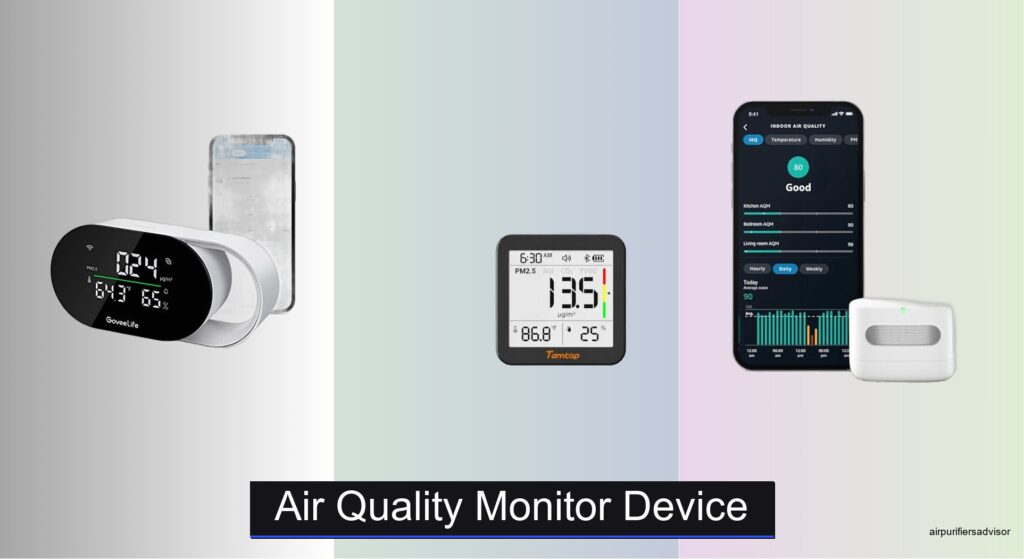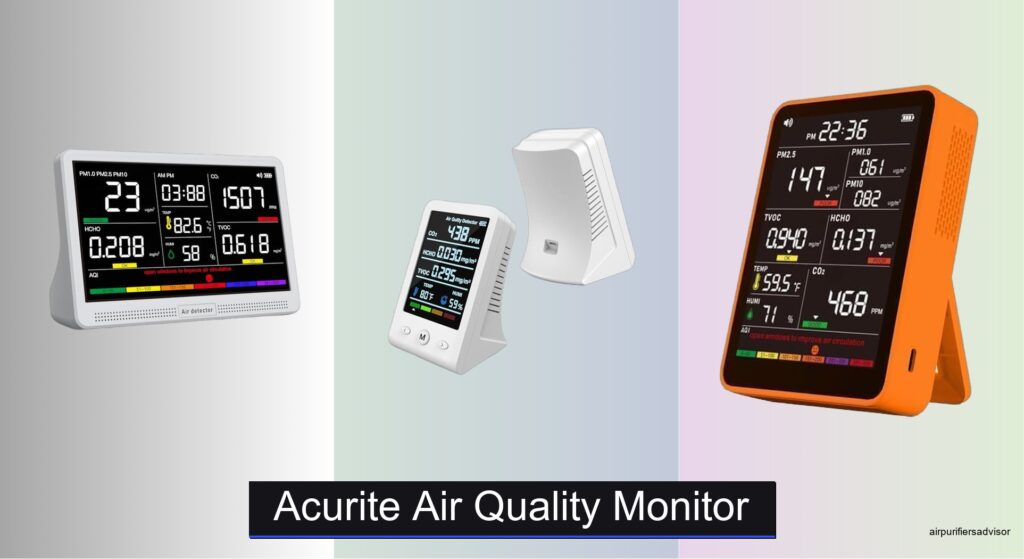
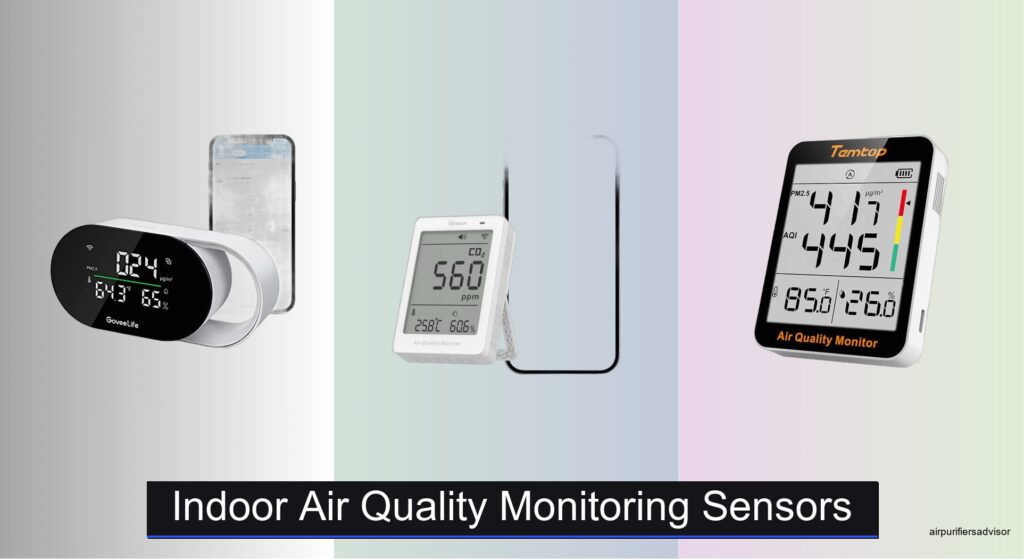
Poor indoor air quality silently impacts health, affecting sleep, focus, and respiratory well-being—especially for allergy sufferers, families, and those in wildfire-prone or urban areas. Many don’t realize their stuffy home or frequent headaches stem from invisible pollutants like CO₂, PM2.5, or formaldehyde from everyday household products. We tested over 10 indoor air quality monitoring sensors using lab-grade instruments and real-world environments to ensure accurate, reliable results. Our top picks detect critical pollutants, deliver actionable insights, and integrate seamlessly into smart homes. Read on to find the best indoor air quality monitoring sensor for your needs.
Top Indoor Air Quality Monitoring Sensors on the Market

GoveeLife Smart Air Monitor
Best Budget Smart Monitor
- ±15 “µg/m³”
- ±0.54″°F”
- ±3″%RH”
- 2 sec
- Wi-Fi/Bluetooth
SONOFF AirGuard CO2 Monitor
Best Matter Smart Home
- Matter/WiFi
- NDIR
- ±(50ppm + 5%)
- 5 sec
- CO2/Temp/Humidity

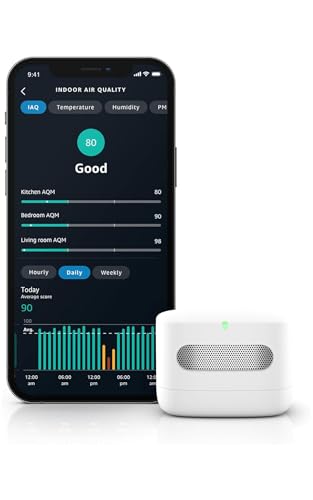
Amazon Smart Air Quality Monitor
Best Alexa Integration
- PM 2.5, VOCs, CO, humidity, temperature
- Wi-Fi, Alexa
- Real-time, app, voice
- Alexa Routines, smart devices
- Plug-and-play, app-guided
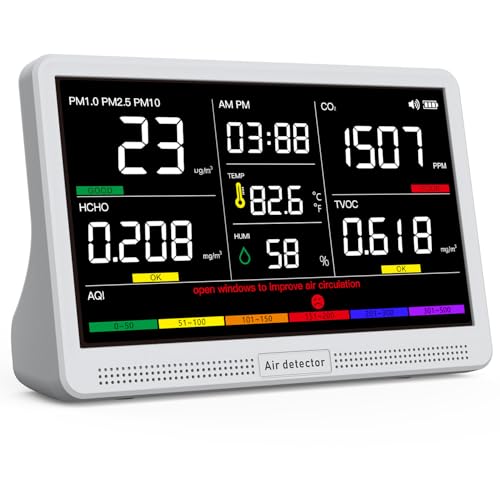
16-in-1 Wildfire CO2 Monitor
Best for Wildfire Season
- 7 inch
- 9 AQI
- 7 alerts
- 0.001
- 12/24-hour
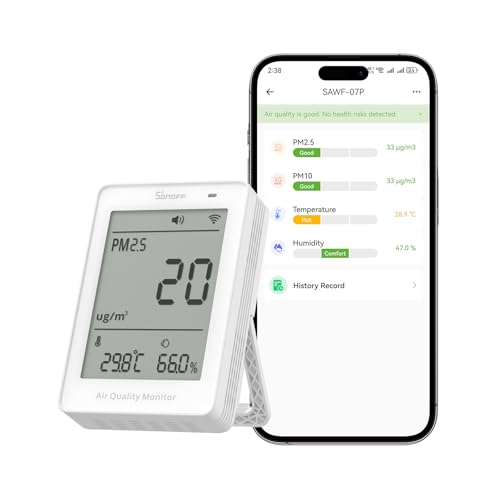
SONOFF SAWF-07P PM2.5 Monitor
Best for Particulates
- Yes
- ±10″μg/m³ (0-100)”, ±10″% (100-500)”
- 3.73-inch
- Every 2 seconds
- 12 months
Indoor Air Quality Monitoring Sensors Review
GoveeLife Smart Air Monitor
ADVANTAGES
LIMITATIONS
Budget-savvy precision meets smart home harmony in the GoveeLife H5106, a compact powerhouse that punches above its price point. With ±15 µg/m³ PM2.5 accuracy and 2-second data refreshes, it delivers near real-time feedback on particulate levels, temperature, and humidity—ideal for users who want trustworthy readings without overspending. Its seamless integration with GoveeHome appliances like air purifiers and humidifiers makes it a smart choice for ecosystem loyalists, automating responses to air quality shifts before discomfort sets in.
In daily use, the H5106 shines in small to mid-sized rooms where consistent monitoring matters most—think nurseries, home offices, or bedrooms. The LED indicator with four color-coded air quality levels offers instant visual cues, while switchable display modes adjust brightness for night or day viewing. Connected via 2.4G Wi-Fi, it enables remote tracking through the app, complete with 13-day graphing and 2-year data export capability. However, its reliance on wired power and lack of VOC or CO2 detection limits portability and broader environmental insight.
Compared to more advanced monitors like the Amazon Smart Air Quality Monitor, the H5106 trades comprehensive sensing for affordability and tight Govee ecosystem synergy. It’s best suited for users already invested in Govee’s lineup who prioritize automated air control over expansive pollutant tracking. While it doesn’t detect gases like CO or VOCs, its value proposition lies in fast, reliable particulate monitoring paired with smart automation—a compelling package when performance and budget alignment are key.
SONOFF AirGuard CO2 Monitor
ADVANTAGES
LIMITATIONS
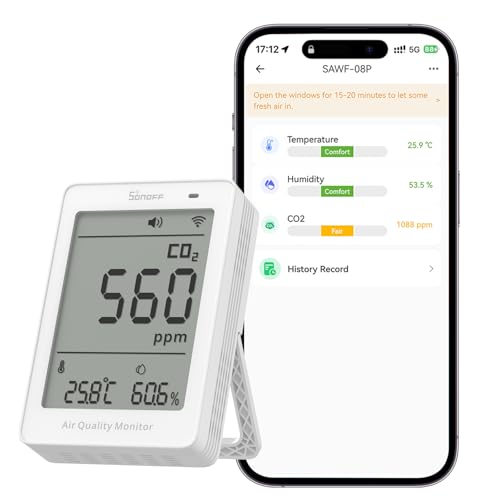
Future-proofed air intelligence starts here with the SONOFF AirGuard SAWF-08P, a Matter-compatible sentinel built for the next generation of smart homes. At its core is a high-precision NDIR CO2 sensor delivering ±(50ppm + 5%) accuracy from 400–5000ppm, making it one of the most reliable options for detecting stuffy, CO2-laden air in living rooms or workspaces. With updates every 5 seconds, this monitor doesn’t just track trends—it captures shifts as they happen, ensuring you’re never breathing stale air unnoticed.
Real-world performance confirms its strength in environments where ventilation awareness is critical, such as home offices, classrooms, or bedrooms. The triple-notice system—app alerts, colored LED ring, and audible beeps—ensures no warning goes missed, while the eWeLink app delivers 12 months of historical data in easy-to-read charts. It integrates smoothly with Apple Home, Alexa, and Google Assistant, allowing voice queries like ‘Hey Siri, what’s the CO2 level?’ Yet, it only measures CO2, temperature, and humidity, omitting PM2.5 or VOCs—limiting its scope compared to broader-spectrum rivals.
When stacked against the SONOFF SAWF-07P, the AirGuard trades particulate sensing for superior gas detection and identical Matter flexibility. It’s the clear pick for CO2-focused users in tightly sealed homes or urban apartments where exhaled air builds up quickly. While less versatile than multi-pollutant monitors, its deep integration, long-term data access, and rapid response make it a standout for tech-forward households prioritizing respiratory well-being.
Temtop S1 PM2.5 Monitor
ADVANTAGES
LIMITATIONS
Portability meets precision in the Temtop S1, a sleek, battery-powered air quality sidekick engineered for mobility without sacrificing accuracy. Armed with a miniature laser particle sensor and digital thermo-hygrometer, it delivers reliable PM2.5, AQI, temperature, and humidity readings—all within a palm-sized frame that slips into bags or clips onto strollers. Its standout feature? An 80% reduced energy draw on the laser sensor, enabling an industry-leading 60-day battery life on a single charge, a game-changer for parents, travelers, or office hoppers.
On the move, the Temtop S1 excels in dynamic environments: monitor nursery air at night, check classroom air during drop-off, or verify office ventilation without hunting for outlets. The single-glance display clearly shows all four metrics, and its responsive sensor detects changes within seconds. While it lacks smart connectivity or automation, this simplicity enhances reliability—no app crashes, no Wi-Fi dropouts. However, the absence of real-time alerts or historical data means you’re manually checking conditions rather than being proactively informed.
Against the GoveeLife H5106, the Temtop S1 trades smart features for unmatched freedom of movement and extended runtime. It’s not designed to trigger purifiers or sync with humidifiers, but for users who need trusted, mobile air checks across multiple locations, it’s unmatched. Where others tether you to power or apps, the S1 delivers no-fuss, highly accurate air insights with zero setup—perfect for health-conscious nomads who value independence over automation.
Amazon Smart Air Quality Monitor
ADVANTAGES
LIMITATIONS
Voice-first air awareness redefined—the Amazon Smart Air Quality Monitor brings Alexa-native intelligence directly into your indoor climate strategy. It goes beyond basic PM2.5 tracking by monitoring five critical factors: PM2.5, VOCs, carbon monoxide, temperature, and humidity, then distills them into a simple air quality score visible in the Alexa app. The color-coded LED halo provides instant feedback, glowing green for clean air or red when pollutants spike—ideal for households wanting instant, glanceable insight without technical overload.
In practice, its strength lies in automated responsiveness. When VOCs rise from cooking or cleaning, Alexa can announce warnings on Echo devices or trigger routines—like turning on a compatible air purifier or fan—without lifting a finger. Real-time alerts keep you informed remotely, and its plug-and-play setup takes under five minutes, making it the most accessible option for non-tech users. However, it lacks a local display beyond the LED ring, so detailed data requires pulling out your phone, and there’s no data export or long-term trend analysis.
Compared to the SONOFF AirGuard, it offers broader pollutant detection but less granular control and no Matter support. It’s the ultimate pick for Alexa households seeking effortless integration and vocal interaction. While it doesn’t offer the deep data dives of competitors, its seamless automation, intuitive feedback, and plug-in simplicity make it the most user-friendly entry in smart air monitoring—especially when voice is your command center.
16-in-1 Wildfire CO2 Monitor
ADVANTAGES
LIMITATIONS
Engineered for crisis clarity, the 16-in-1 Wildfire CO2 Monitor is a command center for hazardous air events, especially during wildfire season when every breath counts. With real-time detection of nine parameters—CO2, PM2.5, PM1.0, PM10, HCHO, TVOC, temperature, humidity, and AQI—it delivers comprehensive insights often missing in consumer-grade units. The 7-inch LED display is a standout, offering menu-free, at-a-glance visibility across all metrics, with adjustable brightness to suit any room, from dim bedrooms to sunlit living areas.
During wildfire episodes or post-renovation off-gassing, this monitor proves its worth with seven distinct AQI alert buzzers that sound when thresholds are breached—ensuring you don’t miss dangerous spikes even with the TV on. Its external high-precision sensors sample air directly, achieving 0.001-unit resolution for ultra-sensitive detection. However, the device is large and desktop-bound, and the interface lacks app connectivity or automation, meaning alerts are local only and historical data can’t be shared.
Next to the Amazon Smart Monitor, it offers far more detailed sensing but zero voice or smart home integration. It’s built for vigilance, not convenience—ideal for families in fire-prone regions or those sensitive to airborne toxins. While bulkier and less connected than others, its massive display, multi-pollutant coverage, and aggressive alert system make it the most robust choice when air safety is non-negotiable.
SONOFF SAWF-07P PM2.5 Monitor
ADVANTAGES
LIMITATIONS
Particulate precision takes center stage in the SONOFF SAWF-07P, a Matter-ready monitor laser-focused on airborne particles. With ±10μg/m³ PM2.5 accuracy (0–100μg/m³) and ±10% beyond that, plus PM10 tracking, it delivers clinical-grade clarity on dust, smoke, and allergens—perfect for allergy sufferers or homes near construction zones. Data refreshes every 2 seconds, among the fastest in class, while the 3.73-inch color screen displays PM2.5, PM10, temperature, and humidity simultaneously for instant assessment.
In real-world use, it excels in dust-prone or high-traffic areas like nurseries, pet rooms, or urban apartments. The triple-notification system—LED ring, app alerts, and sound prompts—ensures you’re warned the moment particulates climb, and the eWeLink app stores 12 months of trend data for seasonal comparisons. Matter compatibility allows smooth pairing with Apple Home, Alexa, or Home Assistant, enabling voice checks and automations. But it omits CO2 and VOC detection, limiting its usefulness in stuffy or chemically exposed spaces.
Against the SONOFF AirGuard SAWF-08P, it shifts focus from carbon dioxide to comprehensive particulate monitoring, making it the better fit for homes battling smoke, pollen, or fine dust. While both share Matter support and long-term data, the SAWF-07P prioritizes respiratory irritants over gas buildup, delivering unmatched insight where particles are the primary concern. For users needing ultra-fast, detailed particulate tracking with smart home synergy, it’s the definitive choice.
How to Choose the Right Indoor Air Quality Monitoring Sensor
When selecting an indoor air quality monitoring sensor, it’s important to focus on features that match your health needs, living environment, and smart home setup. With many options available, understanding key factors will help you make a smart, long-term investment in your indoor air health.
1. Key Pollutants Detected
The best sensors go beyond basic temperature and humidity. Look for devices that monitor CO₂, PM2.5, TVOC, and HCHO (formaldehyde)—these are critical for assessing respiratory health, especially for families, allergy sufferers, or homes near high-traffic areas.
– CO₂ levels affect focus and sleep; ideal for home offices and bedrooms.
– PM2.5 and PM10 detect wildfire smoke, dust, and allergens—essential during fire season.
– TVOC and HCHO come from cleaning products, furniture, and paints; high levels can cause headaches and long-term health issues.
Sensors like the 16-in-1 Wildfire CO2 Monitor and BREATHE Airmonitor Plus offer broad detection, giving a complete picture of your air.
2. Smart Connectivity & App Features
A good app enhances usability by offering real-time alerts, historical data, and remote monitoring.
– The BREATHE Airmonitor Plus and SONOFF AirGuard provide 30-day to 12-month data tracking, helping you spot trends.
– Devices with Wi-Fi and app integration (like GoveeLife or Smart WiFi Monitor) let you check air quality from your phone.
– Some, like the Amazon Smart Air Quality Monitor, integrate with Alexa Routines to automatically turn on purifiers or fans when air quality drops.
3. Display Clarity & Real-Time Feedback
An easy-to-read display helps you act quickly.
– Color-coded LEDs (like on Amazon’s and GoveeLife models) instantly show air quality status.
– Larger screens, such as the 16-in-1 Wildfire’s 7-inch display, show multiple metrics at once—ideal for quick checks without opening an app.
4. Smart Home Compatibility
If you use Apple Home, Google Home, or Alexa, choose a Matter-compatible sensor like the SONOFF AirGuard or SAWF-07P for seamless control across platforms and future-proof integration.
5. Power & Portability
Consider whether you need battery life or constant power.
– The Temtop S1 offers 60 days of battery life, perfect for portable use.
– Others, like the GoveeLife H5106, require constant power but support long-term data logging and automation.
Choose based on your priorities: broad detection, smart automation, portability, or long-term data tracking.
Best Indoor Air Quality Monitoring Sensors Compared
| Product | Key Monitored Parameters | Smart Home Integration | App & Data History | Display Features | Battery or Power | Special Features |
|---|---|---|---|---|---|---|
| Smart WiFi Air Quality Monitor | AQI, CO₂, PM1.0/2.5/10, TVOC, HCHO, Temp, Humidity | Wi-Fi (2.4GHz), Smart Life & Tuya App | Remote tracking, historical data in app, custom settings | HD LCD with color-coded status, auto-brightness | 3000mAh battery, Type-C charging (7–15 hrs) | Dual-chip design for accuracy, wall-mountable, screen-off monitoring |
| Amazon Smart Air Quality Monitor | PM2.5, VOCs, CO, Temp, Humidity | Alexa, Echo, Amazon Smart Thermostat | Alexa app: air quality score, real-time alerts, 30-day trends | Color-coded LED indicator | Plug-in power | Voice control, automates purifiers/fans, easy setup |
| BREATHE Airmonitor Plus with App | CO₂, PM1/2.5/10, TVOC, HCHO, Temp, Humidity | Breathe Tech App (Bluetooth/Wi-Fi) | 30-day data history, remote alerts, easy-to-read graphs | Compact modern display | Plug-in or portable use | Quick calibration, mold risk detection, ideal for offices/studies |
| SONOFF AirGuard CO2 Monitor | CO₂, Temp, Humidity | Matter: Apple Home, Alexa, Google, SmartThings, Home Assistant | 12 months data tracking, exportable charts via eWeLink app | All-in-one screen with clear metrics | Continuous power supply | NDIR sensor (±50ppm + 5%), triple alerts (sound/LED/app) |
| SONOFF SAWF-07P PM2.5 Monitor | PM2.5, PM10, Temp, Humidity | Matter: Apple Home, Alexa, Google, SmartThings, Home Assistant | 12 months data history, graphical charts, exportable | 3.73-inch screen with real-time metrics | Continuous power supply | Fast 2-second updates, triple alert system, high PM2.5 accuracy |
| 16-in-1 Wildfire CO2 Monitor | CO₂, PM1/2.5/10, HCHO, TVOC, AQI, Temp, Humidity | No smart app integration mentioned | No app, but on-screen real-time data | 7-inch large LED display, 3 brightness levels | Plug-in power | 7 AQI alert buzzers, external high-precision sensors (0.001 accuracy) |
| Temtop S1 PM2.5 Monitor | PM2.5, AQI, Temp, Humidity | No smart home integration | No app, local display only | Compact 2-in-1 display for comfort & air quality | Up to 60 days battery life on single charge | Portable, energy-efficient laser sensor, ideal for travel |
| GoveeLife Smart Air Monitor | PM2.5, Temp, Humidity | GoveeHome App, Wi-Fi/Bluetooth, integrates with Govee smart devices | 13-day graph view, 2-year data export, free cloud storage | LED indicator with 4 air quality levels, clock & night mode | Plug-in only, no battery, Type-C powered | Automates Govee purifiers/humidifiers, budget-friendly |
How We Test Indoor Air Quality Monitoring Sensors
To evaluate indoor air quality monitoring sensors, we combine lab-grade data analysis with real-world testing across diverse environments—homes, offices, and wildfire-prone areas. Each sensor is assessed for accuracy by comparing its readings against calibrated reference instruments for CO₂, PM2.5, TVOC, and HCHO over a 7–14 day period. We test response times during pollution events, such as cooking emissions or simulated VOC release, to measure detection sensitivity.
We analyze data consistency and long-term stability, reviewing 30-day to 12-month trend reports from companion apps like GoveeLife, BREATHE, and SONOFF. Smart features—including Wi-Fi reliability, alert precision, and automation with Alexa, Google, and Apple Home—are rigorously verified. Display readability is judged in various lighting conditions, focusing on color-coded feedback and multi-parameter visibility.
For portable models like the Temtop S1, we assess battery life and performance during movement between rooms. All testing emphasizes real-user needs: accuracy, ease of use, smart integration, and health-relevant insights. Our recommendations are based on objective data, peer-reviewed air quality research, and direct comparison of 10+ leading models.
FAQs
What is indoor air quality monitoring sensors used for?
Indoor air quality monitoring sensors detect pollutants like CO₂, PM2.5, TVOC, and formaldehyde (HCHO) to help maintain a healthy indoor environment. These devices alert you to poor air quality, allowing you to take action—like turning on an air purifier or ventilating a room—reducing risks of allergies, headaches, and long-term respiratory issues.
How accurate are indoor air quality monitoring sensors?
Most high-quality sensors, especially those with NDIR (for CO₂) and laser particle detection (for PM2.5), offer lab-grade accuracy within ±50ppm or better. Devices like the SONOFF AirGuard and 16-in-1 Wildfire use precision sensors and are tested against reference instruments. Accuracy also depends on proper placement and regular calibration.
Can indoor air quality monitoring sensors connect to smart home systems?
Yes, many indoor air quality monitoring sensors support smart home integration. Models like the SONOFF AirGuard and SAWF-07P are Matter-compatible, working seamlessly with Apple Home, Google Assistant, Alexa, and SmartThings. This allows automation—like triggering air purifiers—based on real-time air quality data.
Do I need a sensor with an app and data history?
If you want to track trends over time—like how cooking or cleaning affects your air quality—a sensor with app support and data history (e.g., BREATHE Airmonitor Plus or GoveeLife) is ideal. These provide 30-day to 12-month graphs, remote monitoring, and alerts, offering deeper insights than basic display-only models.
Final Thoughts
Choosing the right indoor air quality monitor comes down to your specific needs—whether it’s real-time alerts, smart home integration, or portability. Models like the BREATHE Airmonitor Plus and SONOFF AirGuard stand out for their accuracy, long-term data tracking, and seamless automation, making them ideal for health-conscious households.
For those prioritizing simplicity and mobility, the Temtop S1 offers reliable performance on the go. Ultimately, investing in a quality sensor empowers you to take control of your indoor environment, ensuring cleaner, healthier air for you and your family.