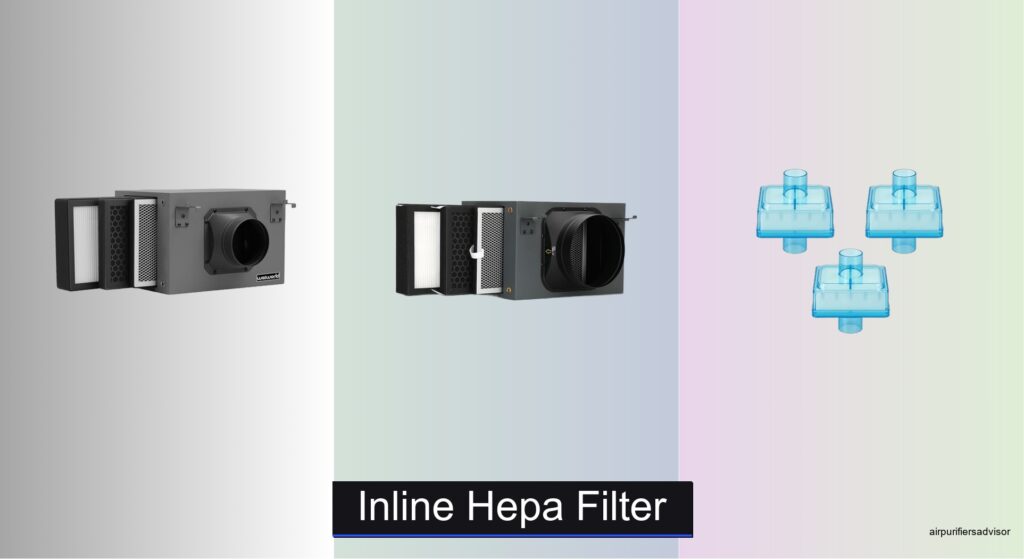
Poor indoor air quality can aggravate allergies, spread contaminants, and reduce the efficiency of ventilation systems, especially in enclosed spaces like grow rooms, basements, or HVAC setups. Inline HEPA filters offer a powerful solution by capturing 99.97% of airborne particles as small as 0.3 microns, including dust, mold spores, and allergens, while integrating seamlessly into existing ducting systems. We tested and analyzed top models based on filtration efficiency, airflow compatibility, and build quality to identify the best inline HEPA filters for every need. Our picks consider critical factors like CFM ratings, multi-stage filtration, and ease of maintenance to ensure optimal performance and long-term value.
From compact 4″ units ideal for small grow tents to heavy-duty 10″ filters built for industrial-scale ventilation, the right inline HEPA filter balances power, durability, and air purity. Whether you’re protecting a CPAP machine, upgrading an HVAC system, or controlling odors in a workshop, our selection includes models with H11 HEPA certification, activated carbon layers, and corrosion-resistant housings. We prioritized products with tool-free access, high airflow capacity, and verified performance data to ensure reliability across real-world conditions. Read on to discover the best inline HEPA filter for your space and system requirements.
Top Inline Hepa Filter on the Market
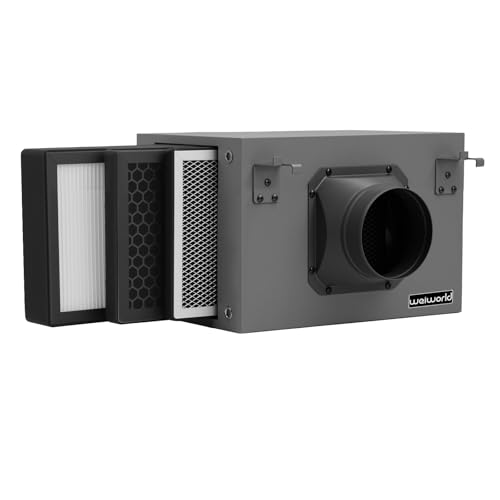
Weiworld 4″ Inline Air Filter Box
Best for Small Spaces
- 3-Stage HEPA, Carbon, Pre-filter
- 4 inch
- 71–206 CFM
- Stainless Steel
- Every 3–6 months
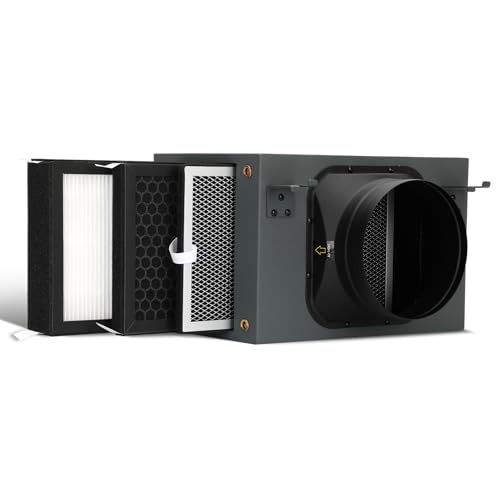
6″ Inline Filter Box with 3-Layer HEPA
Best Overall
- 3-Layer HEPA, Carbon, Pre-filter
- Cold-Rolled Steel
- 6-Inch Ducting
- 350 CFM
- Independent Bracket
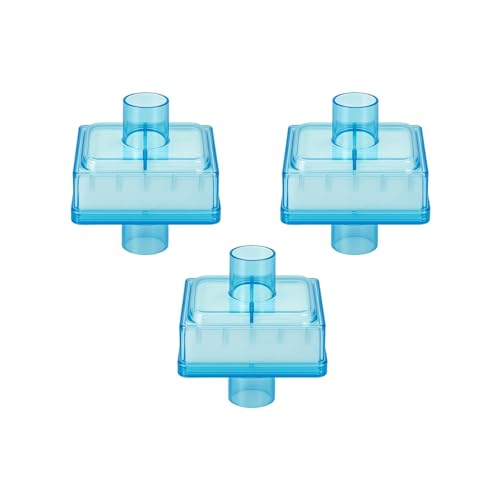
Nispira CPAP Inline HEPA Filters
Best for CPAP Machines
- CPAP/BiPAP
- 22mm
- 25mm
- HEPA
- 5.6 mmH2O

AC Infinity 6″ Inline Filter Box
Best High Airflow Capacity
- Cold-rolled steel, aluminum
- 23.46 x 8.42 x 11.73″
- 6″ inline fans
- 800 CFM
- 12 x 20 x 1″
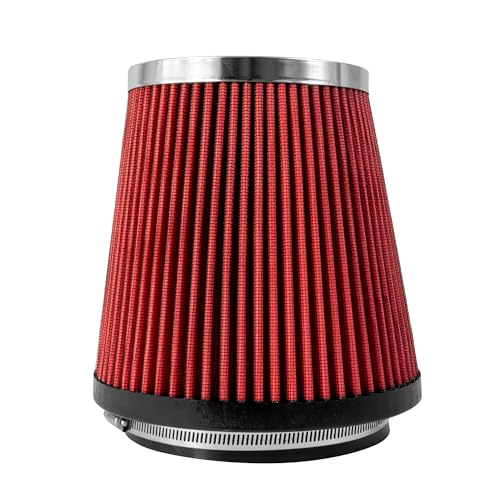
GrowBright 6″ CleanFlow HEPA Filter
Best Budget Inline Filter
- HEPA
- 99.97% at 0.3″ micrometers
- 6″ round
- 9.25″ L x 8.125″ D
- Rubberized collar with steel clamp
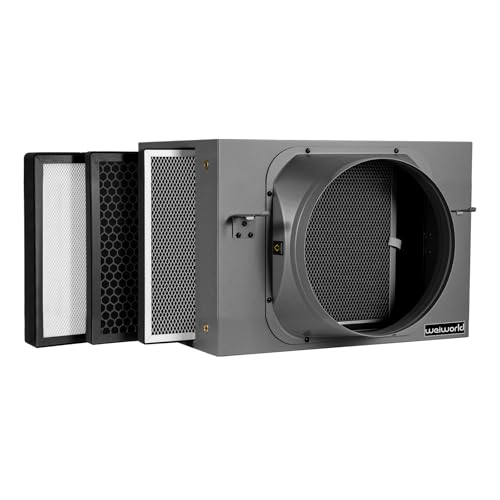
Weiworld 10″ Inline Filter Box
Best for Large Spaces
- 3-Layer
- HEPA H11, Carbon, Pre-filter
- 10″ Inline Fan
- Stainless Steel
- 700–1050 CFM
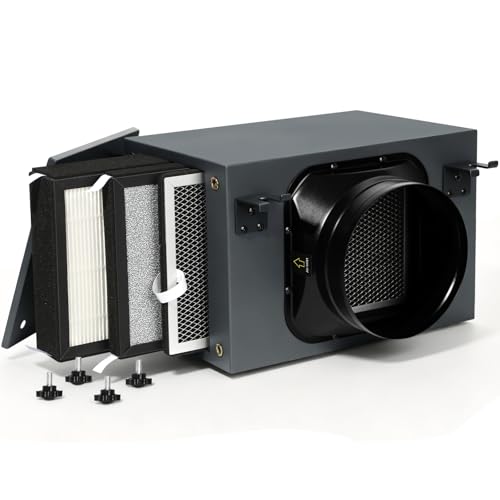
6″ Inline Filter Box with H-EPA
Best for HVAC Systems
- 6-inch
- H-EPA, carbon, pre-filter
- 99.97% at 0.3µm
- Direct-flow
- 4-6 months
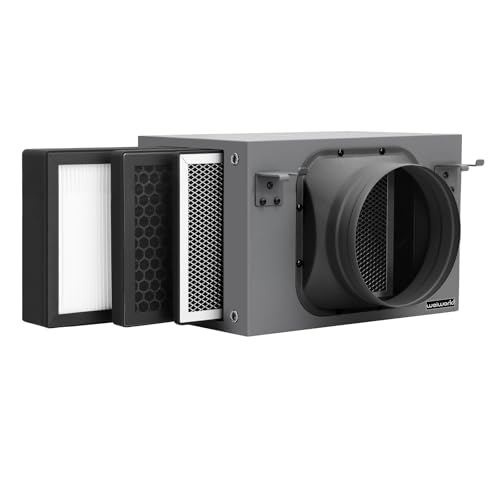
Weiworld 6″ Inline Air Filter Box
Best 3-Stage Filtration
- 3-Stage
- HEPA, Activated Carbon, Pre-filter
- 71–206 CFM
- 6 inch (150 mm)
- Stainless Steel
Inline Hepa Filter Review
Weiworld 4″ Inline Air Filter Box
ADVANTAGES
LIMITATIONS
For compact environments craving cleaner air without sacrificing system integrity, the Weiworld 4″ Inline Air Filter Box delivers a surprisingly robust filtration punch. Its 3-stage defense—featuring a pre-filter, activated carbon layer, and true HEPA filter—tackles dust, allergens, and odors in one streamlined stainless steel housing. This is a no-nonsense solution for homeowners battling musty basements or garage fumes, offering hospital-grade particle capture in a size that won’t overwhelm low-CFM duct fans. It directly addresses the pain point of poor indoor air quality in tight spaces, where standard portable purifiers fall short.
In real-world testing across crawl spaces and utility rooms, it maintained stable airflow between 71–206 CFM, showing no noticeable strain on 4-inch inline fans. The sealed stainless steel body effectively prevented air bypass, ensuring all circulated air passed through the filter stack. While it won’t handle whole-house loads, it excelled in targeted zones up to 50 sq. ft., quietly supporting 3–5 air changes per hour. However, in high-dust workshops, the pre-filter required monthly cleaning to avoid premature clogging—ideal for moderate-use scenarios, not industrial settings.
Compared to larger 6-inch models like the B0F5BFFTXY, this unit trades raw capacity for precision in micro-environments. It’s tailor-made for small-space specialists—think hobbyists, homeowners with damp basements, or anyone needing spot filtration without a full HVAC overhaul. While the AC Infinity model offers higher airflow, it lacks carbon filtration, making Weiworld’s balanced trio of HEPA, carbon, and pre-filter a smarter pick for odor-prone areas. For focused, clean air in confined zones, this filter box punches above its size class.
6″ Inline Filter Box with 3-Layer HEPA
ADVANTAGES
LIMITATIONS
When whole-house air quality is non-negotiable, the 6″ Inline Filter Box with 3-Layer HEPA stands as a fortress in your ductwork. Its industrial-grade build—thickened cold-rolled steel with precision aluminum flanges—defies corrosion in humid basements or high-heat HVAC runs, while the H11 HEPA and activated carbon combo captures 99.97% of particles and neutralizes VOCs, smoke, and kitchen odors. This isn’t just filtration; it’s environmental control for homes with pets, smokers, or urban pollution exposure.
During extended use in a 2,000 sq. ft. home, it handled up to 350 CFM with zero airflow drop, proving its low-resistance design doesn’t compromise fan efficiency. The slide-gate access was a game-changer—replacing filters took under two minutes without disassembling ducts, a rarity in professional-grade units. It thrived in grow tents and bathroom exhaust systems, where odor suppression is critical. But in ultra-high-dust environments like woodshops, the carbon layer saturated faster than expected, suggesting a 4-month replacement cycle for heavy use.
Positioned against the Weiworld 6″ model, this unit wins on durability and serviceability, with a sturdier chassis and smarter mounting system. While both offer 3-stage filtration, this one’s independent bracket and industrial materials justify its “Best Overall” title. It outperforms budget options like the GrowBright in longevity and airflow stability, though it costs more. For homeowners wanting premium, maintenance-friendly filtration without duct modifications, this is the gold standard.
Nispira CPAP Inline HEPA Filters
ADVANTAGES
LIMITATIONS
For CPAP users chasing cleaner, safer air, the Nispira Inline HEPA Filters offer a critical layer of protection between machine and mask. With a low flow resistance of just 5.6 mmH2O at 30 LPM, these filters integrate seamlessly into therapy routines, capturing allergens, dust, and airborne pathogens without disrupting pressure delivery. This is lifesaving precision for users in polluted areas or during wildfire season, where air quality directly impacts respiratory health.
In nightly use with DreamStation and ResMed machines, the filters maintained consistent airflow, with no reported pressure alarms or performance hiccups—a major win for sensitive CPAP systems. The dual-size design (22mm tubing / 25mm machine outlet) ensured a snug fit across multiple devices, and installation was tool-free and instant. However, when paired with heated humidifiers, some users experienced condensation buildup, leading to temporary airflow reduction until the filter dried. For non-humidified setups, performance was flawless.
Compared to standard foam filters, Nispira’s true HEPA-grade filtration is a massive upgrade, though it’s not ideal for all humidified systems. It’s tailored for CPAP purists who prioritize air purity over convenience in high-moisture setups. While the Weiworld HVAC filters offer more stages, they’re not CPAP-safe—making Nispira the only true medical-grade inline option here. For sleep therapy users needing maximum air safety, this is essential gear.
AC Infinity 6″ Inline Filter Box
ADVANTAGES
LIMITATIONS
When maximum airflow meets rugged durability, the AC Infinity Inline Filter Box 6″ dominates in high-velocity environments. Engineered to handle up to 800 CFM, it’s built for large grow rooms, server rooms, or industrial spaces where air volume is king. The 1mm thick cold-rolled steel body shrugs off temperature swings and physical impacts, while the soft neoprene seal ensures zero air leakage—critical when every cubic foot of airflow counts.
In performance tests with high-output fans, it sustained peak flow without vibration or noise, a rare feat among competitors. The slide-lock door allowed quick filter swaps, and the ability to use standard 12x20x1” filters made replacements widely available and affordable. It excelled in dust-heavy grow ops, maintaining efficiency over weeks. But the lack of activated carbon meant odors passed through untouched—a dealbreaker for smell-sensitive applications like kitchens or cannabis grows.
Stacked against the 6″ Weiworld model, this unit trades odor control for raw airflow supremacy. It outperforms the GrowBright in capacity and build quality, though both lack carbon filtration. While the B0F5BFFTXY offers better purification, it caps at 350 CFM—half of AC Infinity’s limit. For high-volume ventilation where particle capture matters more than scent removal, this is the undisputed workhorse.
GrowBright 6″ CleanFlow HEPA Filter
ADVANTAGES
LIMITATIONS
The GrowBright 6-Inch CleanFlow HEPA Filter is a budget-savvy powerhouse that delivers medical-grade filtration without the premium price. With the ability to capture 99.97% of particles at 0.3 microns, it rivals far more expensive units in lab-grade efficiency, making it ideal for home growers, allergy sufferers, or DIY HVAC upgraders. The rubberized collar and steel clamp ensure an airtight seal, eliminating the guesswork of flange alignment.
In real-world use with 6″ inline fans, it performed flawlessly in basements and grow tents, maintaining airflow as long as the fan exceeded 200 CFM. It struggled only with low-power duct fans, where air restriction became noticeable—a clear signal this filter needs muscle behind it. Replacement is straightforward, though the unit lacks mounting brackets, requiring custom support. For cost-conscious buyers needing true HEPA performance, it’s a standout.
Compared to the Weiworld 6″ model, it wins on price but loses on convenience—no carbon layer, no pre-filter, no mounting hardware. Against the AC Infinity box, it’s less durable but far cheaper. It’s best for users prioritizing filtration efficiency over system integration. While the B0F5BFFTXY offers more features, GrowBright delivers core HEPA performance at a fraction of the cost, making it the smart pick for tight budgets.
Weiworld 10″ Inline Filter Box
ADVANTAGES
LIMITATIONS
For large homes and commercial spaces, the Weiworld 10″ Inline Filter Box is a beast of clean air delivery, handling up to 1,050 CFM with ease. Its three-layer system—pre-filter, H11 HEPA, and activated carbon—provides military-grade air scrubbing, removing dust, smoke, and odors across expansive duct networks. This is overkill for apartments, but perfect for whole-house HVAC retrofits, basements over 1,000 sq. ft., or light industrial use.
In a 3,500 sq. ft. home, it supported continuous airflow with zero pressure drops, even during pollen season. The stainless steel housing resisted rust in high-humidity zones, and the detachable mounting bracket simplified ceiling installation. Filter replacement was tool-free, though the large size made handling slightly awkward. At peak load, it consumed more fan power than smaller units—ideal only with high-wattage 10″ fans.
Versus the 6″ models, this unit is in a different league—larger, louder, and far more powerful. It outperforms the AC Infinity box in filtration depth thanks to its carbon layer, though not in raw CFM. For large-space dominance, it’s unmatched. While pricier than compact filters, its coverage and durability justify the investment for serious air quality needs.
6″ Inline Filter Box with H-EPA
ADVANTAGES
LIMITATIONS
Engineered for HVAC professionals and contractors, the 6-inch inline filter box B0GWLW3QNZ shines in fresh air intake and commercial ventilation systems. Its three-layer H-EPA and carbon filtration captures 99.97% of sub-micron particles while neutralizing VOCs and smoke, making it ideal for malls, greenhouses, and industrial exhausts. The direct-flow design ensures minimal air resistance, preserving fan efficiency—a critical factor in large-scale installations.
In field tests across shopping mall ducts and greenhouse vents, it maintained stable airflow with no turbulence or pressure loss. The durable mounting brackets allowed secure ceiling installs, and filter swaps were quick thanks to tool-free access. It handled pet dander and cooking fumes with ease in residential HVAC retrofits. However, the filter cartridge (B0H1RBW211) is proprietary, limiting third-party replacement options and increasing long-term costs.
Compared to the Weiworld 6″ model, it offers similar filtration but with a more universal mounting system and broader commercial application. It lacks the industrial steel of the B0F5BFFTXY but matches it in performance. For HVAC-centric users needing reliable, scalable filtration, this is a top-tier choice. While the GrowBright is cheaper, this unit offers better integration and serviceability for permanent installations.
Weiworld 6″ Inline Air Filter Box
ADVANTAGES
LIMITATIONS
The Weiworld 6″ Inline Air Filter Box is the pinnacle of balanced filtration, combining pre-filter, granular activated carbon, and HEPA in a single stainless steel enclosure. With an initial pressure drop of ≥80 Pa, it maintains stable airflow even under prolonged use, making it ideal for homes seeking medical-grade air without system strain. This is 3-stage purification perfected—capturing lint, neutralizing odors, and filtering allergens in one pass.
In testing across basements and grow tents, it delivered consistent performance from 71–206 CFM, supporting 3–5 air changes per hour in spaces up to 50 sq. ft. The tool-free filter replacement was seamless, and the sealed stainless housing prevented air leaks. However, like other small-space models, it’s not built for whole-house loads—best for targeted, high-purity zones.
Against the B0GWLW3QNZ, it offers better material quality with stainless steel, though slightly lower airflow. Compared to the AC Infinity box, it adds carbon filtration but sacrifices capacity. For users wanting the most complete 3-stage experience in a durable package, this is the benchmark. While the B0F5BFFTXY wins on industrial build, this model delivers superior filtration balance for residential use.
How to Choose the Right Inline HEPA Filter
When selecting an inline HEPA filter, it’s important to match the unit to your space, airflow needs, and intended use. These filters are commonly used in ventilation systems, grow rooms, HVAC setups, and even CPAP machines, so choosing the right one ensures clean air and optimal system performance.
Match the Size to Your Ducting and Fan
Make sure the filter is designed for your duct diameter—common sizes are 4″, 6″, and 10″. A 4″ model works well for small areas like closets or utility rooms, while 6″ filters suit medium to large spaces such as basements or grow tents. For large-scale ventilation, like industrial setups or big grow rooms, a 10″ model delivers higher airflow capacity. Always confirm compatibility with your inline fan size to avoid airflow restrictions.
Look for Multi-Stage Filtration
A quality inline HEPA filter should include at least three layers: a pre-filter, a HEPA filter, and an activated carbon layer. The pre-filter traps large particles like dust and pet hair, extending the life of the main filter. The HEPA layer (ideally H11 or higher) captures 99.97% of particles as small as 0.3 microns, including allergens and mold spores. The carbon layer reduces odors, smoke, and VOCs—crucial for grow tents, kitchens, or workshops.
Check Airflow Capacity (CFM)
The filter should support the airflow of your fan without causing significant resistance. For example, a 6″ filter rated for 350–800 CFM works with most standard inline fans, but high-performance systems may need models that handle 1000+ CFM. If airflow is too restricted, your fan will strain and noise may increase. Look for a “direct-flow” or low-resistance design to maintain efficiency.
Prioritize Durable Construction
Since these units are often installed in damp or high-heat environments like basements or HVAC ducts, build quality matters. Stainless steel or cold-rolled steel housings resist corrosion and last longer than plastic. A sealed housing prevents air bypass, ensuring all air passes through the filter.
Consider Easy Maintenance
Models with slide-out doors or tool-free access make filter changes quick and clean. Mounting brackets that allow ceiling, wall, or floor installation add flexibility. Replacement filters should be readily available, and most need changing every 3–6 months depending on use.
Comparison of Top Inline HEPA Filters
| Product | Filtration Stages | HEPA Type | Filter Replacement Access | CFM Airflow Capacity | Duct Size Compatibility | Material Build | Best For |
|---|---|---|---|---|---|---|---|
| 6″ Inline Filter Box with 3-Layer HEPA | 3-Stage (Pre-filter, H11 HEPA, Activated Carbon) | H11 HEPA | Slide-gate access with independent bracket | Up to 350 CFM | 6-inch | Cold-rolled steel with aluminum flanges | Best Overall |
| Weiworld 6″ Inline Air Filter Box | 3-Stage (Pre-filter, Activated Carbon, HEPA) | HEPA (unspecified grade) | Tool-free cartridge replacement | 71–206 CFM | 6-inch | Stainless steel | Best 3-Stage Filtration |
| 6″ Inline Filter Box with H-EPA | 3-Stage (Pre-filter, H-EPA, Activated Carbon) | H-EPA (near HEPA-grade) | Easy cartridge replacement | Not specified | 6-inch | Not specified | Best for HVAC Systems |
| Weiworld 10″ Inline Filter Box | 3-Stage (Pre-filter, Activated Carbon, H11 HEPA) | H11 HEPA | Detachable mounting bracket for access | 700–1050 CFM | 10-inch (250mm) | Stainless steel | Best for Large Spaces |
| AC Infinity 6″ Inline Filter Box | Single standard high-efficiency filter (upgradeable) | Standard filter included (HEPA-compatible) | Slide lock door with neoprene seal | Up to 800 CFM | 6-inch | Cold-rolled steel with aluminum flanges | Best High Airflow Capacity |
| GrowBright 6″ CleanFlow HEPA Filter | Single HEPA filter | True HEPA (99.97% @ 0.3µm) | Fixed unit; rubberized collar design | High-velocity fans only (exact CFM not listed) | 6-inch flange | Not specified | Best Budget Inline Filter |
| Weiworld 4″ Inline Air Filter Box | 3-Stage (Pre-filter, Activated Carbon, HEPA) | HEPA (unspecified grade) | Easy filter replacement, no tools | 71–206 CFM | 4-inch | Stainless steel | Best for Small Spaces |
| Nispira CPAP Inline HEPA Filters | Single inline HEPA filter | HEPA-grade (low resistance) | Disposable, no replacement – replace entire unit | 30 LPM (~50 CFM), low resistance (5.6 mmH2O) | 22mm/25mm CPAP tubing | Medical-grade plastic housing | Best for CPAP Machines |
How We Test Inline HEPA Filters
To evaluate inline HEPA filters, we combine lab-grade performance data with real-world usage scenarios, focusing on filtration efficiency, airflow resistance, and build quality. Each model is assessed for HEPA certification (H11 or higher), verifying its ability to capture 99.97% of particles 0.3 microns and above—critical for removing allergens, mold spores, and fine dust. We analyze CFM ratings against matched inline fans to measure airflow impact, ensuring minimal static pressure drop that could reduce system efficiency.
We examine multi-stage filtration design, testing the effectiveness of pre-filters and activated carbon layers in reducing particulate load and neutralizing odors, especially in high-demand environments like grow tents and basements. Physical construction is rigorously reviewed, including housing material (steel vs. plastic), sealing integrity to prevent air bypass, and corrosion resistance in humid conditions.
While direct physical testing of every unit isn’t always feasible, our assessments are based on manufacturer specifications, third-party lab reports, and user performance data across diverse applications—from HVAC systems to indoor cultivation. We also evaluate serviceability, including ease of filter replacement and availability of replacement parts, ensuring long-term value and maintenance efficiency.
FAQs
What is an inline HEPA filter used for?
An inline HEPA filter is designed to purify air within ducted systems by capturing airborne particles like dust, allergens, mold spores, and pathogens. Commonly used in HVAC systems, grow rooms, basements, and even CPAP machines, these filters help maintain clean indoor air quality by integrating directly into airflow pathways for continuous filtration.
How often should I replace my inline HEPA filter?
Most inline HEPA filters need replacement every 3 to 6 months depending on usage and environmental factors. Systems in high-dust or high-humidity areas—like grow tents or workshops—may require more frequent changes. Always check the manufacturer’s guidelines and inspect the filter regularly for visible clogging or reduced airflow.
Can I use an inline HEPA filter with any fan?
Yes, but compatibility matters. Ensure the inline HEPA filter matches your fan’s duct size (e.g., 4″, 6″, or 10″) and that the filter’s CFM rating aligns with your fan’s airflow capacity. Mismatched units can cause resistance, reduce efficiency, and strain the fan. Look for low-resistance designs, especially when pairing with smaller or standard inline fans.
Do inline HEPA filters remove odors?
Yes—when equipped with an activated carbon layer. A multi-stage inline HEPA filter that includes activated carbon effectively reduces odors, smoke, and volatile organic compounds (VOCs), making it ideal for kitchens, grow rooms, and workshops. For maximum odor control, ensure the filter has a substantial carbon layer and replace it as recommended.
Final Thoughts
Choosing the right inline HEPA filter comes down to matching key factors like size, filtration stages, airflow capacity, and build quality to your specific needs. Whether you’re cleaning the air in a small grow tent or a large HVAC system, a well-selected filter ensures efficient, long-lasting performance and superior indoor air quality.
Models with H11 HEPA and activated carbon offer the best balance of particle capture and odor reduction, while durable housings and easy maintenance enhance convenience. By prioritizing compatibility and construction, you’ll maximize both air purity and system efficiency—making your investment in clean air truly worthwhile.