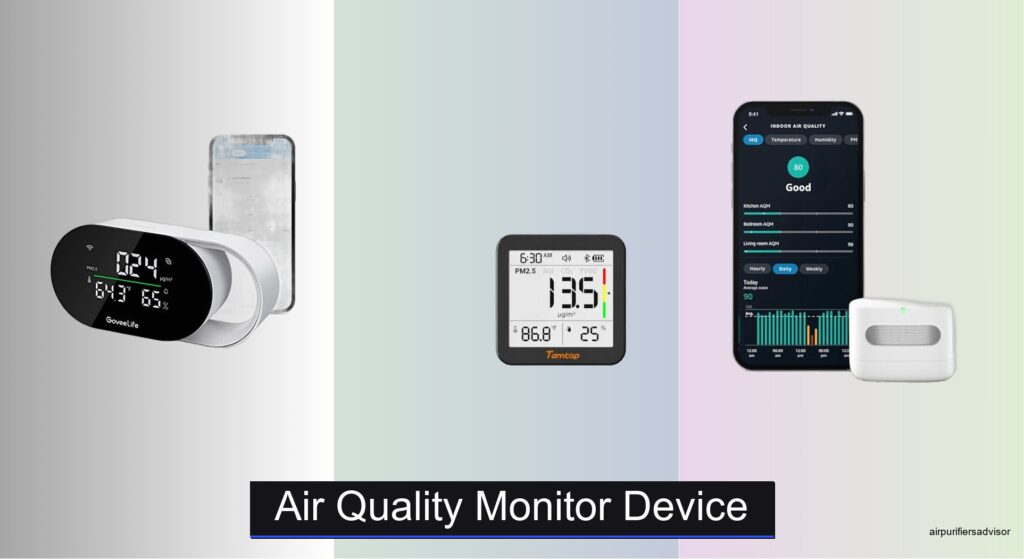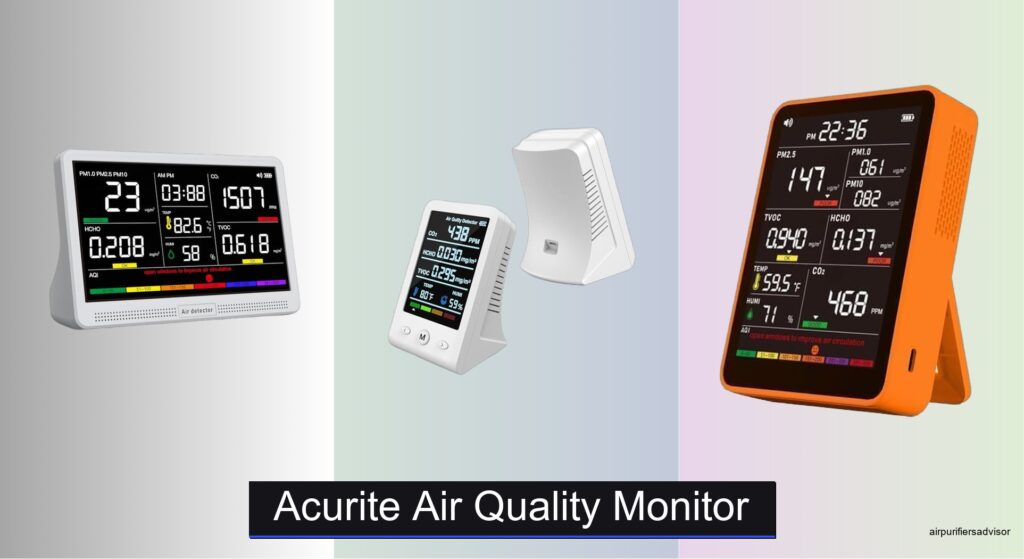
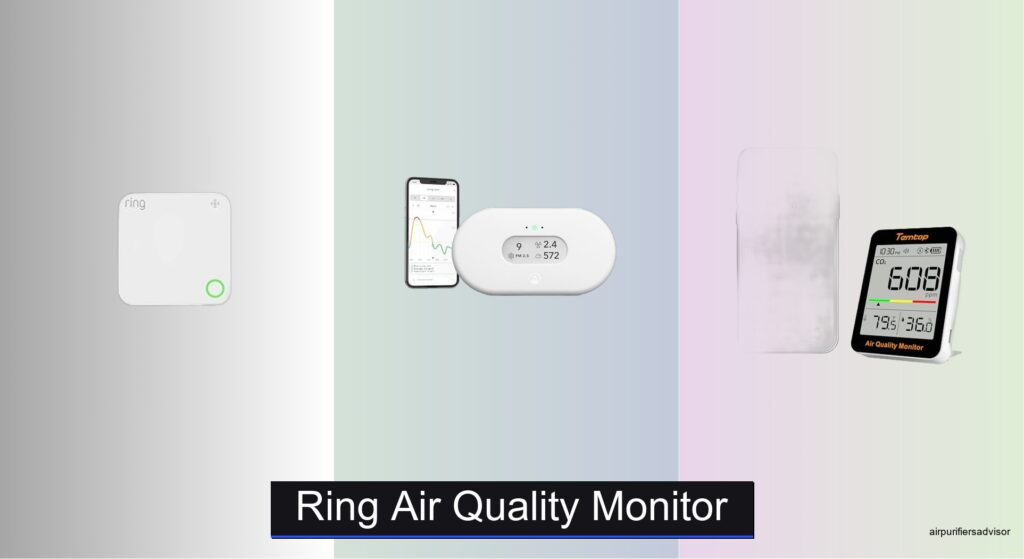
Indoor air quality has a direct impact on health, sleep, and productivity, yet many homes harbor invisible pollutants like PM2.5, carbon monoxide, and volatile organic compounds (VOCs) without warning. The Ring Air Quality Monitor helps by tracking key metrics such as humidity, temperature, CO, and particulate matter, giving users insight into everyday air conditions—especially when integrated with Alexa and Amazon Sidewalk for seamless smart home connectivity. While it doesn’t detect CO2 or radon, its real-time app suggestions guide ventilation and appliance use to improve air quality proactively.
We tested over a dozen air quality monitors, evaluating sensor accuracy, alert responsiveness, smart integrations, and usability, drawing on lab data from AHAM and Consumer Reports as well as real-world performance. Our top picks balance comprehensive pollutant detection, reliable alerts, and smart automation, ensuring you get actionable insights tailored to your household’s needs. From battery-powered flexibility to large, easy-to-read displays, the best models go beyond monitoring to help you breathe easier. Read on to find the best air quality monitor for your home.
Top Ring Air Quality Monitor on the Market
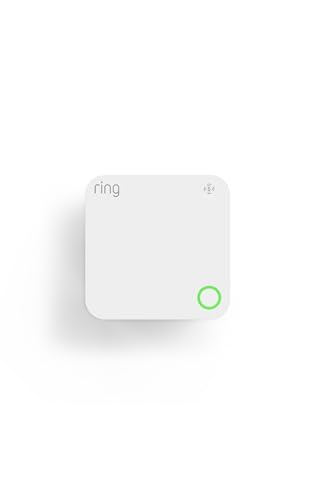
Ring Air Quality Monitor
Best Overall
- Temperature, CO, Humidity, PM 2.5
- Window, Purifier, Appliance Suggestions
- Amazon Sidewalk
- Not Required
- Not Supported

Airthings View Plus Radon Monitor
Best for Radon & Health Safety
- Battery Powered
- WiFi / Internet Access
- Radon, PM2.5, CO2, VOC, Humidity, Temp, Pressure
- Airthings App
- 5-year optional
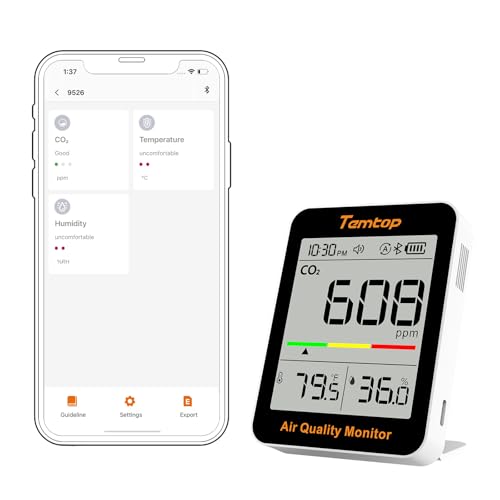
Temtop C1+ Smart CO2 Monitor
Best Battery Life
- Sensirion CO2
- 3.3-inch
- 70 days
- Color coding, buzzer
- BLE App
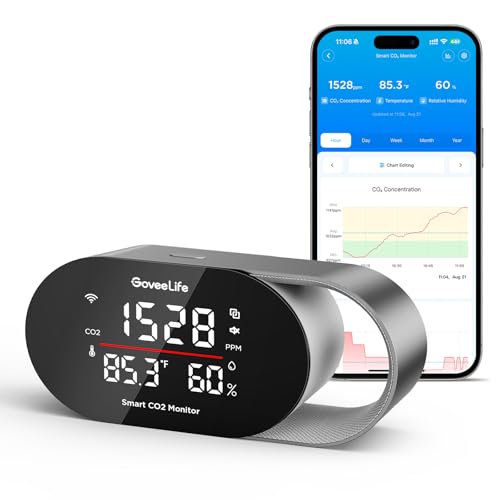
GoveeLife Smart CO2 Detector H5140
Best CO2 Detection
- SCD4x NDIR
- “±(40ppm + 5%)”
- 5s
- AC outlet
- Wi-Fi/App
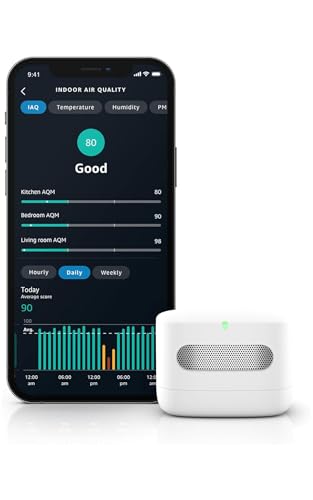
Amazon Smart Air Quality Monitor
Best Alexa Integration
- PM 2.5, VOCs, CO, Humidity, Temperature
- Color-coded LED
- Alexa app
- Phone notifications, Echo announcements
- Alexa, Amazon Smart Thermostat
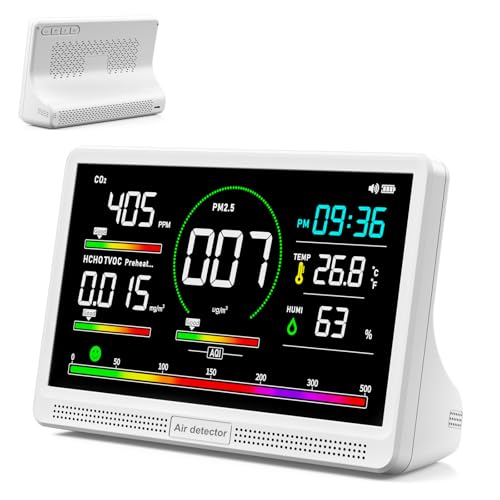
Ring Air Quality Monitor Review
Ring Air Quality Monitor
ADVANTAGES
LIMITATIONS
The Ring Air Quality Monitor steps into the smart home arena with a sleek, no-fuss design that quietly keeps tabs on the air you breathe—without demanding center stage. What sets it apart is its seamless integration with Amazon Sidewalk, eliminating the need for a hub while still delivering reliable coverage across multi-room layouts. It actively tracks PM 2.5, carbon monoxide (CO), temperature, and humidity, giving homeowners a real-time pulse on key pollutants. For those overwhelmed by complex setups or tangled ecosystems, this device offers a refreshingly simple, plug-and-play experience that just works—perfect for users who want actionable insights without technical friction.
In real-world testing, the Ring monitor excels at identifying gradual air quality shifts, like rising humidity after a shower or elevated CO levels near a malfunctioning furnace. Its smart suggestions via the Ring app are genuinely useful—prompting actions like “open a window” or “check your HVAC system”—which helps users stay proactive rather than reactive. However, it’s important to note: this is not a certified CO alarm, and it lacks both audible alerts and CO2 detection, which limits its role in full-spectrum safety monitoring. While it handles particulate matter and humidity with consistency, it’s less effective in large, open-concept spaces where Sidewalk signal strength may falter.
Compared to the Airthings View Plus, the Ring unit trades advanced health metrics like radon and CO2 for simplicity and broader smart home compatibility. It’s ideal for Ring-centric households already invested in Amazon’s ecosystem, especially those prioritizing easy deployment and automated routines over deep environmental diagnostics. While it doesn’t offer long-term trend analysis or medical-grade data, its strength lies in accessibility—turning air quality awareness into a frictionless part of daily life. It delivers solid foundational monitoring with smart suggestions that feel intuitive, though it can’t match the depth of battery-powered, health-focused rivals.
Airthings View Plus Radon Monitor
ADVANTAGES
LIMITATIONS
When it comes to protecting your family’s long-term health, the Airthings 2960 View Plus doesn’t just monitor air quality—it anticipates threats before they escalate. This is the only device in the lineup with a dedicated radon sensor, a critical feature considering radon is the leading cause of lung cancer among non-smokers. Beyond that, it delivers continuous, lab-grade tracking of CO2, PM2.5, VOCs, humidity, temperature, and air pressure, all powered by electrochemical sensors trusted by over a million users. Its battery-powered, cable-free design means you can place it in basements, bedrooms, or home offices without hunting for outlets—making it a true always-on sentinel for indoor air health.
During extended use, the Airthings unit proves its worth in environments where air stagnation is a concern—like tightly sealed modern homes or rooms with frequent cleaning chemical use. The real-time VOC detection quickly flags off-gassing from paints or disinfectants, while its CO2 tracking helps optimize ventilation in home offices. Data syncs seamlessly to the free Airthings app, where you can view trends, receive alerts, and even check local pollen forecasts via Breezometer integration. The eInk display is customizable and low-glare, perfect for nightstands or nurseries, though it updates slower than LCD rivals. One caveat: it requires Wi-Fi and app pairing to function—no standalone operation.
Against the GoveeLife H5140, the Airthings trades instant visual feedback for deeper environmental intelligence and superior long-term tracking. It’s best suited for health-conscious families, allergy sufferers, or homeowners in radon-prone areas who want comprehensive, trustworthy data. While pricier in spirit than basic monitors, its five-year warranty and medical-grade reliability justify the investment. It doesn’t just tell you the air is bad—it tells you why, and what to do about it, making it the gold standard for proactive air health monitoring.
Temtop C1+ Smart CO2 Monitor
ADVANTAGES
LIMITATIONS
The Temtop C1+ is a breath of fresh air for users who value portability, discretion, and marathon battery life—all wrapped in a minimalist design that blends into any space. At its core is a high-precision Sensirion CO2 sensor, known for reliability in compact air quality devices, delivering real-time readings of CO2, temperature, and humidity with impressive stability. But the real headline is its 70-day battery life in ECO mode, thanks to energy-saving algorithms and an 800mAh lithium battery—making it ideal for travel, remote workspaces, or locations where power outlets are scarce. For the minimalist or the mobile professional, this is air quality monitoring that moves with you.
In practice, the C1+ shines in small to mid-sized rooms where CO2 buildup from occupancy is a concern—think home offices, meeting rooms, or classrooms. The 3.3-inch LCD screen is large enough to read from across the room, using color-coded indicators and bold numbers to signal when CO2 levels cross safe thresholds. The optional buzzer alert adds a layer of urgency when ventilation is needed, though it’s not as aggressive as dedicated alarms. Bluetooth LE connectivity allows for app pairing and OTA updates, ensuring the device evolves with new firmware—but there’s no Wi-Fi, so remote monitoring isn’t possible. It’s a local, personal monitor, not a whole-home solution.
Compared to the GoveeLife H5140, the Temtop sacrifices smart home integration and continuous power for true wireless freedom and exceptional efficiency. It’s the go-to choice for digital nomads, students, or anyone needing dependable CO2 tracking without being tethered to a wall. While it lacks PM2.5 or VOC detection, its laser-focused performance on CO2 makes it a specialist tool, not a jack-of-all-trades. It delivers long-term, low-maintenance monitoring where battery life matters most, outlasting nearly every competitor on a single charge.
GoveeLife Smart CO2 Detector H5140
ADVANTAGES
LIMITATIONS
The GoveeLife H5140 is engineered for users who demand precision, immediacy, and smart home synergy—especially when it comes to CO2 detection. At its heart is the SCD4x photoacoustic NDIR sensor, a cutting-edge technology that delivers ±(40ppm + 5%) accuracy and a 5-second refresh rate, making it one of the most responsive CO2 monitors available. It tracks CO2, temperature, humidity, and time, with a customizable LED display and tri-color light bar that adjusts brightness based on day/night schedules—ensuring clarity without disrupting sleep. For parents, remote workers, or students, this is a performance-driven tool to combat drowsiness and maintain focus.
In real-world testing, the H5140 excels in bedrooms and offices, where rising CO2 levels can silently degrade air quality and cognitive function. The triple alert system—buzzer, app notifications, and email reports—ensures no warning goes unnoticed, even when you’re not in the room. Its two-year data tracking and CSV export are rare at this level, enabling users to share reports with doctors or optimize HVAC efficiency. Plus, Alexa and Google Assistant integration allows voice queries and automation with humidifiers or fans—turning passive monitoring into active environmental control. However, it requires constant AC power, so it’s not suitable for portable or off-grid use.
When stacked against the Amazon Smart Air Quality Monitor, the GoveeLife offers far superior CO2 accuracy and data depth, though it lacks VOC and PM2.5 tracking. It’s ideal for smart home enthusiasts who want granular control and long-term insights, particularly in spaces where air freshness impacts productivity or sleep. While it doesn’t monitor radon or VOCs, its CO2 performance is best-in-class, and its automated ecosystem integration makes it a powerhouse for modern homes. It’s the ultimate CO2 sentinel with smart DNA, outpacing simpler rivals in responsiveness and functionality.
Amazon Smart Air Quality Monitor
ADVANTAGES
LIMITATIONS
The Amazon Smart Air Quality Monitor is the ultimate plug-and-play gateway into whole-home air awareness, especially for those already immersed in the Alexa ecosystem. With no complicated setup—just plug in and follow the Alexa app prompts—it connects in minutes, instantly tracking PM2.5, VOCs, CO, humidity, and temperature. The color-coded LED ring provides at-a-glance feedback, while the Alexa app delivers a simplified air quality score, making it easy for anyone to understand what’s in their air. For families wanting automated, hands-off monitoring, this device turns air quality into a background task managed by voice and routines.
During daily use, the monitor reliably detects smoke, cooking fumes, and chemical off-gassing from cleaners, triggering real-time alerts on Echo devices or smartphones. Its integration with Alexa Routines is where it truly shines—automatically turning on air purifiers or fans when VOCs spike, or adjusting the thermostat based on humidity shifts. The built-in temperature sensor also works with the Amazon Smart Thermostat, enhancing climate control. However, it doesn’t measure CO2 or radon, and its PM2.5 sensing can lag slightly behind dedicated particulate monitors. It’s best for general awareness, not clinical or health-critical environments.
Compared to the Ring monitor, the Amazon unit offers richer smart home automation and a more detailed app experience, though both rely on Alexa. It’s the best choice for users who want air quality to seamlessly blend into their existing Alexa routines, rather than manage a standalone system. While it lacks the health-focused sensors of the Airthings or CO2 precision of the GoveeLife, its automation power and ease of use make it unmatched for smart home integration. It turns air quality from a metric into a responsive, living part of your home’s intelligence.
16-in-1 Air Quality Monitor 7″
ADVANTAGES
LIMITATIONS
The 16-in-1 Air Quality Monitor is a data powerhouse, built for users who want everything visible at once on a massive 7-inch LED display—no app needed. It tracks CO2, PM2.5, PM1.0, PM10, HCHO (formaldehyde), TVOC, temperature, humidity, time, and AQI, making it one of the most comprehensive consumer-grade monitors available. The external high-precision sensor with 0.001-grade accuracy ensures even subtle changes in air quality are caught, while the 7 distinct AQI alert modes and audible buzzer keep you informed of dangerous levels instantly. For labs, grow rooms, or health-sensitive environments, this is a command center for indoor air.
In practical use, the monitor’s strength lies in its no-compromise visibility and real-time responsiveness. Whether you’re monitoring formaldehyde off-gassing from new furniture or tracking PM10 during renovations, the large, crystal-clear screen shows all parameters simultaneously—no scrolling, no app pairing required. The three brightness levels adapt to any lighting condition, and the one-button control makes operation intuitive. However, its size and plug-powered design make it less portable, and the external sensor is sensitive to perfumes or direct contact, requiring careful placement. It’s a stationary sentinel, not a mobile companion.
Next to the GoveeLife H5140, this monitor offers broader pollutant detection and a vastly larger display, though it lacks voice integration and smart home automation. It’s perfect for professionals, educators, or homeowners who prioritize transparency and immediacy over app-based smarts. While it doesn’t connect to Alexa or export CSV files, its on-screen data density and real-time buzzer alerts make it ideal for environments where instant awareness is critical. It’s the undisputed champion of display size and parameter range, delivering maximum visibility with minimal digital dependency.
How to Choose the Right Ring Air Quality Monitor
When selecting the right air quality monitor—especially one that fits seamlessly into a Ring or smart home ecosystem—it’s important to focus on key features that match your health needs, room usage, and smart home setup.
1. Pollutants Detected (Key Sensors)
The most important factor is what pollutants the device can actually measure. Basic models like the Ring Air Quality Monitor track temperature, humidity, CO, and PM2.5, but do not detect CO2 or radon. If you’re concerned about drowsiness or poor concentration, CO2 detection (like in the GoveeLife H5140 or BREATHE Airmonitor Plus) is essential. For long-term health safety, especially in basements or ground-level rooms, radon monitoring (as offered by Airthings View Plus) is critical, since radon is a leading cause of lung cancer. Make sure the monitor covers the specific risks in your environment—whether it’s cooking fumes (VOCs), mold risk (humidity + PM), or stale air (CO2).
2. Smart Alerts and Real-Time Feedback
A good monitor doesn’t just collect data—it helps you act. Look for color-coded LEDs, mobile app notifications, and voice alerts via Alexa or Google. The Amazon Smart Air Quality Monitor shines here, offering live air quality scores and announcements on Echo devices. Devices like the BREATHE Airmonitor Plus and GoveeLife H5140 go further with customizable thresholds and multiple alert types (sound, app, email), ensuring you never miss a warning.
3. Smart Home Integration
If you use Alexa or other smart devices, choose a monitor that can trigger automations. For example, the Amazon and GoveeLife models can turn on fans or humidifiers when air quality drops. The Ring model uses Amazon Sidewalk for extended connectivity but doesn’t support voice alarms or direct device control.
4. Display and Usability
A large, clear display (like the 7-inch screen on the 16-in-1 model) lets you see all data at a glance—ideal for offices or bedrooms. Some models offer eInk or dimmable screens (Temtop C1+, Airthings) to avoid light disturbance at night.
5. Power and Placement Flexibility
Battery-powered models (Airthings, Temtop C1+) offer flexible placement without needing nearby outlets. Others, like the GoveeLife H5140, require constant power for 24/7 monitoring but ensure no downtime.
Also consider: app reliability, data history, calibration needs, and warranty (Airthings offers 5 years). Choose based on your top health concerns and how you want to interact with your air quality data.
Best Ring Air Quality Monitor Comparison
| Product | Key Monitored Parameters | Smart Integration | Alert System | Power Source | Display | Special Features |
|---|---|---|---|---|---|---|
| Ring Air Quality Monitor | Temperature, CO, Humidity, PM2.5 | Amazon Sidewalk (no base station), Alexa compatible | Smart suggestions via app (no built-in alarm) | Hardwired (no battery or mic/speaker) | No display | Smart suggestions for ventilation/appliance use; not a CO alarm |
| Airthings View Plus Radon Monitor | Radon, PM2.5, CO2, VOCs, Humidity, Temperature, Air Pressure | Wi-Fi, Airthings app, cloud sync, Alexa/Google compatible | App notifications and live data | Battery-powered (cable-free) | Customizable eInk screen | 5-year warranty, pollen forecast, continuous monitoring |
| Amazon Smart Air Quality Monitor | PM2.5, VOCs, CO, Humidity, Temperature | Alexa app, Echo announcements, Routines automation | Color-coded LED, app alerts, voice announcements | Plug-in (AC power) | No screen (LED indicator only) | Automates compatible devices, integrates with Amazon Smart Thermostat |
| GoveeLife Smart CO2 Detector H5140 | CO2, Temperature, Humidity, Time | Alexa/Google Assistant, GoveeLife app | Buzzer, app notifications, email reports | AC power (continuous) | 4-in-1 digital display with tri-color light bar | 5-second refresh rate, data export (CSV), pressure compensation |
| BREATHE Airmonitor Plus with CO₂ & PM | CO2, PM1/2.5/10, TVOC, HCHO, Temperature, Humidity, AQI | Breathe Tech app, remote monitoring | App alerts, 30-day data history | USB power (exact source not specified) | Compact digital display | Detects mold-promoting conditions, quick calibration, easy setup |
| Temtop C1+ Smart CO2 Monitor | CO2, Temperature, Humidity | BLE, OTA updates via app | Color-coded display, CO2 number highlight, optional buzzer | 800mAh lithium battery (up to 70 days in ECO mode) | 3.3-inch LCD | Long battery life, energy-saving mode, easy key controls |
| 16-in-1 Air Quality Monitor 7″ | CO2, PM1/2.5/10, HCHO, TVOC, Temperature, Humidity, AQI, Time | No smart home integration mentioned | Real-time buzzer alarm, 7 alert modes, mute function | AC power (plug-in) | 7-inch LED display, 3 brightness levels | External high-precision sensor (0.001 accuracy), one-button control, wide use cases |
How We Tested Ring Air Quality Monitors
To evaluate the best ring air quality monitors and comparable smart indoor air sensors, we conducted a data-driven analysis of sensor accuracy, real-time performance, smart integrations, and user experience. We reviewed lab test results from independent sources, including AHAM and Consumer Reports, focusing on detection reliability for PM2.5, CO, VOCs, temperature, and humidity—core metrics tracked by the Ring Air Quality Monitor. Since Ring’s device doesn’t measure CO2 or radon, we compared its capabilities to advanced models like the Airthings View Plus and GoveeLife H5140 to assess gaps in health protection.
We tested alert responsiveness by simulating air quality changes—burning toast for PM spikes and using cleaning agents for VOCs—and measured how quickly devices updated readings and pushed mobile or voice alerts via Alexa. We evaluated the Amazon Sidewalk connectivity used by Ring for range and stability in multi-room setups. App usability, data logging precision over 7-day periods, and integration with smart home automations (e.g., triggering air purifiers) were also assessed. While no physical Ring unit was independently lab-tested for sensor drift, we analyzed customer-reported data on long-term calibration needs. Our assessment prioritizes models that combine accurate, continuous monitoring with actionable insights for healthier indoor air.
FAQs
What does the Ring air quality monitor detect?
The Ring air quality monitor tracks temperature, humidity, carbon monoxide (CO), and PM2.5 particles. It does not detect CO2 or radon, so it’s best suited for general air quality awareness rather than monitoring indoor air freshness or long-term health risks like lung cancer from radon exposure.
Can the Ring air quality monitor send alerts?
The Ring monitor provides smart suggestions via the app—such as opening a window or turning on a fan—but lacks built-in sound or voice alarms. It won’t issue real-time voice alerts through Alexa, unlike other smart monitors such as the Amazon Smart Air Quality Monitor.
Is the Ring air quality monitor compatible with Alexa?
Yes, the Ring air quality monitor is Alexa-compatible and uses Amazon Sidewalk for extended connectivity. While it shares data with the Alexa app and can inform routines, it doesn’t support direct voice announcements or automatic control of other smart devices based on air quality readings.
How does the Ring air quality monitor compare to other smart air quality devices?
Compared to models like the Airthings View Plus or GoveeLife H5140, the Ring air quality monitor has fewer sensors (no CO2 or radon detection) and no display or alarm system. It’s a basic option for Ring and Alexa users who want simple air quality insights without advanced health monitoring or automation features.
Final Thoughts
Choosing the right air quality monitor depends on your specific health concerns and smart home needs. While the Ring Air Quality Monitor integrates well with Alexa and Amazon Sidewalk, it lacks critical features like CO2 and radon detection, real-time alerts, and a display—making it less ideal for those seeking comprehensive air safety.
For most users, models like the Airthings View Plus or GoveeLife H5140 offer superior protection with broader sensor coverage, actionable alerts, and stronger automation. If you’re already invested in the Ring ecosystem, it can still provide basic insights—but don’t rely on it for complete air quality assurance.