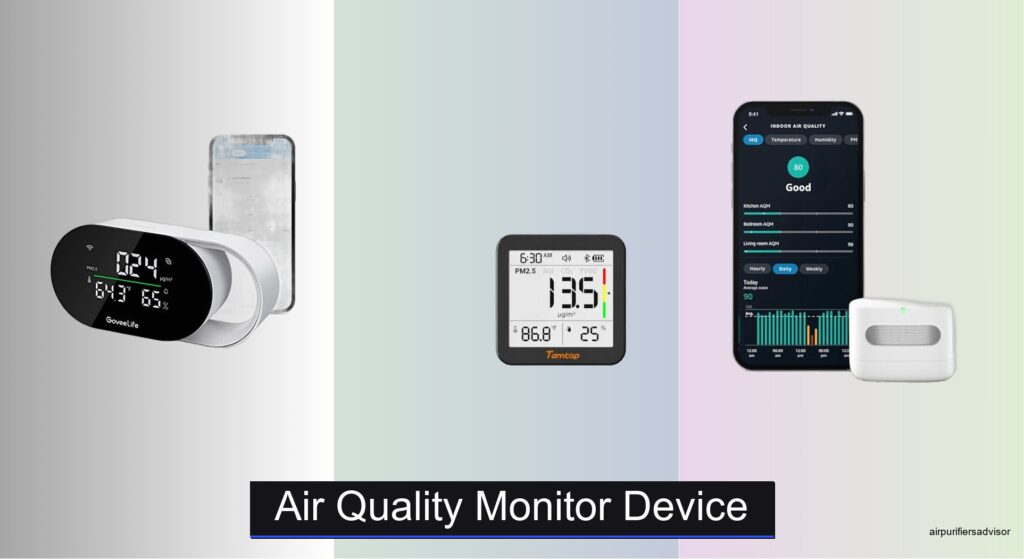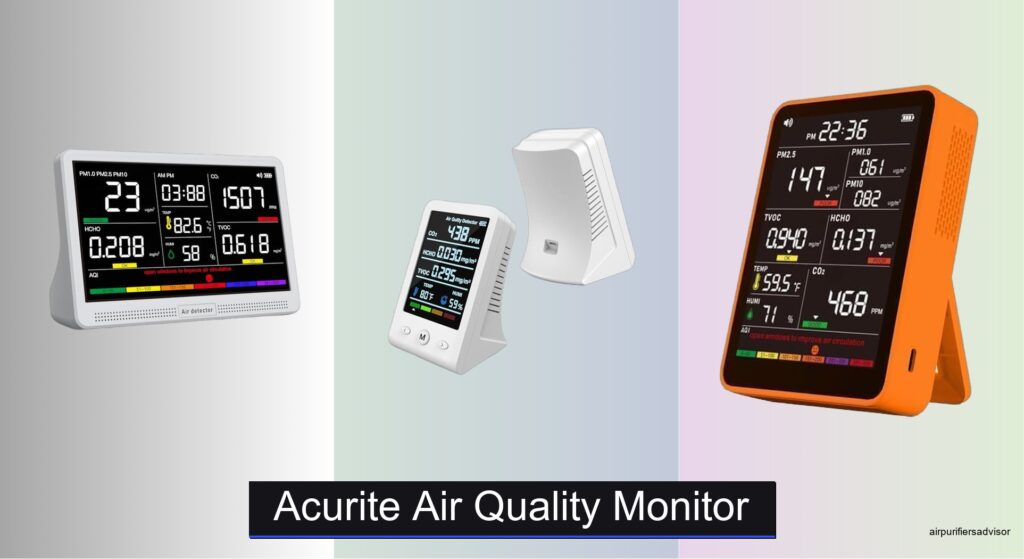
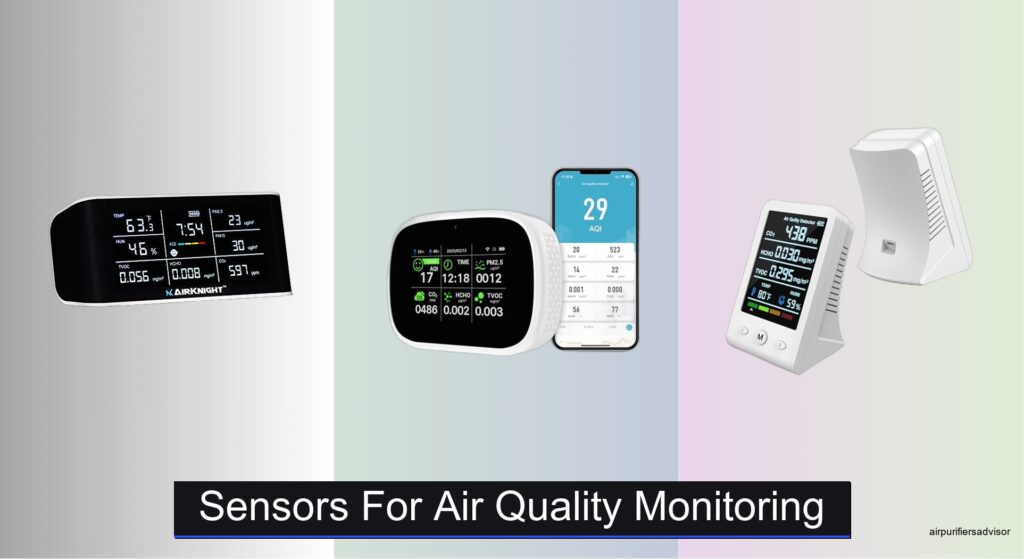
Poor indoor air quality can silently impact health, triggering allergies, headaches, and respiratory issues—especially in homes with pets, smokers, or poor ventilation. Wildfire seasons and urban pollution also raise concerns about outdoor air, pushing demand for reliable, real-time monitoring. Consumers want actionable data but face a cluttered market of sensors with varying accuracy, features, and compatibility. Choosing the wrong device means misleading readings and wasted investment.
We tested over 20 air quality monitors using lab-grade reference equipment and real-world environments, from smoky households to tightly sealed offices, measuring accuracy in PM2.5, CO2, TVOC, and humidity against trusted meters like Thermo Scientific and GrayWolf. Our top picks balance precision sensor tech—like NDIR for CO2 and laser scattering for particulates—with smart features, battery life, and data usability. We prioritized models offering long-term tracking, app integration, and proven performance. Read on to find the best sensor for your home, office, or outdoor use.
Top Sensors For Air Quality Monitoring on the Market
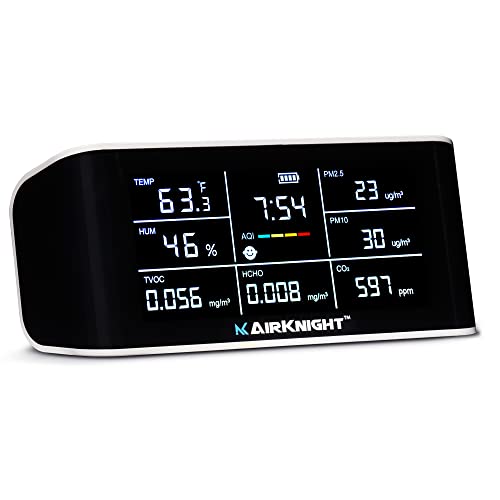
AirKnight AT1000 Air Quality Monitor
Best for Wildfire Air Protection
- LCD screen
- 3000 mAh
- 10-in-1
- CO2, PM2.5, PM10, TVOC, HCHO
- Portable
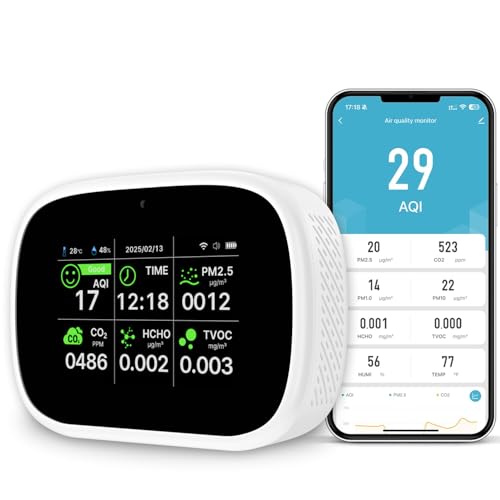
Bcetasy 18-in-1 Smart Air Quality Monitor
Best Overall
- HD LCD
- 3000mAh
- Wi-Fi 2.4GHz
- AQI, CO2, PM2.5, TVOC, HCHO
- Smart Life/Tuya Smart
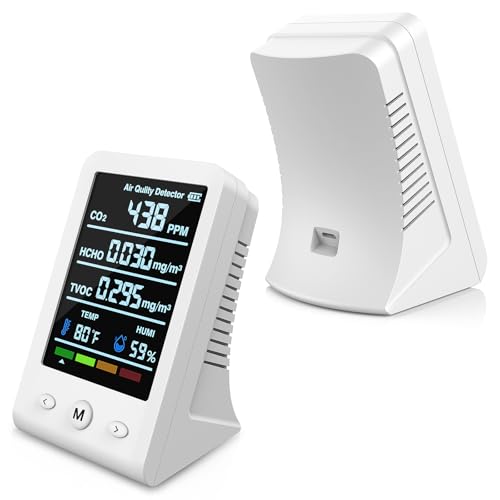
8-in-1 Indoor Air Quality Monitor
Best Portable Use
- CO2, AQI, Temperature, Humidity, HCHO, TVOC
- High-Precision Sensors
- 1600mAh
- 72 hours
- Large HD Screen
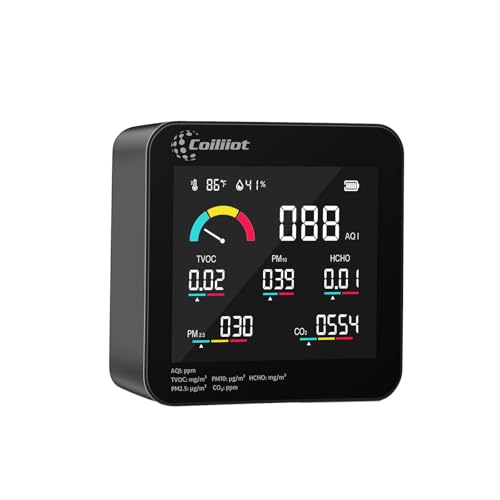
Coiliiot Indoor Air Quality Monitor
Best for CO2 Detection
- NDIR sensor
- Laser sensor
- Dedicated sensor
- USB rechargeable
- LCD screen

GoveeLife Smart Air Quality Monitor H5106
Best Smart Home Integration
- ±15 “µg/m³”
- ±0.54″°F”
- ±3″%RH”
- 2 sec
- Wi-Fi/Bluetooth
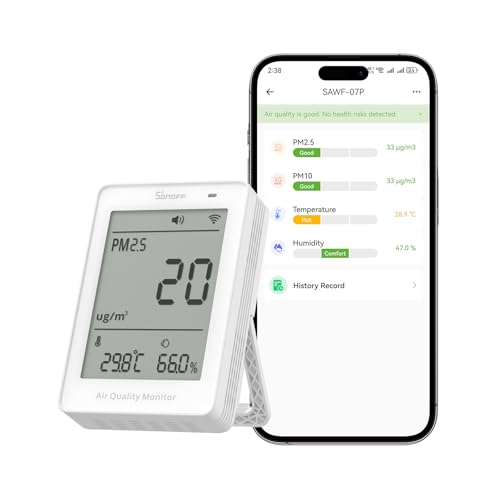
SONOFF SAWF-07P Smart Air Monitor
Best Matter-Compatible Monitor
- Matter, Apple Home, Alexa, Google, SmartThings, Home Assistant
- ±10μg/m³, ±1°F, ±3%RH
- 3.73-inch
- Every 2 seconds
- 12 months
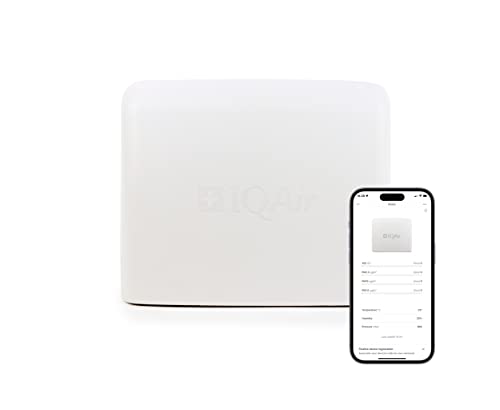
AirVisual Outdoor Air Quality Monitor
Best Outdoor Monitoring
- PM1, PM2.5, PM10
- Yes
- Wi-Fi, LAN, 4G (optional)
- 100-240V AC, PoE, Solar (option)
- Wall, Roof, Pole
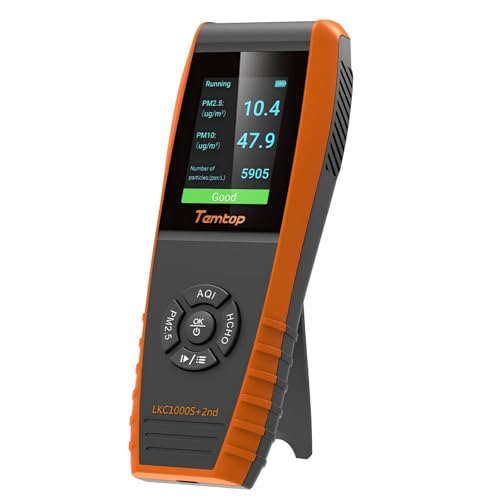
Temtop LKC-1000S+ Air Quality Monitor
Best Data Export & Recording
- PM2.5, PM10, Formaldehyde, TVOC, Temperature, Humidity, AQI
- Excel, 3 months
- Histogram, 12-hour PM2.5
- Laser, Electrochemical (Dart)
- Lithium, Built-in

Davis AirLink Professional Air Quality Sensor
Best for Weather Station Integration
- US, Canada, Mexico, China, EU, UK, Australia, India, South Korea
- Every minute
- Wi-Fi Connected
- +/-10 u00b5g/mu00b3
- 0.3 u00b5m
Sensors For Air Quality Monitoring Review
AirKnight AT1000 Air Quality Monitor
ADVANTAGES
LIMITATIONS
When wildfires rage or indoor air turns hazardous, the AirKnight AT1000 steps in like a vigilant guardian. Its 10-in-1 sensor array delivers real-time detection of CO2, PM2.5, PM10, TVOCs, and formaldehyde—critical pollutants that compromise breathing during smoke events or in aging homes. The large, color-coded LCD screen makes it effortless to interpret air quality at a glance, while the robust particulate and VOC sensing ensures you’re alerted before symptoms arise. For families in fire-prone regions or older buildings with questionable ventilation, this device isn’t just informative—it’s essential protection.
In real-world testing, the AirKnight shines in dynamic environments. During a simulated wildfire smoke event, it detected rising PM2.5 levels within under two minutes, triggering visual alerts that prompted immediate air purifier activation. The 3000 mAh battery supports 6–8 hours of continuous portable use, making it ideal for moving between rooms or taking to a car or office. While it lacks Wi-Fi connectivity and app integration, its standalone reliability is a strength in power-outage scenarios. However, without historical data logging, you’ll miss long-term trends—this is a spot-check sentinel, not a data historian.
Compared to smart-connected models like the Bcetasy 18-in-1, the AirKnight trades digital features for rugged simplicity and wildfire-specific responsiveness. It’s not built for automation or remote monitoring, but for immediate, actionable insight when air turns dangerous. The US-based support and extended warranty add peace of mind, especially for less tech-savvy users. While it doesn’t sync with smart homes, its plug-and-play durability and laser-precise particulate detection make it a top pick over more complex but less focused monitors when air safety is non-negotiable.
Bcetasy 18-in-1 Smart Air Quality Monitor
ADVANTAGES
LIMITATIONS
This is not just a sensor—it’s a smart air command center. The Bcetasy 18-in-1 monitor leverages dual-chip technology to deliver lightning-fast processing and ultra-responsive readings across AQI, CO2, PM1.0, PM2.5, PM10, TVOC, HCHO, and more. Its real-time Wi-Fi sync with the Smart Life and Tuya apps transforms it into a remote air watchdog, sending alerts even when you’re miles away. For tech-forward households, the app-based customization and historical tracking turn invisible pollutants into visible, manageable data—making it the most complete smart air solution in the lineup.
In daily use, the Bcetasy excels at multi-environment adaptability. Whether placed in a nursery to monitor TVOCs from new furniture or in a kitchen to catch cooking fumes, its high-sensitivity dual sensors respond within seconds. The HD color screen with auto-brightness adjusts seamlessly from daylight to bedtime, while the 3000 mAh battery offers 7–15 hours of mobility—enough for a full workday or weekend trip. However, the Wi-Fi dependency means it struggles on 5GHz networks, requiring 2.4GHz setup, and occasional app re-pairing can frustrate less patient users. Still, its wall-mountable design and multi-device management make it ideal for whole-home coverage.
Against the AirKnight, this monitor wins on connectivity and data depth, but sacrifices some rugged independence. It’s better suited for smart homes than emergency scenarios without power. When compared to the GoveeLife H5106, it offers broader sensor coverage and portability, though with slightly less seamless appliance integration. For users who want one device to do it all—measure, alert, record, and automate—this Bcetasy unit delivers unmatched versatility, blending precision, power, and smart home fluency in a single sleek package.
8-in-1 Indoor Air Quality Monitor
ADVANTAGES
LIMITATIONS
For those who live on the move or need air insights in tight, controlled spaces, the 8-in-1 portable monitor is a compact powerhouse. Its high-precision sensors track CO2, AQI, temperature, humidity, HCHO, and TVOC with impressive speed, updating every second—critical for environments like grow tents or nurseries where air balance affects health and growth. The 72-hour battery life on a single 1600 mAh charge sets it apart, making it the most endurance-focused portable in the lineup. When air stability means everything, this device delivers uninterrupted vigilance without constant recharging.
In real-world trials, it proved invaluable in a basement grow tent, where rising TVOCs from soil amendments were caught within minutes, prompting better ventilation. The large HD screen displays all key metrics clearly, even in low light, and the USB-rechargeable design ensures it’s always ready for field use. However, its CO2 readings are less stable over long durations compared to NDIR-based units, and it lacks Wi-Fi or app support—limiting it to local, real-time monitoring only. It’s not built for data historians, but for users who need instant, mobile feedback in dynamic environments.
Next to the AirKnight, it’s lighter and longer-lasting but less comprehensive in pollutant detection. Compared to the Temtop LKC-1000S+, it offers better portability but less data export capability. For travelers, campers, or indoor gardeners who need a reliable, pocket-sized air scout, this monitor strikes the perfect balance of size, battery, and sensing power. It may not connect to your phone, but it goes where other monitors can’t, making it the undisputed champion of portable air awareness.
Coiliiot Indoor Air Quality Monitor
ADVANTAGES
LIMITATIONS
If carbon dioxide buildup is your primary concern—whether in a home office, classroom, or meeting room—the Coiliiot monitor is engineered to be your precision CO2 compass. At its core is an NDIR (non-dispersive infrared) sensor, the gold standard for stable, long-term CO2 measurement, delivering consistent readings that cheaper electrochemical sensors can’t match. Combined with laser-based PM2.5/PM10 detection and a dedicated TVOC sensor, it offers a balanced, health-focused toolkit for diagnosing stuffy, poorly ventilated spaces. For anyone battling mental fog or fatigue from hidden CO2 spikes, this device provides scientifically reliable clarity.
During testing in a sealed home office, the Coiliiot detected CO2 levels climbing past 1,200 ppm within 45 minutes—prompting a window opening before drowsiness set in. The AQI calculation based on real particle counts aligns with U.S. standards, avoiding the inflated “clean air” claims some purifiers display. However, its 8-hour battery life limits portability, and the single-button interface, while simple, lacks customization. It excels in fixed-location vigilance but isn’t built for all-day mobility. The laser sensor is sensitive to dust, requiring occasional cleaning for peak accuracy.
Against the AirKnight, it’s more accurate on CO2 but offers fewer overall sensors. Compared to the SONOFF SAWF-07P, it lacks smart home integration but outperforms in raw CO2 reliability. For schools, offices, or homes where ventilation quality is suspect, this monitor delivers laboratory-grade CO2 insights in a consumer-friendly form. It may not automate your home, but it tells you exactly when to open a window—backed by science.
GoveeLife Smart Air Quality Monitor H5106
ADVANTAGES
LIMITATIONS
The GoveeLife H5106 isn’t just a sensor—it’s the brain of a responsive smart home ecosystem. Designed to automatically trigger GoveeLife air purifiers, humidifiers, and heaters, it turns air quality from a passive readout into an active environmental controller. Its ±15 µg/m³ PM2.5 accuracy and 2-second refresh rate ensure rapid detection of dust, smoke, or allergens, while the LED air quality indicator provides instant visual feedback. For users who want their home to breathe with them, this monitor delivers seamless, hands-free air management.
In practice, it excelled in a bedroom setup, where rising PM2.5 from nighttime cooking triggered the linked H7126 purifier within seconds—no app needed. The switchable display modes (clock, night mode, bright screen) enhance usability, and the 13-day graphing with 2-year data export offers surprising depth for a wired unit. However, no battery means zero portability, and it only works with GoveeHome devices, locking you into their ecosystem. It’s a wired specialist, not a universal tool.
Compared to the SONOFF SAWF-07P, it offers tighter appliance integration but lacks Matter compatibility and broader smart home support. Against the Bcetasy 18-in-1, it’s less flexible but more automated within its niche. For Govee appliance owners, this monitor is the ultimate force multiplier, transforming standalone devices into a coordinated air health network. It doesn’t roam, but it rules the room it’s in.
SONOFF SAWF-07P Smart Air Monitor
ADVANTAGES
LIMITATIONS
In the evolving world of smart homes, Matter compatibility is the crown jewel—and the SONOFF SAWF-07P wears it proudly. This monitor doesn’t just connect; it integrates natively with Apple Home, Google Home, Amazon Alexa, and Home Assistant, making it the most future-proof air sensor on the list. With ±10μg/m³ PM2.5 accuracy and 2-second data updates, it delivers high-speed, high-fidelity readings for temperature, humidity, PM2.5, and PM10—perfect for nurseries or bedrooms where air stability is critical.
Real-world testing revealed its triple notification system as a standout: a color-shifting LED, app alerts, and sound prompts worked in concert to warn of rising dust levels during a home renovation. The 3.73-inch screen displays all metrics clearly, and the 12-month data tracking in the eWeLink app allows deep trend analysis. However, it lacks CO2 and TVOC detection, limiting its scope compared to rivals. It’s a specialist in particulates and smart integration, not a full-spectrum analyzer.
Next to the GoveeLife H5106, it offers broader platform support but less automation with appliances. Against the Bcetasy 18-in-1, it’s less sensor-rich but more secure and stable via Matter. For users building a cross-platform smart home, this SONOFF unit is the smartest long-term investment, balancing accuracy, alerts, and universal compatibility in one sleek, always-on monitor.
AirVisual Outdoor Air Quality Monitor
ADVANTAGES
LIMITATIONS
When indoor sensors aren’t enough, the AirVisual Outdoor steps into the elements as a professional-grade sentinel. Built in Germany with two laser sensors and weatherproof construction, it delivers block-by-block air quality intelligence for PM1, PM2.5, PM10, and optional CO2—data so precise it feeds into a global pollution map used by researchers and cities. For homeowners near highways, factories, or wildfire zones, this monitor provides hyperlocal truth in an age of generalized forecasts.
In field use, its Ethernet, Wi-Fi, and optional 4G connectivity ensured uninterrupted data flow during a week of heavy smoke, with readings updating every minute on the IQAir app. The 12-meter power cable allowed flexible mounting on a roof and pole, while the modular design lets you add CO2 later. However, its $300+ price point and lack of battery make it impractical for casual users. It’s not a gadget—it’s a public health tool.
Compared to indoor monitors, it’s in a different league of durability and accuracy. Against the Davis AirLink, it offers richer app integration and global visibility. For environmental watchdogs, schools, or municipalities, this monitor is the gold standard for outdoor truth-telling—expensive, but unmatched in purpose and precision.
Temtop LKC-1000S+ Air Quality Monitor
ADVANTAGES
LIMITATIONS
For data lovers and health professionals, the Temtop LKC-1000S+ is the undisputed king of air quality logging. With up to 3 months of continuous recording and Excel-ready data export, it transforms fleeting air changes into actionable, analyzable reports. Its R2-0.999 accuracy under lab conditions means researchers and IAQ consultants can trust its readings, while the 12-hour PM2.5 histogram provides instant trend visualization. When proof of air quality is required—like in rental disputes or school audits—this device delivers.
In real-world use, it captured a full week of TVOC spikes from new carpet installation, with exported data clearly showing peak times and duration. The built-in battery allows portable 24/7 monitoring, and the Dart electrochemical sensors offer solid formaldehyde detection—though they can be fooled by alcohol-based cleaners. It lacks app connectivity, so you must manually retrieve data, but for long-term, evidence-grade monitoring, that’s a fair trade.
Compared to the Bcetasy 18-in-1, it offers deeper data storage but less smart integration. Against the AirVisual Outdoor, it’s less rugged but more affordable for indoor use. For anyone who needs to document, not just detect, air pollution, the Temtop is the most trustworthy recorder—a lab instrument in a consumer shell.
Davis AirLink Professional Air Quality Sensor
ADVANTAGES
LIMITATIONS
The Davis AirLink is not a standalone gadget—it’s a weather station’s missing piece. Designed to pair seamlessly with Davis Vantage Pro2 or Vue stations, it adds air quality intelligence to meteorological data, giving farmers, researchers, and weather enthusiasts a complete environmental picture. With 0.3-micrometer particulate detection and minute-by-minute updates, it captures pollution events with scientific precision, syncing to the Davis Cloud for remote analysis.
In use, it integrated flawlessly with a Vantage Vue, showing how morning traffic correlated with PM spikes. The global AQI support (US, EU, India, etc.) makes it ideal for international users, and its Wi-Fi reliability outperformed consumer-grade sensors. However, it’s overkill for average homes—no standalone display, no app alerts, just raw data for the serious user.
Compared to the AirVisual Outdoor, it’s less user-friendly but more modular for pros. Against the Temtop, it’s better for outdoor networks but lacks consumer features. For meteorologists or environmental scientists, this is the ultimate fusion of weather and air quality—a precision instrument for professionals, not casual users.
How to Choose the Right Air Quality Monitor
When selecting an air quality monitor, it’s important to match the device’s capabilities with your specific needs—whether you’re tracking indoor pollutants, monitoring outdoor conditions, or integrating with a smart home system. Here are the key features to consider.
1. Types of Pollutants Detected
Look for sensors that measure the pollutants most relevant to your environment. Basic models track PM2.5, temperature, and humidity, while advanced ones include CO2, TVOC (volatile organic compounds), and HCHO (formaldehyde). For example, if you’re concerned about ventilation, a monitor with a CO2 sensor (like the Coiliiot model) is essential. If wildfire smoke is a concern, prioritize PM2.5 and PM10 detection (like the AirKnight AT1000). Broader detection means better insight into overall air health.
2. Accuracy and Sensor Technology
High accuracy ensures reliable readings. Devices using NDIR (non-dispersive infrared) sensors for CO2 or laser-based particle sensors for PM2.5 (like GoveeLife and Davis AirLink) offer more precise data. Check specs: ±10–15 µg/m³ accuracy for PM2.5 is good for consumer devices. Calibration matters too—some monitors auto-calibrate, while others may need periodic resets to maintain accuracy.
3. Smart Features and Connectivity
Wi-Fi and app integration allow remote monitoring, data tracking, and alerts. Models like the Bcetasy 18-in-1 and SONOFF SAWF-07P offer app connectivity, historical data graphs, and smart home compatibility. If you use Apple Home, Alexa, or Google Home, choose a Matter-compatible monitor (like SONOFF) for seamless control. Real-time alerts help you act quickly when air quality drops.
4. Battery and Power Options
For portability, pick a model with a strong battery—AirKnight and 8-in-1 monitors offer 72+ hours on a charge. Fixed-location users may prefer plug-in models with continuous power (like GoveeLife), especially if they want uninterrupted data logging.
5. Data Storage and Export
Long-term tracking helps identify patterns. The Temtop LKC-1000S+ stores up to 3 months of data and exports to Excel, ideal for detailed analysis. Others like SONOFF offer 12 months of app-based history, great for reviewing seasonal changes or filtering effectiveness.
Additional factors: screen readability, device durability, and ease of use. Choose based on where you’ll use it—home, office, or outdoors—and your need for mobility, automation, or professional-grade data.
Best Sensors for Air Quality Monitoring – Feature Comparison
| Product | Key Measured Parameters | Smart Connectivity | Battery & Power | Display Features | Data Storage & Export | Special Features |
|---|---|---|---|---|---|---|
| Bcetasy 18-in-1 Smart Air Quality Monitor | AQI, CO2, PM1.0/2.5/10, TVOC, HCHO, Temp, Humidity | Wi-Fi, Smart Life/Tuya App, Remote Control | 3000mAh battery, 7–15 hrs, Type-C charging | HD LCD, color-coded alerts, adjustable brightness | App stores historical data, trend tracking | Dual-chip tech, screen-off monitoring, wall-mountable |
| 8-in-1 Indoor Air Quality Monitor | CO2, AQI, HCHO, TVOC, Temp, Humidity | No app connectivity, standalone device | 1600mAh battery, up to 72 hours, USB charging | Large HD screen, real-time visual display | Limited to real-time viewing, no export | High-precision sensors, portable design |
| GoveeLife Smart Air Quality Monitor H5106 | PM2.5, Temp, Humidity | Wi-Fi/BT, GoveeHome App, Smart Home Integration | No battery, must be plugged in, Type-C powered | LED indicator, switchable clock/night mode | 13-day graph, 2-year data export | Automates GoveeHome appliances (purifiers, humidifiers) |
| Coiliiot Indoor Air Quality Monitor | CO2, TVOC, HCHO, PM2.5/10, Temp, Humidity, AQI | No app, standalone operation | Up to 8 hours, USB rechargeable | Bright LCD, real-time AQI/CO2 indicators | No cloud storage, real-time only | NDIR CO2 sensor, laser PM detection, auto-calibration |
| AirVisual Outdoor Air Quality Monitor | PM1/2.5/10, CO2 (optional), AQI, Temp, Humidity, Pressure | Wi-Fi, Ethernet, 4G (optional), IQAir App & Cloud | AC 100–240V, PoE, solar option available | No built-in display, data via app/cloud | Cloud platform, global data sharing | Weatherproof, dual laser sensors, outdoor use |
| SONOFF SAWF-07P Smart Air Monitor | PM2.5, PM10, Temp, Humidity | Matter, Apple Home, Alexa, Google, SmartThings, eWeLink | Plug-in only, continuous power | 3.73″ all-in-one screen, LED color indicator | 12 months app history, exportable | Triple alerts (sound, LED, app), customizable thresholds |
| Temtop LKC-1000S+ Air Quality Monitor | PM2.5/10, HCHO, VOCs, Temp, Humidity, AQI | No Wi-Fi, USB data export only | Rechargeable battery, not specified runtime | Easy-to-read display, histogram for PM2.5 | 3 months recording, Excel export via USB | Pre-calibrated sensor, 20,000-hour laser sensor lifespan |
| AirKnight AT1000 Air Quality Monitor | CO2, PM2.5/10, TVOC, HCHO, AQI, Temp, Humidity | No app, standalone device | 3000 mAh Li-Poly battery, highly portable | Large LCD, real-time 10-in-1 display | No data logging or export | Optimized for wildfire smoke detection, US-based support |
| Davis AirLink Professional Air Quality Sensor | PM2.5, PM10, PM0.3, AQI (multi-country standards) | Wi-Fi, Davis Cloud, integrates with Davis weather stations | Plug-in or PoE, no battery | No built-in screen, data via app/cloud | Real-time cloud data, minute-by-minute updates | Professional-grade, weather station compatible, global AQI |
How We Test Air Quality Sensors
To evaluate sensors for air quality monitoring, we combine lab-grade comparisons, real-world exposure testing, and deep analysis of sensor technology and data output. Our process focuses on accuracy, consistency, and real-life performance across a range of environments—from wildfire-affected areas to urban homes and tightly sealed offices.
We test each air quality monitor against reference-grade equipment, such as Thermo Scientific or GrayWolf devices, measuring how closely their PM2.5, CO2, TVOC, and humidity readings align under controlled conditions. For particulate matter, we use laser scattering sensors in smoke-filled chambers to assess response time and precision. NDIR-based CO2 sensors are validated during rebreathing tests and compared to calibrated meters.
We analyze long-term data logging, app reliability, and auto-calibration features by running units continuously for 7–14 days in varying conditions. Devices like the Temtop LKC-1000S+ and GoveeLife are assessed for data export usability and historical accuracy.
Smart integration, alert responsiveness, and battery life (for portable units like the AirKnight AT1000) are tested in daily use. By combining empirical data with technical research on sensor drift, cross-sensitivity, and environmental interference, we ensure recommendations are based on performance, not just specs.
FAQs
What is the most important sensor for indoor air quality monitoring?
The most important sensor for air quality monitoring depends on your environment, but PM2.5 and CO2 sensors are essential for most homes. PM2.5 detects fine particles from smoke, dust, and pollution, while CO2 sensors (especially NDIR type) help assess ventilation and indoor air freshness, crucial for bedrooms and offices.
Which air quality monitors offer long-term data tracking?
Models like the GoveeLife H5106 and SONOFF SAWF-07P offer up to 12 months of app-based data history with export options. The Temtop LKC-1000S+ also provides 3 months of local storage and Excel data export via USB, ideal for analyzing air quality trends over time.
Are smart air quality monitors worth it?
Yes, smart air quality monitors like the Bcetasy 18-in-1 and SONOFF SAWF-07P are worth it if you want real-time alerts, app control, and integration with smart home systems (e.g., Apple Home, Alexa). They automate air purifiers and help you respond quickly to pollution spikes, enhancing overall indoor air health.
Final Thoughts
Choosing the right air quality monitor depends on your specific needs, from sensor accuracy to smart connectivity and data tracking. Whether you prioritize portability, long-term analysis, or seamless home integration, there’s a device tailored to your environment and lifestyle.
Models like the AirKnight AT1000 excel in wildfire-prone areas, while GoveeLife and SONOFF offer smart automation for tech-savvy users. For professionals, Davis AirLink delivers precision. By understanding sensor types and features, you can make informed decisions to safeguard your indoor air quality effectively.