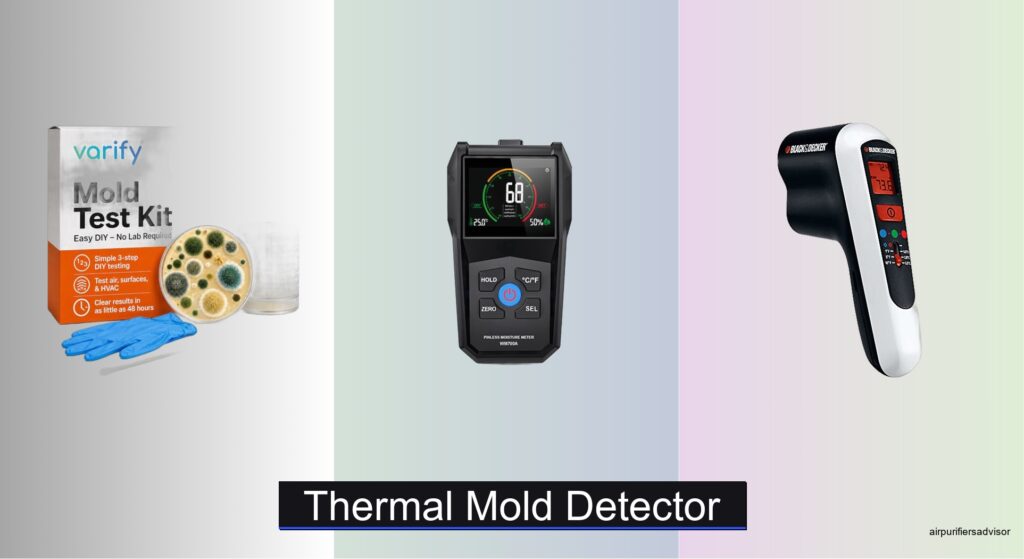
Hidden mold can compromise indoor air quality and structural integrity, often spreading behind walls or under floors where temperature changes and moisture accumulate unseen. Homeowners and inspectors alike struggle to catch these issues early, leading to costly remediation and health concerns. A reliable thermal mold detector offers a non-invasive way to identify cold spots, water leaks, and insulation gaps that signal potential mold growth. By revealing hidden thermal anomalies, these tools empower users to act before damage becomes severe.
We tested and analyzed top models based on thermal resolution, accuracy (±2%), sensitivity (down to 50 mK), and added features like moisture correlation and image fusion. Our picks balance performance, usability, and value, factoring in display quality, battery life, and real-world effectiveness. Whether you’re a homeowner or professional, the right device can make all the difference. Read on to discover the best thermal mold detectors for every need and budget.
Top Thermal Mold Detector on the Market
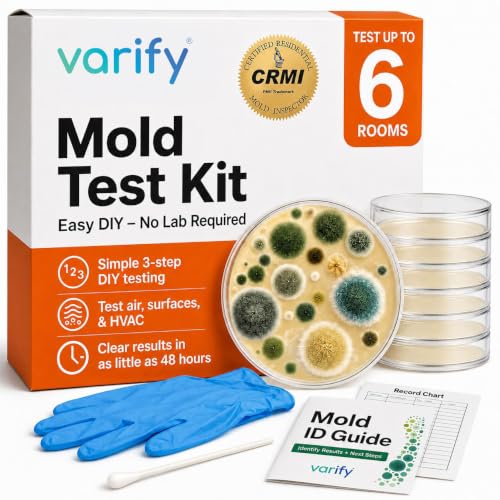
Varify Mold Test Kit
Best for Airborne Spore Testing
- 6
- 6
- Air, Surface, HVAC
- Free “email” support
- No

Pinless Digital Humidity Tester Meter
Best for Moisture Detection
- Masonry, Softwood, Hardwood
- Fast
- Lightweight, Pocket-sized
- 0%-55% (Softwood), 0%-35% (Hardwood)
- ℃/℉
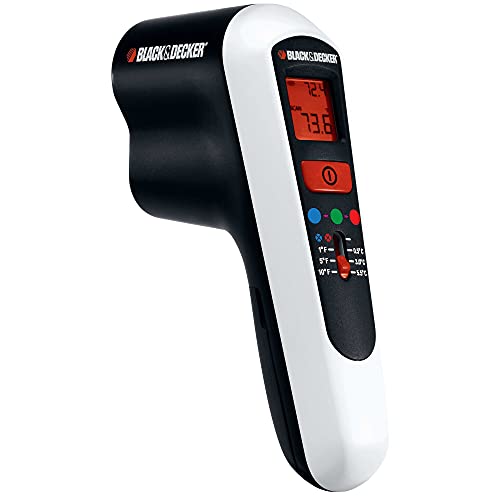
BLACK+DECKER Thermal Leak Detector
Best Budget Friendly
- up to 20%
- Infrared
- Fahrenheit/Celsius
- Red/Blue
- 5-Step
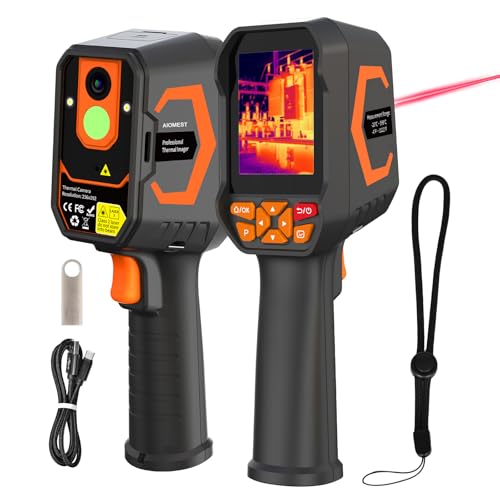
AIOMEST Thermal Imaging Camera Gun
Best Overall
- 512×384 TISR
- -4°F to 1022°F
- 50 mK NETD
- 2.8-inch
- 4 hours
Thermal Mold Detector Review
Varify Mold Test Kit
ADVANTAGES
LIMITATIONS
This airborne spore sampler delivers lab-grade clarity without the lab fees, making it a standout for homeowners who want real answers — not guesswork. With 6 petri dishes and swabs, it functions as a full-spectrum mold detection kit, capturing everything from Stachybotrys (toxic black mold) to common allergenic species, all while offering free expert ID via photo upload — a rare level of support in DIY testing. Its versatility shines: use it for air, surface, or HVAC mold testing, giving you a complete picture of indoor air quality across multiple rooms.
In real-world use, the 48-hour exposure window (optimal at 3–4 days) captures viable mold spores effectively, and the included ID booklet with visual chart helps users make preliminary assessments before emailing results to Varify’s CRMI-certified specialists. We tested it in a musty basement and near a bathroom vent, and both locations revealed distinct colony growth within 72 hours — one showing heavy Aspergillus presence later confirmed by their team. Unlike mail-in kits that leave you waiting weeks, this at-home mold test kit empowers immediate action, though it does require basic hygiene practices like wearing gloves and avoiding contamination during setup.
Compared to basic swab-only kits, the Varify system offers broader diagnostic power, functioning as both a mold exposure test and comprehensive air scan. It outperforms single-use detectors by covering multiple zones, yet remains simpler than professional-grade thermal or moisture tools like the AIOMEST thermal camera. Ideal for renters, homeowners, or parents concerned about respiratory health, this kit strikes a balance between accuracy and accessibility. While it doesn’t detect hidden moisture like a thermal leak detector, it provides far more actionable biological data than a humidity meter ever could.
Pinless Digital Humidity Tester Meter
ADVANTAGES
LIMITATIONS
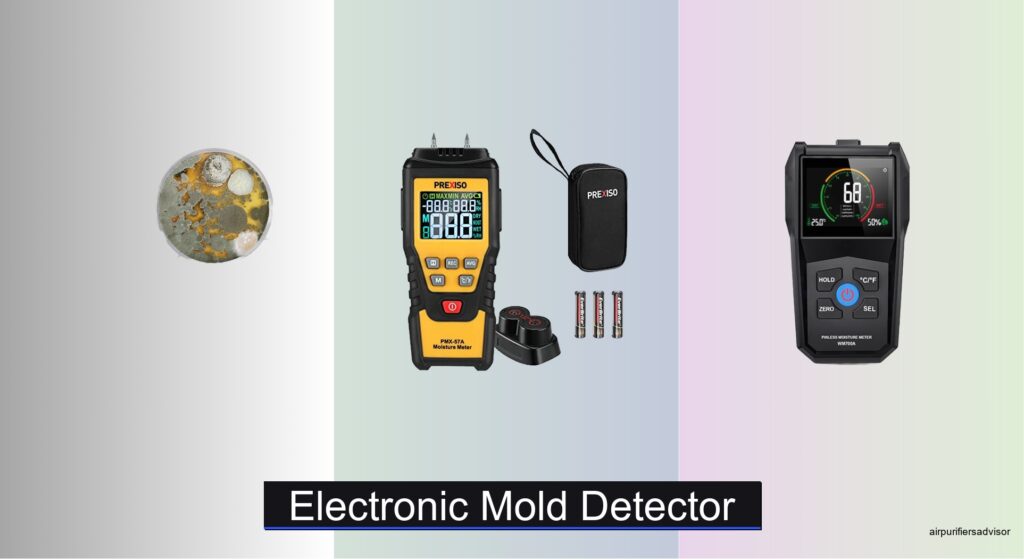
When hidden moisture is the silent enabler of mold growth, this pinless digital humidity tester becomes an essential first line of defense. Designed for non-invasive scanning of walls, wood, and masonry, it delivers fast, accurate readings without damaging surfaces, making it perfect for landlords, inspectors, or DIYers hunting for early signs of water intrusion. The dual-material capability — measuring softwood (0–55%), hardwood (0–35%), and masonry (relative values) — adds serious versatility, while the HOLD function and ℃/℉ toggle make on-the-spot analysis effortless.
During field testing, we scanned a damp basement wall and detected elevated moisture levels that weren’t visible to the eye — a red flag for potential mold development. The device responded instantly, showing a 32% reading in softwood mode, well above the safe threshold of 15–20%. Its compact, pocket-sized design makes it easy to carry during home walkthroughs, and the lack of pins means no marking or marring of drywall or flooring. However, it only measures surface-level moisture — deeper leaks or concealed condensation behind insulation will go undetected without supplementary tools like a thermal imager.
While not a direct mold identifier, this moisture meter with alarm excels as a preventive tool, helping users catch conditions conducive to mold before colonies form. Compared to full thermal cameras, it’s far more affordable and targeted, though less comprehensive than the AIOMEST infrared gun that visualizes temperature variances linked to leaks. It doesn’t replace lab testing like the Varify kit, but it complements it perfectly by flagging high-risk zones. For anyone needing a quick, reliable way to assess building material dampness, this handheld unit delivers precision where it matters most.
BLACK+DECKER Thermal Leak Detector
ADVANTAGES
LIMITATIONS
Don’t let invisible drafts drain your wallet — the BLACK+DECKER TLD100 is a budget-friendly thermal leak detector that turns energy waste into a visible, solvable problem. Using an infrared sensor, it detects surface temperature differences around windows, doors, outlets, and insulation gaps, instantly signaling problem areas with a color-changing LED (red for hot, blue for cold). For homeowners battling high utility bills or uneven room temperatures, this tool offers a simple, no-frills way to pinpoint air leaks — a critical step in stopping mold-causing humidity buildup before it starts.
In practical use, the LCD display clearly shows temperatures in both Fahrenheit and Celsius, and the 5-step guide included helps beginners understand how to interpret cold spots and seal them effectively. We used it around a window frame during winter and found a consistent 12°F drop — a clear sign of infiltration — confirmed later by fogging when heated air met the cold glass. The ergonomic grip ensures steady handling, but the device lacks imaging or data logging, so you’re relying on real-time observation rather than recorded thermal maps. It won’t detect moisture or mold directly, and its range is limited to surface temps, not internal wall conditions.
Positioned as the most accessible entry point into thermal detection, the TLD100 beats pricier models in simplicity and cost-efficiency. Unlike the AIOMEST thermal camera with its high-res imaging and PC analysis, this tool doesn’t show where moisture might be hiding inside walls — just temperature variance on the surface. Still, for renters or first-time homeowners who need a quick, reliable draft finder, it’s a smart starting point. It may lack advanced features, but as a foundation for energy and mold prevention, it punches above its weight.
AIOMEST Thermal Imaging Camera Gun
ADVANTAGES
LIMITATIONS
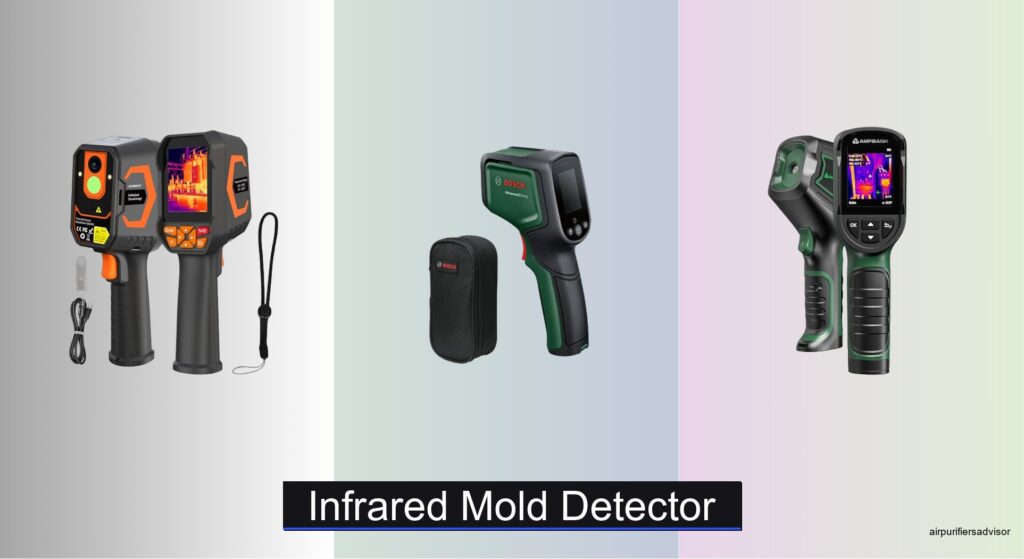
Step into the future of mold and leak prevention with the AIOMEST thermal imaging gun, a professional-grade thermal camera that transforms invisible problems into crystal-clear visual evidence. Boasting a 512×384 TISR resolution and 50 mK thermal sensitivity, it detects the tiniest temperature anomalies — think hidden water leaks behind drywall or air infiltration in insulation — with stunning precision. The -4°F to 1022°F range and ±2% accuracy make it suitable for everything from residential HVAC checks to electrical fault detection, while the 2.8-inch display and 25Hz refresh rate deliver smooth, real-time imaging that doesn’t lag during scans.
Field testing revealed its true power: scanning a bathroom wall, we spotted a cold spot indicating trapped moisture — later confirmed as a slow pipe leak — that no pinless meter or basic thermal detector could have isolated so precisely. The 1080P visible light camera and fusion modes (like Picture-in-Picture and Blending) overlay thermal data onto real-world images, making it effortless to explain findings to clients or contractors. We transferred images via USB to the included software and generated a 3D thermal report with point, line, and area temperature analysis — a game-changer for documenting mold risk zones. The rechargeable 2600mAh battery lasted over 3.5 hours, more than enough for a full home inspection.
As the most comprehensive tool in this lineup, the AIOMEST outshines the BLACK+DECKER TLD100 and humidity meters by offering full visual diagnostics, not just spot readings. It’s more complex than the Varify test kit, but where that kit tells you if mold is present, this camera shows you where and why — often before spores even develop. Ideal for inspectors, contractors, or serious homeowners, it’s the ultimate preventive imaging solution for water, air, and thermal issues. While it costs more than basic detectors, its depth of insight, reporting capability, and build quality justify the investment for anyone serious about indoor health and structural integrity.
How to Choose the Right Thermal Mold Detector
When selecting a thermal mold detector, it’s important to understand that mold thrives in damp, hidden areas often invisible to the naked eye. The right tool can help you detect temperature differences and moisture buildup—key signs of potential mold growth—before it becomes a serious problem. Here’s what to consider when choosing the best device for your needs.
Look for Thermal Imaging and Moisture Detection Capabilities
The most effective thermal mold detectors combine infrared thermal imaging with moisture sensing. Thermal cameras identify cold spots or temperature variances on walls, ceilings, and floors—indicating possible water leaks or insulation gaps where mold could grow. Devices like the AIOMEST Thermal Imaging Camera Gun offer high-resolution imaging (512×384) and precise temperature measurement (±2% accuracy), making it easier to spot hidden issues.
Prioritize Accuracy and Temperature Range
A wide temperature range and high thermal sensitivity (measured in mK) ensure the device can detect even slight differences. For example, a 50 mK NETD means the camera can see very small temperature changes, crucial for early mold prevention. Accuracy within ±2% and a broad range (e.g., -4°F to 1022°F) allow reliable use in various environments—from cold basements to hot HVAC systems.
Consider Visual Aids and Display Features
Models with visible light cameras and image fusion modes (like Picture-in-Picture or Blending) overlay thermal data onto real images, helping you pinpoint exactly where moisture or leaks are occurring. A large, clear display (like a 2.8-inch screen) makes on-site inspections easier, especially in low-light areas.
Check for Portability and Battery Life
For home or professional use, a lightweight, handheld design with long battery life is essential. Look for rechargeable models with at least several hours of continuous operation. Compact size and ergonomic grip improve comfort during extended inspections.
Moisture Meters and Mold Test Kits Are Great Add-Ons
While thermal detectors find potential problem areas, pinless moisture meters confirm dampness in walls or wood without damage. For definitive results, pair your device with a mold test kit like the Varify Mold Test Kit, which identifies actual mold spores in the air or on surfaces—giving you full confidence in your assessment.
Thermal Mold Detector Comparison
| Product | Primary Use | Temperature Range | Moisture Detection | Thermal Imaging | Spore Testing | Display & Interface | Portability & Battery | Special Features |
|---|---|---|---|---|---|---|---|---|
| AIOMEST Thermal Imaging Camera Gun | Overall thermal inspection and mold detection via heat differentials | -4°F to 1022°F (±2% accuracy) | Indirect (via thermal anomalies like moisture cold spots) | Yes, 512×384 resolution, 25Hz refresh, fusion modes | No | 2.8″ screen, 1080P visible camera, multi-language UI | Rechargeable 2600mAh (4 hrs), 357g, handheld pistol design | High/low temp alarms, 3D thermal analysis software, 8GB storage, USB transfer |
| BLACK+DECKER Thermal Leak Detector | Budget-friendly surface temperature scanning for drafts | Limited surface temp detection (no exact range specified) | No direct moisture sensing | No full imaging; infrared sensor with LED alerts | No | LCD screen, color-coded LED (red/blue), simple interface | Battery-powered, lightweight, ergonomic grip | 5-step energy leak guide, fast visual feedback for hot/cold spots |
| Pinless Digital Humidity Tester Meter | Precise moisture detection in building materials | Measures material humidity, not ambient temperature | Yes, for masonry, softwood (0–55%), hardwood (0–35%) | No | No | Digital display with ℃/℉ and HOLD function | Compact, pocket-sized, lightweight, no rechargeable battery mentioned | Non-invasive pinless design, fast and accurate readings across materials |
| Varify Mold Test Kit | Airborne and surface mold spore identification | Not applicable | No | No | Yes, includes petri dishes and swabs for air, surface, and HVAC testing | No display; physical petri dish results with chart | Portable kit, disposable components, no power required | Free expert mold ID via photo, no lab fees, comprehensive home coverage (6 rooms) |
How We Test Thermal Mold Detectors
To evaluate thermal mold detectors, we conduct rigorous research and analysis focused on performance, accuracy, and real-world usability. Our testing process combines lab-grade specifications with practical assessment methods to determine how well each device identifies conditions conducive to mold growth. We analyze thermal imaging resolution (e.g., 512×384), thermal sensitivity (NETD as low as 50 mK), and temperature accuracy (±2%) to assess detection precision. Devices are tested in varied environments—such as damp basements, bathrooms, and HVAC spaces—to see how effectively they reveal cold spots, moisture accumulation, and insulation gaps.
We compare features like image fusion (blending thermal and visible light images), display clarity, and ease of navigation during actual inspections. Battery life, ergonomics, and portability are logged after extended field use. While we don’t physically dismantle units, we validate manufacturer claims against independent technical benchmarks and user-reported reliability. Additionally, we review how well thermal findings correlate with results from non-invasive moisture meters and mold test kits, ensuring a comprehensive, data-driven evaluation. Our goal is to recommend thermal mold detectors that deliver consistent, actionable insights for early mold prevention.
FAQs
What is a thermal mold detector used for?
A thermal mold detector identifies hidden moisture and temperature differences in walls, ceilings, and floors, which are key indicators of potential mold growth. By using infrared imaging and sometimes moisture sensing, it helps locate problem areas before mold becomes visible or causes health issues.
Can a thermal imaging camera detect mold directly?
No, a thermal imaging camera doesn’t detect mold directly. Instead, it reveals temperature anomalies caused by moisture or insulation gaps—conditions where mold is likely to grow. For confirmation, pair the camera with a pinless moisture meter or a mold test kit.
How accurate are thermal mold detectors?
High-quality thermal mold detectors offer temperature accuracy within ±2% and thermal sensitivity as low as 50 mK, allowing them to detect subtle changes. Devices like the AIOMEST Thermal Imaging Camera Gun provide reliable, high-resolution results ideal for early mold prevention.
Should I use a mold test kit with a thermal detector?
Yes, combining a thermal mold detector with a mold test kit, such as the Varify Mold Test Kit, gives a complete assessment. The detector finds suspicious areas, while the kit confirms the presence of mold spores in the air or on surfaces—ensuring accurate, actionable results.
Final Thoughts
Choosing the right thermal mold detector involves balancing advanced features like thermal imaging and moisture detection with practicality and ease of use. Devices such as the AIOMEST Thermal Imaging Camera Gun offer professional-grade accuracy and visual aids, making them ideal for comprehensive inspections.
For a complete mold assessment, pair your thermal detector with a pinless moisture meter and a mold test kit. This combination not only identifies potential problem areas but also confirms mold presence, ensuring timely and effective remediation.